China’s EngineAI Debuts Combat-Ready Humanoid: A New Chapter in Autonomous Warfare and Industrial Robotics
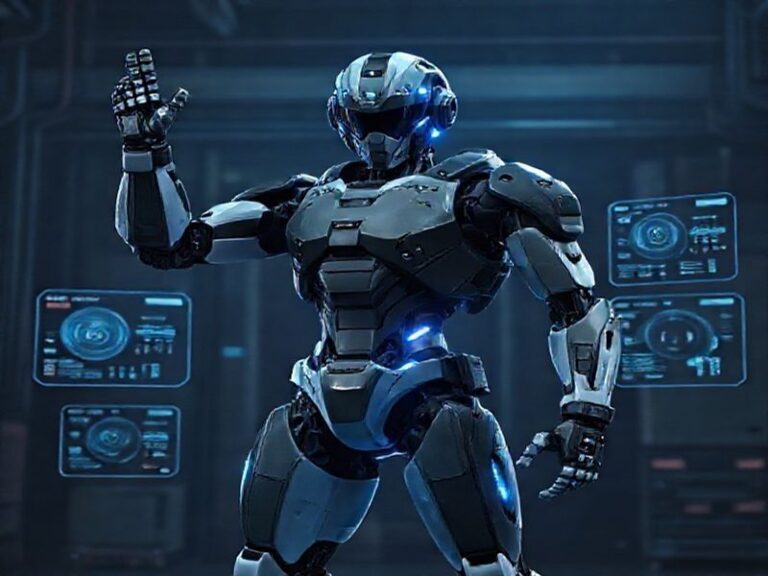
In a move that could reshape both military strategy and industrial automation, Chinese robotics firm EngineAI has unveiled what industry experts are calling the world’s first full-scale AI combat humanoid. Standing at 5’9″ and weighing 180 pounds, this bipedal robot represents a quantum leap in autonomous systems, capable of navigating complex terrain while potentially executing military operations with minimal human oversight.
The announcement, made at Beijing’s International Defense Technology Expo, has sent ripples through defense circles and industrial automation sectors worldwide. EngineAI’s creation isn’t just another humanoid robot—it’s a harbinger of a future where artificial intelligence and robotics converge on the battlefield and factory floor alike.
Technical Breakthrough: Beyond Traditional Robotics
EngineAI’s combat humanoid distinguishes itself from previous iterations through several groundbreaking innovations:
- Adaptive Neural Architecture: The robot employs a proprietary neural network that can learn and adapt to battlefield conditions in real-time, processing over 500GB of sensor data per second
- Advanced Locomotion System: Utilizing reinforced learning algorithms, the humanoid can traverse uneven terrain, climb obstacles, and maintain balance under combat conditions
- Multi-Modal Perception: Integrated LiDAR, thermal imaging, and computer vision systems provide 360-degree environmental awareness
- Autonomous Decision-Making: Capable of identifying threats and making tactical decisions without human intervention within 0.3 seconds
The AI Brain Behind the Brawn
At the heart of EngineAI’s humanoid lies a sophisticated artificial intelligence system that the company claims can process battlefield scenarios faster than human special forces operatives. The AI incorporates:
- Predictive combat modeling using generative adversarial networks (GANs)
- Swarm intelligence protocols for coordinated multi-unit operations
- Real-time threat assessment algorithms trained on millions of combat scenarios
- Adaptive learning capabilities that improve performance through field experience
Industry Implications: Beyond the Battlefield
While military applications dominate headlines, EngineAI’s technology signals transformative changes across multiple sectors:
Manufacturing Revolution
The same technologies enabling combat readiness translate directly to industrial applications. EngineAI’s humanoid can:
- Operate in hazardous environments like chemical plants or nuclear facilities
- Perform complex assembly tasks requiring human-like dexterity
- Work 24/7 without fatigue, dramatically increasing productivity
- Adapt to production line changes through AI learning algorithms
Disaster Response and Emergency Services
The robot’s battlefield capabilities—navigating rubble, making split-second decisions, and operating in dangerous conditions—make it ideal for:
- Earthquake rescue operations in unstable structures
- Nuclear disaster containment and cleanup
- Wildfire management in inaccessible terrain
- Search and rescue missions in extreme weather conditions
Global Response and Strategic Implications
The international community has reacted with a mixture of fascination and concern. The United States Department of Defense has accelerated its own robotics programs, while NATO allies are reassessing their autonomous systems strategies. Japan and South Korea have announced increased funding for competitive humanoid robotics programs.
Dr. Sarah Chen, a robotics ethicist at MIT, warns: “EngineAI’s achievement represents a watershed moment. We’re witnessing the emergence of machines that can not only replicate human physical capabilities but potentially exceed human decision-making speed in combat scenarios.”
The Ethics and Regulation Challenge
The deployment of autonomous combat systems raises critical questions:
- Accountability: Who bears responsibility when an autonomous robot makes a lethal decision?
- Escalation Risks: Could AI-powered combatants lower the threshold for military engagement?
- Employment Impact: How will widespread adoption affect military and industrial workforces?
- Security Concerns: What happens if these systems are hacked or captured?
International bodies are scrambling to establish frameworks. The UN Convention on Certain Conventional Weapons has scheduled emergency sessions to address autonomous combat systems, while the IEEE has formed a special committee to develop safety standards for military AI applications.
Future Possibilities: The Next Five Years
Industry analysts predict rapid evolution in this space:
Near-term Developments (2024-2026)
- Integration with drone swarms for coordinated ground-air operations
- Enhanced natural language processing for improved human-robot collaboration
- Modular weapon systems allowing rapid reconfiguration for different missions
- Extended operational duration through improved battery and power management
Long-term Vision (2027-2030)
- Complete autonomous platoon operations without human oversight
- Integration with satellite networks for global deployment capabilities
- Civilian variants for space exploration and colonization missions
- Medical humanoids capable of battlefield surgery and emergency care
Investment and Market Dynamics
The global market for autonomous combat systems is projected to reach $30 billion by 2030, with civilian applications potentially doubling that figure. Venture capital firms are pouring billions into robotics startups, while traditional defense contractors are racing to acquire AI companies.
EngineAI itself has announced plans to spin off civilian applications through a subsidiary, EngineAI Industrial, targeting manufacturing, logistics, and infrastructure maintenance sectors. Early investors include major Chinese technology conglomerates and international venture funds.
Preparing for an Autonomous Future
As EngineAI’s combat humanoid moves from prototype to production, businesses and governments must prepare for fundamental shifts:
- Workforce Development: Retraining programs for displaced workers and new education curricula focusing on AI collaboration
- Regulatory Frameworks: Developing international standards for autonomous weapons and industrial robots
- Cybersecurity Infrastructure: Protecting autonomous systems from hacking and unauthorized control
- Ethical Guidelines: Establishing clear boundaries for AI decision-making in life-or-death scenarios
The unveiling of EngineAI’s combat humanoid marks more than a technological milestone—it’s a glimpse into a future where the line between human and machine capabilities blurs beyond recognition. As these systems evolve from prototypes to partners to potentially independent actors, society must grapple with questions that extend far beyond technology into the very nature of warfare, work, and human agency.
Whether viewed as a harbinger of dystopian warfare or a catalyst for unprecedented industrial efficiency, EngineAI’s achievement demands attention. The age of autonomous humanoid robots isn’t approaching—it’s arrived, walking on two legs into our factories and battlefields alike.