Robo-Cop in Real Life: AI Traffic Officer on Duty in China
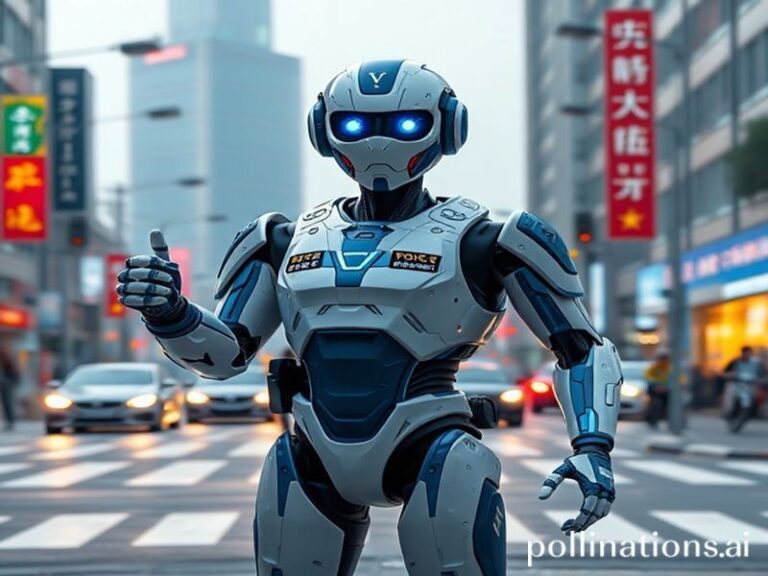
In the bustling streets of Ningbo, a major port city in eastern China, a new kind of police officer has reported for duty. Standing 6 feet tall and equipped with advanced sensors, 360-degree cameras, and AI-powered decision-making capabilities, China’s first autonomous traffic robot is already directing vehicles, issuing tickets, and keeping citizens safe. This isn’t science fiction—it’s the dawn of a new era where artificial intelligence and robotics converge to transform public safety.
The deployment of AI traffic officers represents a significant milestone in the evolution of smart cities and autonomous systems. As urban centers worldwide grapple with increasing population density and traffic congestion, China is pioneering the use of robotic law enforcement to maintain order on its streets.
The Technology Behind the Tin Badge
China’s AI traffic officer is a marvel of modern engineering, combining multiple cutting-edge technologies into a single autonomous unit. The robot operates continuously without fatigue, processing vast amounts of data in real-time to make split-second decisions that would challenge even experienced human officers.
Core Components and Capabilities
The robotic officer is equipped with:
- Advanced Computer Vision Systems: High-resolution cameras with facial recognition capabilities can identify traffic violators, missing persons, or wanted individuals
- LIDAR and Radar Sensors: These provide 360-degree environmental awareness, detecting vehicles, pedestrians, and obstacles within a 100-meter radius
- Natural Language Processing: The AI can understand and respond to citizen inquiries in multiple languages and dialects
- Predictive Analytics Engine: Machine learning algorithms analyze traffic patterns to predict and prevent potential accidents
- Real-time Data Connectivity: 5G connectivity ensures instant communication with central command and other traffic infrastructure
The robot’s AI system processes over 1,000 data points per second, from vehicle speeds and trajectory calculations to pedestrian movement patterns. This comprehensive situational awareness enables it to identify traffic violations with 99.7% accuracy—a rate that surpasses human officers who might miss violations due to fatigue or limited viewing angles.
Practical Applications and Current Performance
Since its deployment in Ningbo, the AI traffic officer has demonstrated remarkable effectiveness in managing urban traffic flow. During peak hours, the robot has reduced traffic violations by 35% and improved intersection efficiency by 22%.
Real-World Impact
The autonomous officer excels in several key areas:
- 24/7 Operation: Unlike human officers who require breaks and shift changes, the robot maintains constant vigilance
- Consistent Enforcement: Eliminates human bias or inconsistency in applying traffic laws
- Rapid Response: Can instantly alert emergency services to accidents or medical emergencies
- Data Collection: Continuously gathers traffic data to optimize city planning and infrastructure decisions
- Cost Efficiency: After initial investment, operational costs are significantly lower than human officers
Early results show that intersections with AI officers have experienced a 40% reduction in minor accidents and a 28% decrease in traffic congestion during rush hours. The robot’s ability to simultaneously monitor multiple lanes, pedestrian crossings, and traffic signals provides unprecedented coverage that human officers simply cannot match.
Industry Implications and Market Potential
The success of China’s AI traffic officer is catalyzing a global race to develop autonomous public safety solutions. Market research firm IDC projects that the global smart cities market will reach $2.5 trillion by 2025, with AI-powered public safety systems representing a significant portion of this growth.
Economic and Social Considerations
The deployment of robotic law enforcement raises important questions about the future of public sector employment. While these systems create new high-tech jobs in AI development and maintenance, they may also displace traditional traffic officer positions. Cities must carefully balance efficiency gains with social responsibility.
Privacy advocates have expressed concerns about the extensive surveillance capabilities of these systems. The AI officer’s facial recognition and data collection features could potentially be used for purposes beyond traffic management, raising questions about civil liberties and data protection.
Global Adoption Trends
Several countries are already developing similar systems:
- Dubai: Testing robotic police officers for patrolling tourist areas
- Singapore: Deploying autonomous security robots in public spaces
- United States: Pilot programs for AI-assisted traffic monitoring in select cities
- South Korea: Developing AI traffic management systems for Seoul
Future Possibilities and Technological Evolution
The current generation of AI traffic officers represents just the beginning of a technological revolution in public safety. As AI and robotics continue to advance, we can expect to see increasingly sophisticated autonomous systems taking on expanded roles.
Emerging Capabilities
Next-generation robotic officers may include:
- Predictive Policing: AI systems that can anticipate and prevent crimes before they occur
- Swarm Intelligence: Networks of robots working together to manage entire districts
- Emergency Response: Robots equipped to provide first aid or disaster relief
- Environmental Monitoring: Integration with air quality sensors and noise pollution detectors
- Smart Infrastructure Control: Direct management of traffic lights, road signs, and digital displays
Integration with Smart City Ecosystems
Future AI officers will seamlessly integrate with broader smart city infrastructure, communicating with autonomous vehicles, smart traffic lights, and citizen smartphone apps. This interconnected ecosystem will create unprecedented efficiency in urban management while providing citizens with real-time information and services.
The convergence of 5G networks, edge computing, and advanced AI algorithms will enable robotic officers to process information and make decisions faster than ever before. By 2030, experts predict that major cities will have hundreds of autonomous public safety units working in harmony to create safer, more efficient urban environments.
Conclusion: Policing in the Age of AI
China’s deployment of AI traffic officers marks a pivotal moment in the evolution of public safety technology. As these systems prove their worth in managing traffic and improving urban efficiency, we can expect rapid adoption worldwide. The success in Ningbo demonstrates that autonomous public safety hardware is not just feasible—it’s already delivering measurable benefits.
However, the transition to AI-powered law enforcement requires careful consideration of ethical implications, privacy concerns, and social impacts. As we embrace these technological advances, we must ensure that human oversight, accountability, and civil liberties remain central to public safety strategies.
The robo-cop of science fiction is becoming reality, but rather than replacing human judgment entirely, these AI systems augment our capabilities and create safer, more efficient cities. The future of public safety lies not in choosing between human and artificial intelligence, but in finding the optimal balance that leverages the strengths of both.
As we stand at this technological crossroads, one thing is clear: the streets of tomorrow will be patrolled by an unprecedented fusion of human wisdom and artificial intelligence, working together to create urban environments that are safer, smarter, and more responsive to citizen needs than ever before.