# AI’s Impact on Wildlife Tracking: How AI-generated Images Are Complicating Efforts to Track Escaped Monkeys
## The Intersection of AI and Wildlife Conservation
Artificial intelligence (AI) has revolutionized numerous industries, from healthcare to finance, and now it’s making waves in wildlife conservation. AI-powered tools are being used to monitor endangered species, track poaching activities, and even predict natural disasters. However, as with any powerful technology, AI comes with its own set of challenges. One such challenge is the unintended consequence of AI-generated images complicating efforts to track escaped monkeys.
## The Rise of AI in Wildlife Tracking
### AI-Powered Monitoring Systems
AI has become an invaluable tool in wildlife tracking. Conservationists and researchers are leveraging machine learning algorithms to analyze vast amounts of data collected from camera traps, drones, and satellite imagery. These AI systems can identify and track individual animals, monitor their behavior, and even predict their movements.
### Benefits of AI in Conservation
- **Efficiency**: AI can process large datasets much faster than humans, allowing for real-time monitoring and quicker responses to threats.
- **Accuracy**: Machine learning models can identify subtle patterns and anomalies that might go unnoticed by human observers.
- **Cost-Effectiveness**: Automated systems reduce the need for manual labor, lowering the overall cost of conservation efforts.
## The Unintended Consequences: AI-Generated Images
### The Problem with AI-Generated Images
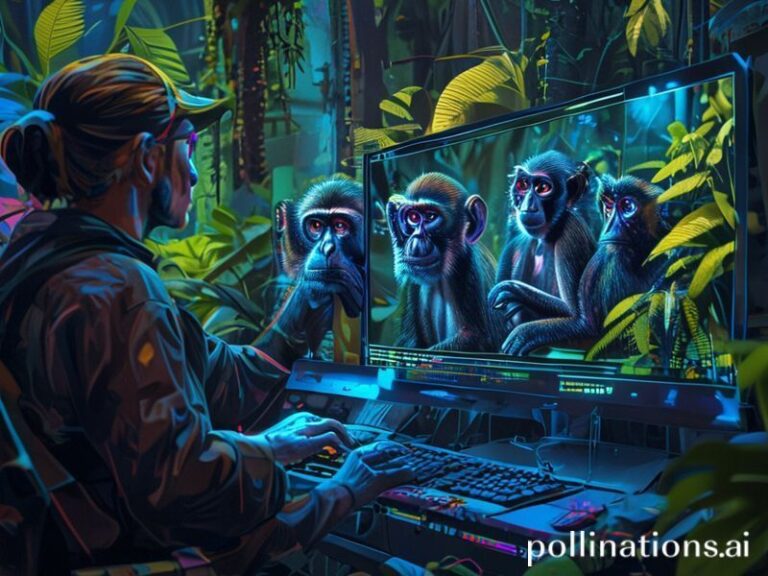
While AI has brought numerous benefits to wildlife conservation, it has also introduced new challenges. One such challenge is the proliferation of AI-generated images, which are complicating efforts to track escaped monkeys. These images, often created using generative adversarial networks (GANs) or other deep learning techniques, can be indistinguishable from real photographs.
### Impact on Wildlife Tracking
- **False Positives**: AI systems trained to identify monkeys from real images may struggle to distinguish between real and AI-generated images, leading to false positives.
- **Resource Allocation**: Conservationists may waste valuable time and resources investigating AI-generated images, diverting attention from real threats.
- **Misinformation**: The spread of AI-generated images can lead to misinformation, potentially affecting public perception and support for conservation efforts.
## Practical Insights and Industry Implications
### Addressing the Challenge
To mitigate the impact of AI-generated images on wildlife tracking, conservationists and researchers need to adopt a multi-faceted approach:
### Industry Implications
- **Ethical Considerations**: The use of AI in wildlife conservation raises ethical questions about the responsible use of technology and the potential for misuse.
- **Regulatory Frameworks**: Governments and international organizations may need to establish guidelines and regulations to ensure the ethical and effective use of AI in conservation efforts.
- **Public Awareness**: Raising awareness about the challenges and benefits of AI in wildlife conservation can help garner public support and funding for these initiatives.
## Future Possibilities
### Innovations on the Horizon
The future of AI in wildlife conservation looks promising, with several innovative technologies on the horizon:
- **Quantum Computing**: Quantum computers could revolutionize data processing, enabling even faster and more accurate analysis of wildlife data.
- **Edge AI**: Deploying AI algorithms directly on devices in the field can reduce latency and improve real-time decision-making.
- **Bioacoustics**: AI-powered bioacoustic monitoring can help track animal vocalizations, providing valuable insights into their behavior and habitat use.
### Long-Term Vision
The long-term vision for AI in wildlife conservation involves creating a seamless integration of technology and nature. By leveraging AI’s capabilities, conservationists can gain a deeper understanding of wildlife behavior, predict and mitigate threats, and ultimately ensure the survival of endangered species.
## Conclusion
AI’s impact on wildlife tracking is a double-edged sword. While it offers immense potential for improving conservation efforts, it also introduces new challenges, such as the proliferation of AI-generated images complicating the tracking of escaped monkeys. By adopting a proactive approach and leveraging innovative technologies, conservationists can mitigate these challenges and harness the full potential of AI to protect our planet’s biodiversity.