# The Sensory Gap Limiting AI Advancements: Exploring How the Lack of Sensory Capabilities is Holding AI Back
## Introduction
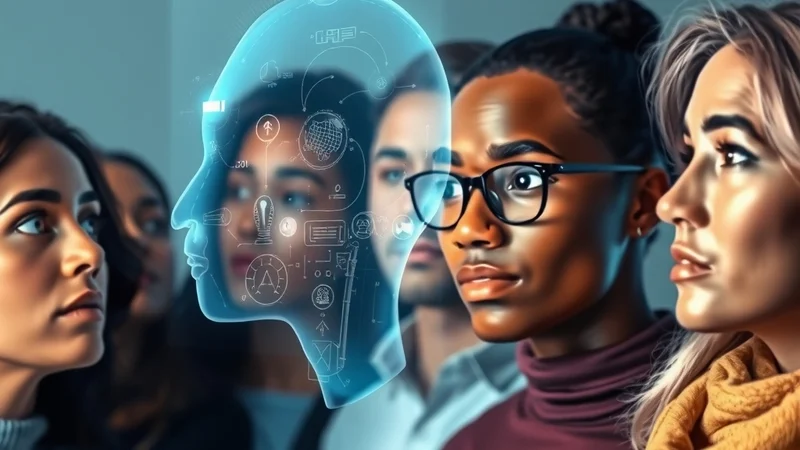
Artificial Intelligence (AI) has made remarkable strides in recent years, revolutionizing industries from healthcare to finance. However, despite these advancements, AI systems still lack the full spectrum of sensory capabilities that humans possess. The absence of senses like smell, touch, and even taste is creating a significant sensory gap that is limiting AI’s potential. This article delves into how these limitations are impacting AI advancements, the practical implications for various industries, and the future possibilities that could bridge this gap.
## The Current State of AI Sensory Capabilities
### Vision and Hearing: The Front-Runners
AI has made substantial progress in the realms of vision and hearing. Technologies like computer vision and natural language processing (NLP) have enabled AI to interpret visual data and understand human language with remarkable accuracy. These advancements have paved the way for applications such as autonomous vehicles, facial recognition, and virtual assistants.
### The Missing Senses: Smell, Touch, and Taste
Despite the progress in vision and hearing, AI’s ability to perceive and interpret other senses remains underdeveloped. The lack of sensory capabilities like smell, touch, and taste is a significant bottleneck in AI’s evolution. These senses play a crucial role in human interaction with the environment, and their absence in AI systems limits their ability to perform tasks that require a holistic understanding of the world.
## The Impact of the Sensory Gap
### Practical Implications for Industries
The sensory gap has far-reaching implications for various industries. For instance, in healthcare, the ability to detect and interpret smells could revolutionize disease diagnosis. Similarly, the sense of touch is essential for tasks like surgical robotics and prosthetics, where precision and sensitivity are paramount. The lack of these sensory capabilities hinders AI’s potential to fully integrate into these fields.
### Everyday Applications
In everyday applications, the absence of sensory capabilities limits AI’s ability to perform tasks that humans take for granted. For example, an AI system cannot determine the freshness of food by smell or assess the quality of a fabric by touch. These limitations highlight the need for AI systems to develop a more comprehensive sensory repertoire.
## Bridging the Sensory Gap
### Emerging Technologies
Several emerging technologies are poised to bridge the sensory gap in AI. Researchers are exploring ways to integrate smell and touch sensors into AI systems. For instance, electronic noses (e-noses) are being developed to detect and analyze volatile organic compounds, enabling AI to interpret smells. Similarly, advancements in haptic technology are paving the way for AI systems to perceive and respond to touch.
### Future Possibilities
The future of AI holds exciting possibilities for bridging the sensory gap. As technology advances, AI systems could develop the ability to perceive and interpret a wider range of sensory inputs. This could lead to more intuitive and responsive AI systems that can interact with the environment in a manner akin to human senses. The integration of multiple sensory inputs could also enhance AI’s decision-making capabilities, making it more adaptable and versatile.
## Industry Implications
### Healthcare
In healthcare, the integration of sensory capabilities into AI systems could revolutionize diagnostics and treatment. For example, AI systems equipped with the ability to detect and interpret smells could aid in the early diagnosis of diseases like cancer. Similarly, touch-sensitive AI systems could enhance surgical robotics, enabling more precise and delicate procedures.
### Manufacturing and Quality Control
In manufacturing, AI systems with enhanced sensory capabilities could improve quality control processes. For instance, AI systems equipped with touch sensors could detect defects in products with greater accuracy. Similarly, the ability to interpret smells could aid in detecting contaminants or spoilage in food production.
### Consumer Electronics
In the realm of consumer electronics, the integration of sensory capabilities into AI systems could lead to more intuitive and responsive devices. For example, AI-powered virtual assistants could interpret touch and gesture inputs, enhancing user interaction. Similarly, AI systems with the ability to detect and interpret smells could aid in home automation, such as detecting and responding to air quality issues.
## Practical Insights
### Challenges and Considerations
While the integration of sensory capabilities into AI systems holds great promise, it also presents several challenges. For instance, developing sensors that can accurately interpret complex sensory inputs is a significant technical hurdle. Additionally, ensuring the reliability and accuracy of these sensors in real-world applications is crucial.
### Ethical and Privacy Concerns
The integration of sensory capabilities into AI systems also raises ethical and privacy concerns. For example, AI systems equipped with the ability to detect and interpret smells could potentially infringe on individuals’ privacy. Similarly, the use of touch-sensitive AI systems in public spaces could raise concerns about consent and surveillance.
## Conclusion
The sensory gap in AI is a significant bottleneck that is limiting the potential of AI systems. While AI has made remarkable progress in vision and hearing, the lack of sensory capabilities like smell, touch, and taste is hindering its ability to perform tasks that require a holistic understanding of the environment. However, emerging technologies and future advancements hold the promise of bridging this gap, paving the way for more intuitive, responsive, and versatile AI systems. As AI continues to evolve, the integration of sensory capabilities will be a critical step in unlocking its full potential.