The Sensory Gap Limiting AI Advancements: Exploring How AI’s Lack of Sensory Perception Hampers Its Development
Artificial Intelligence (AI) has made remarkable strides in recent years, revolutionizing industries and transforming the way we live and work. From self-driving cars to virtual assistants, AI’s capabilities seem almost limitless. However, despite these advancements, AI still faces a significant hurdle: the sensory gap. This gap refers to the lack of sensory perception in AI systems, which hampers their ability to interact with the physical world in the same way humans do. In this article, we will explore the sensory gap, its implications for AI development, and the future possibilities that could bridge this divide.
The Nature of the Sensory Gap
Human sensory perception is a complex and multifaceted system that allows us to interact with our environment in real-time. We rely on our senses of sight, hearing, touch, taste, and smell to navigate the world, make decisions, and learn from our experiences. AI, on the other hand, primarily relies on data input from sensors and cameras, which provide a limited and often fragmented view of the world.
The sensory gap is not just about the quantity of data that AI systems can process. It’s about the quality and richness of that data. For example, a self-driving car may have access to vast amounts of data from its sensors, but it still struggles to interpret complex social cues, such as a pedestrian’s body language or a driver’s intent. Similarly, a virtual assistant may be able to understand and respond to voice commands, but it lacks the ability to perceive the emotional context of a conversation.
The Implications of the Sensory Gap
The sensory gap has significant implications for AI development and its applications in various industries. Here are some of the key challenges and limitations:
- Limited Adaptability: AI systems that lack sensory perception are less adaptable to new environments and situations. They rely on pre-programmed responses and may struggle to handle unexpected or novel scenarios.
- Reduced Autonomy: The lack of sensory perception limits the autonomy of AI systems. They require constant human oversight and intervention, which can be time-consuming and costly.
- Poor User Experience: AI systems that lack sensory perception often provide a poor user experience. They may struggle to understand user intent, leading to frustration and dissatisfaction.
- Safety Concerns: In applications such as self-driving cars and robotics, the lack of sensory perception can pose significant safety risks. AI systems may fail to detect and respond to potential hazards, leading to accidents and injuries.
Bridging the Sensory Gap
While the sensory gap presents significant challenges, there are also promising avenues for bridging this divide. Here are some of the key approaches and technologies that could help AI systems overcome their sensory limitations:
Multimodal Learning
Multimodal learning is an approach that combines data from multiple sensory inputs to improve AI’s understanding of the world. For example, a self-driving car could use data from its cameras, LiDAR, and radar sensors to create a more comprehensive and accurate representation of its environment. Similarly, a virtual assistant could use data from its microphone, camera, and touchscreen to better understand the context of a conversation.
Neuromorphic Engineering
Neuromorphic engineering is a field that aims to design and build artificial neural networks that mimic the architecture and functionality of the human brain. Neuromorphic chips, such as IBM’s TrueNorth and Intel’s Loihi, are designed to process sensory data in real-time, enabling AI systems to respond more quickly and accurately to their environment.
Embodied AI
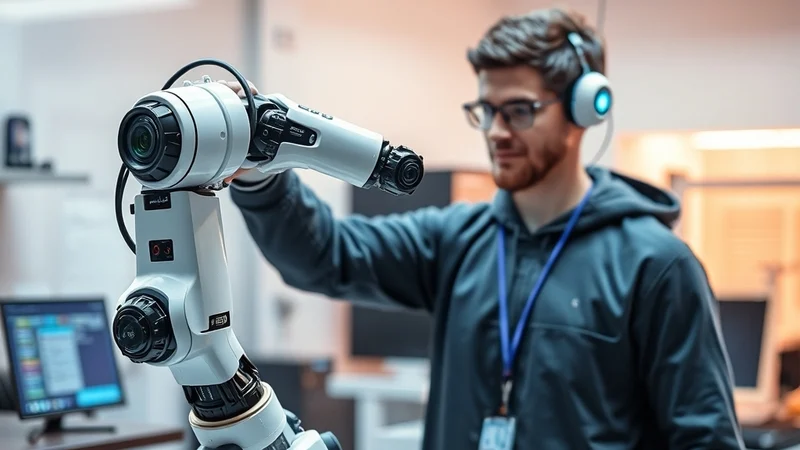
Embodied AI is an approach that integrates AI systems into physical robots or avatars, enabling them to interact with the world in a more natural and intuitive way. Embodied AI systems can use their sensors and actuators to explore their environment, learn from their experiences, and adapt to new situations.
Future Possibilities
As AI continues to evolve, the sensory gap is likely to narrow, opening up new possibilities for innovation and application. Here are some of the key trends and developments to watch:
- Advanced Sensors: The development of more advanced sensors, such as tactile sensors and chemical sensors, could enable AI systems to perceive and interact with the world in new ways.
- Edge Computing: The growth of edge computing, which involves processing data at the edge of the network, could enable AI systems to respond more quickly and accurately to their environment.
- Human-AI Collaboration: The increasing collaboration between humans and AI systems could help bridge the sensory gap, as humans can provide the sensory input and context that AI systems lack.
Conclusion
The sensory gap is a significant challenge for AI development, but it is not an insurmountable one. By leveraging multimodal learning, neuromorphic engineering, and embodied AI, we can help AI systems overcome their sensory limitations and unlock new possibilities for innovation and application. As AI continues to evolve, the sensory gap is likely to narrow, paving the way for a future where AI systems can interact with the world in a more natural and intuitive way.
In the meantime, it’s essential for AI developers and researchers to remain aware of the sensory gap and its implications. By taking a holistic and interdisciplinary approach to AI development, we can ensure that AI systems are designed to be adaptable, autonomous, and safe, and that they provide a positive user experience.
As we look to the future, the sensory gap presents both a challenge and an opportunity. By bridging this divide, we can unlock the full potential of AI and create a world where humans and machines can collaborate and coexist in harmony.