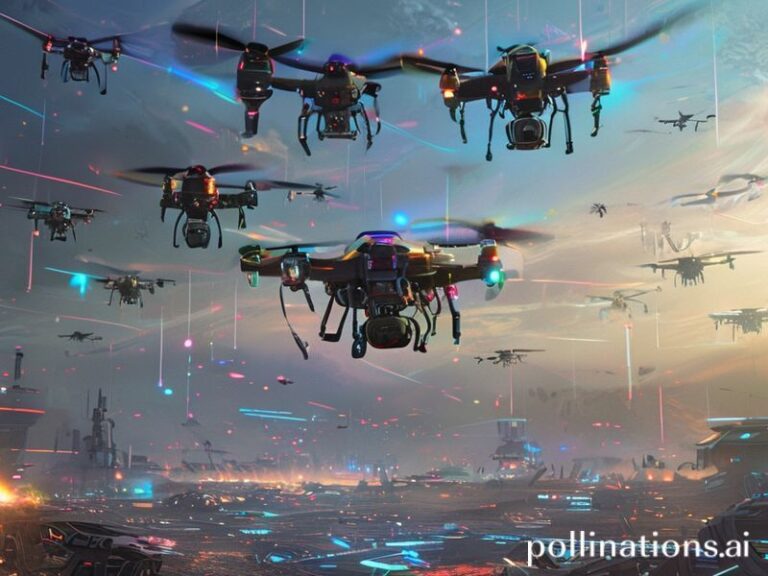
# The Rise of Autonomous Drone Swarms in Military Operations
## Introduction
The landscape of modern warfare is undergoing a seismic shift, driven by advancements in artificial intelligence (AI) and autonomous systems. Among the most transformative innovations are autonomous drone swarms, which are revolutionizing military operations. These swarms, composed of multiple unmanned aerial vehicles (UAVs) operating in a coordinated manner, leverage AI to perform complex tasks with unprecedented efficiency and precision.
## The Technology Behind Autonomous Drone Swarms
### AI and Machine Learning
At the heart of autonomous drone swarms lies AI and machine learning (ML). These technologies enable drones to:
- Process vast amounts of data in real-time
- Make autonomous decisions based on environmental inputs
- Adapt to changing conditions and threats
- Coordinate with other drones in the swarm
Machine learning algorithms, particularly reinforcement learning, allow drones to learn from their environments and improve their performance over time. This capability is crucial for missions that require adaptability and quick decision-making.
### Swarm Intelligence
Swarm intelligence is a key component of autonomous drone operations. Inspired by natural phenomena like bird flocks and fish schools, swarm intelligence enables drones to:
- Operate as a cohesive unit
- Share information and resources
- Execute complex maneuvers
- Achieve mission objectives with minimal human intervention
This decentralized approach enhances the resilience and flexibility of the swarm, making it less vulnerable to individual drone failures.
### Communication and Coordination
Effective communication is vital for the success of autonomous drone swarms. Drones use a combination of:
- Radio frequency (RF) communication
- Optical communication
- Mesh networking
These methods ensure that drones can exchange data and coordinate their actions seamlessly, even in contested environments.
## Practical Applications in Military Operations
### Reconnaissance and Surveillance
One of the primary applications of autonomous drone swarms is reconnaissance and surveillance. Swarms can:
- Cover large areas quickly and efficiently
- Provide real-time intelligence to ground forces
- Identify and track enemy movements
- Monitor strategic locations and infrastructure
Their ability to operate in swarms allows for comprehensive coverage and reduces the risk of detection.
### Electronic Warfare
Autonomous drone swarms are also instrumental in electronic warfare. They can:
- Jam enemy communications
- Disrupt radar systems
- Create electronic decoys
- Support cyber operations
By leveraging AI, drones can adapt their electronic warfare strategies in real-time, making them highly effective against evolving threats.
### Precision Strikes
In precision strike missions, autonomous drone swarms offer several advantages:
- Increased accuracy and reduced collateral damage
- Rapid response to time-sensitive targets
- Ability to engage multiple targets simultaneously
- Enhanced survivability through distributed operations
AI-driven targeting systems ensure that strikes are precise and minimize the risk to civilian populations.
## Industry Implications
### Cost Efficiency
Autonomous drone swarms offer significant cost advantages over traditional military assets. They:
- Reduce the need for expensive manned aircraft
- Lower operational and maintenance costs
- Increase mission success rates, reducing the need for repeat operations
These cost savings can be reinvested in other critical areas, enhancing overall military capability.
### Force Multiplication
By integrating autonomous drone swarms into military operations, forces can achieve a force multiplication effect. This means:
- Small teams can control large numbers of drones
- Human operators can focus on strategic decision-making
- Military assets can be deployed more effectively
This capability is particularly valuable in asymmetric warfare, where resources are often limited.
### Ethical and Legal Considerations
The rise of autonomous drone swarms also raises important ethical and legal questions. Key considerations include:
- Accountability for autonomous decisions
- Compliance with international humanitarian law
- Potential for misuse or unintended consequences
Addressing these issues is crucial for the responsible deployment of autonomous systems in military operations.
## Future Possibilities
### Advanced AI Capabilities
The future of autonomous drone swarms lies in advancing AI capabilities. Emerging technologies such as:
- Quantum computing
- Neuromorphic engineering
- Advanced sensor fusion
will enhance the performance and autonomy of drone swarms, enabling them to tackle even more complex missions.
### Integration with Other Systems
Future drone swarms will likely be integrated with other military systems, creating a networked battlefield. This integration could include:
- Ground-based autonomous vehicles
- Unmanned underwater vehicles (UUVs)
- Satellite and space-based assets
By working together, these systems can provide a comprehensive and coordinated approach to military operations.
### Human-Machine Collaboration
The future of autonomous drone swarms will also involve enhanced human-machine collaboration. This could include:
- Advanced human-machine interfaces
- Augmented reality (AR) and virtual reality (VR) training
- AI-assisted decision-making tools
These advancements will ensure that human operators remain an integral part of the decision-making process, even as drones become more autonomous.
## Conclusion
The rise of autonomous drone swarms represents a paradigm shift in military operations. By leveraging AI, machine learning, and swarm intelligence, these systems offer unprecedented capabilities in reconnaissance, electronic warfare, and precision strikes. As technology continues to evolve, the potential applications and benefits of autonomous drone swarms will only grow, reshaping the future of warfare.