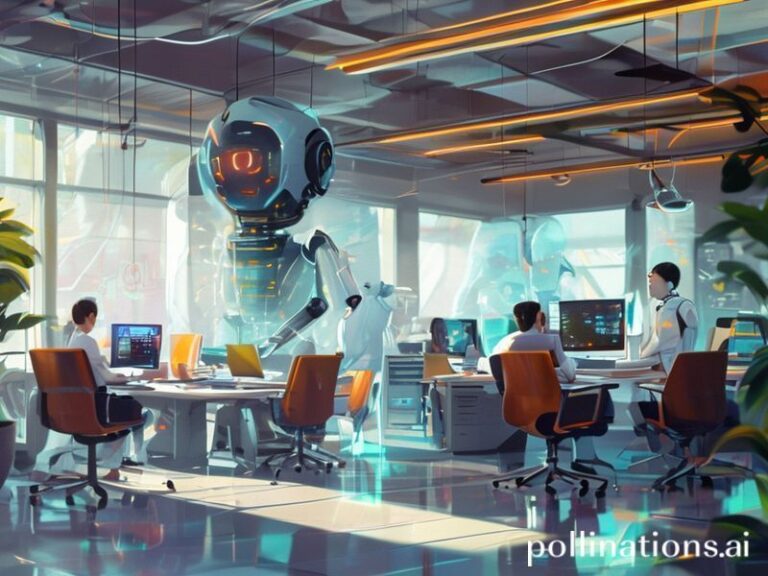
# The Impact of AI on Job Displacement: Understanding the Mechanics of How AI Quietly Replaces Jobs and Roles
## Introduction
Artificial Intelligence (AI) is transforming industries at an unprecedented pace, driving innovation and efficiency. However, this transformation comes with a significant side effect: job displacement. AI’s ability to automate tasks, analyze data, and make decisions is quietly reshaping the job market, replacing certain roles while creating new ones. Understanding the mechanics of this displacement is crucial for businesses, policymakers, and individuals navigating the future of work.
## The Mechanics of AI-Driven Job Displacement
### Automation of Routine Tasks
AI excels at automating routine and repetitive tasks. This includes data entry, customer service, and even some aspects of manufacturing. For example, chatbots and virtual assistants can handle customer inquiries, reducing the need for human customer service representatives. Similarly, robotic process automation (RPA) can perform data entry tasks more efficiently and accurately than humans.
### Enhanced Decision-Making Capabilities
AI’s ability to analyze vast amounts of data and make data-driven decisions is another factor contributing to job displacement. In fields like finance, AI algorithms can assess credit risk, detect fraud, and even make investment decisions. This reduces the need for human analysts and traders.
### Improved Efficiency and Productivity
AI systems can operate 24/7 without breaks, leading to increased productivity. For instance, AI-powered manufacturing robots can work continuously, reducing the need for human labor. This efficiency gain is a double-edged sword, as it benefits businesses but can lead to job losses in certain sectors.
## Industry Implications
### Healthcare
In healthcare, AI is being used for diagnostic purposes, analyzing medical images, and even suggesting treatment plans. While this improves patient outcomes, it also reduces the need for certain diagnostic roles. However, AI also creates new opportunities, such as roles in AI model training and maintenance.
### Finance
The finance sector is another area where AI is making significant inroads. AI algorithms can analyze market trends, execute trades, and manage portfolios. This automation reduces the need for human traders and analysts but creates new roles in AI model development and oversight.
### Retail
In retail, AI is used for inventory management, personalized marketing, and even autonomous checkout systems. This reduces the need for human cashiers and inventory managers. However, AI also enables new roles in data analysis and customer experience optimization.
## Practical Insights for Businesses and Individuals
### For Businesses
### For Individuals
## Future Possibilities
### New Job Creation
While AI displaces certain jobs, it also creates new ones. For example, roles in AI model development, data analysis, and AI ethics are emerging. The key is to ensure that the workforce is prepared to transition into these new roles.
### Enhanced Human-AI Collaboration
The future of work is likely to involve enhanced human-AI collaboration. AI can augment human capabilities, leading to increased productivity and innovation. For instance, AI can assist doctors in diagnosing diseases, enabling them to focus on patient care.
### Policy and Education Reforms
To mitigate the impact of AI-driven job displacement, policymakers and educators must work together. This includes reforming education systems to focus on STEM (Science, Technology, Engineering, and Mathematics) skills and providing lifelong learning opportunities.
## Conclusion
AI’s impact on job displacement is a complex issue that requires a nuanced understanding. While AI automates certain tasks and roles, it also creates new opportunities and enhances human capabilities. The key to navigating this transformation lies in continuous learning, adaptability, and ethical AI implementation. By embracing these principles, businesses and individuals can thrive in an AI-driven future.