# AI Agents Autonomously Develop a Web Browser: Cursor’s Experiment and Its Implications for Software Development
## Introduction
In a groundbreaking experiment, Cursor, a cutting-edge AI research lab, demonstrated the potential of AI agents to autonomously develop a fully functional web browser. This experiment, which utilized a combination of large language models (LLMs) and reinforcement learning, showcases the remarkable capabilities of AI in software development and hints at a future where AI agents could revolutionize the way we build and maintain software.
## The Experiment: How AI Agents Built a Web Browser
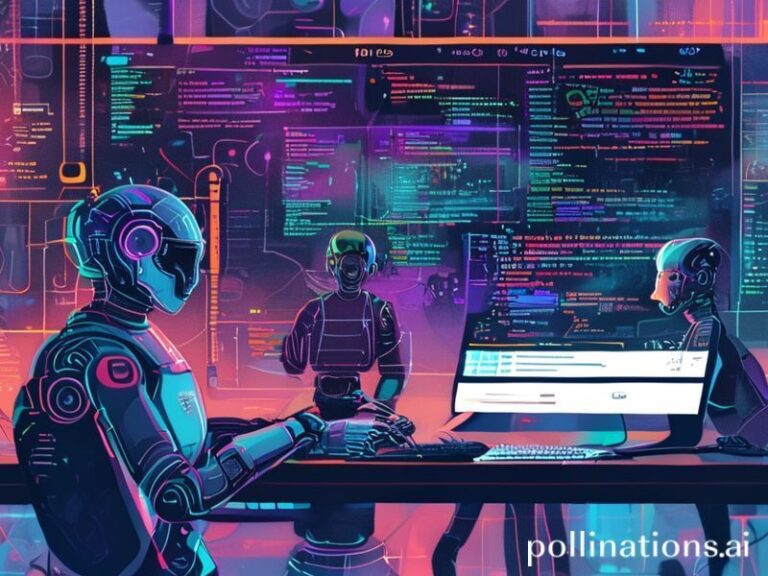
Cursor’s experiment involved a team of AI agents working collaboratively to design, code, and test a web browser. The agents were given a set of high-level objectives and constraints, such as the need for the browser to support modern web standards and be user-friendly. The agents then autonomously broke down these objectives into smaller tasks, assigned tasks to each other, and worked together to complete them.
### Key Components of the Experiment
## Practical Insights: What This Means for Software Development
Cursor’s experiment provides valuable insights into the future of software development. Here are some key takeaways:
### 1. AI Agents Can Handle Complex Tasks
The fact that AI agents were able to autonomously develop a web browser, a complex piece of software, demonstrates that AI is capable of handling tasks that were previously thought to be the exclusive domain of human developers. This has significant implications for the software development industry, as it suggests that AI could be used to automate a wide range of development tasks.
### 2. AI Agents Can Work Collaboratively
The collaborative nature of the experiment highlights the potential for AI agents to work together in a team, much like human developers. This could lead to more efficient and effective development processes, as AI agents could divide tasks among themselves, share code, and provide feedback.
### 3. AI Agents Can Improve Over Time
The use of reinforcement learning in the experiment shows that AI agents can improve their performance over time. This means that as AI agents are used more and more in software development, they could become increasingly proficient, leading to higher-quality software.
## Industry Implications: How This Could Change the Software Development Landscape
Cursor’s experiment has significant implications for the software development industry. Here are some ways in which this could change the landscape:
### 1. Increased Automation in Software Development
As AI agents become more capable, we could see a shift towards increased automation in software development. This could lead to faster development cycles, lower costs, and higher-quality software. However, it could also lead to job displacement for some developers, as AI agents take over tasks that were previously done by humans.
### 2. New Roles for Developers
While AI agents could automate many tasks in software development, they are unlikely to replace human developers entirely. Instead, we could see a shift towards new roles for developers, such as AI trainer, AI supervisor, or AI-human collaboration specialist. These roles would involve working with AI agents to ensure that they are performing tasks correctly and effectively.
### 3. New Tools and Platforms
The success of Cursor’s experiment could lead to the development of new tools and platforms that enable AI agents to work more effectively in software development. These tools could include AI-powered code editors, AI-powered testing frameworks, and AI-powered project management tools.
## Future Possibilities: What’s Next for AI in Software Development
The future of AI in software development is bright, with many exciting possibilities on the horizon. Here are some potential developments to watch for:
### 1. AI Agents That Can Learn from Human Developers
One exciting possibility is the development of AI agents that can learn from human developers. This could involve AI agents observing human developers as they work, and then using this information to improve their own performance. This could lead to AI agents that are even more proficient than human developers in certain tasks.
### 2. AI Agents That Can Work Across Different Programming Languages and Frameworks
Another possibility is the development of AI agents that can work across different programming languages and frameworks. This could involve AI agents that can understand and generate code in multiple languages, as well as AI agents that can work with different frameworks and libraries. This could make AI agents even more versatile and useful in software development.
### 3. AI Agents That Can Work on Larger and More Complex Projects
Finally, we could see the development of AI agents that can work on larger and more complex projects. This could involve AI agents that can manage large teams of other AI agents, as well as AI agents that can work on projects that span multiple domains or disciplines. This could lead to the development of even more complex and sophisticated software systems.
## Conclusion
Cursor’s experiment is a significant milestone in the development of AI for software development. It demonstrates the potential for AI agents to autonomously develop complex software systems, and highlights the many ways in which AI could transform the software development industry. As AI continues to advance, we can expect to see even more exciting developments in this area, leading to a future where AI and human developers work together to build the software systems of tomorrow.