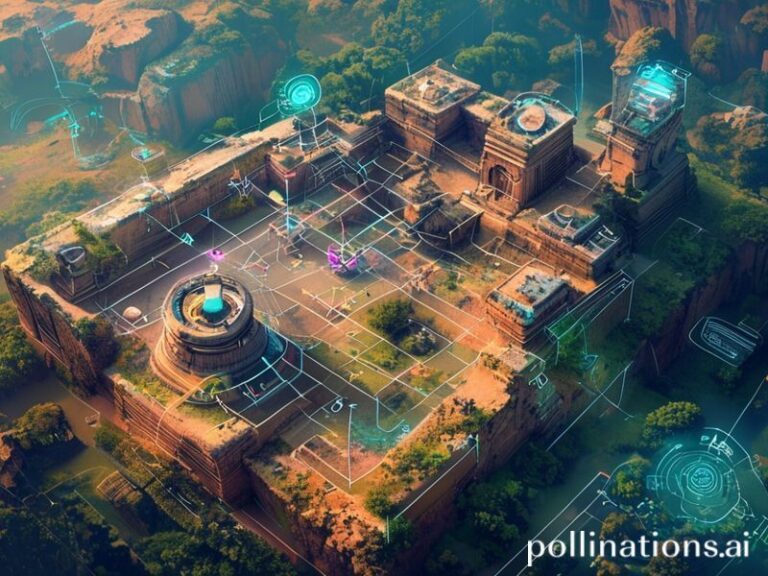
# AI Uncovers Ancient Mysteries Through Satellite Analysis: How Machine Learning is Revolutionizing Archaeology
## The Dawn of a New Era in Archaeology
Archaeology, a field traditionally rooted in manual excavation and painstaking analysis, is undergoing a technological renaissance. At the forefront of this transformation is artificial intelligence (AI), particularly machine learning (ML), which is enabling researchers to uncover ancient mysteries with unprecedented efficiency and accuracy. By leveraging satellite imagery and advanced algorithms, AI is revolutionizing the way we explore and understand our past.
## The Power of Satellite Analysis
Satellite imagery has long been a valuable tool for archaeologists, providing a bird’s-eye view of landscapes that can reveal hidden patterns and structures. However, the sheer volume of data generated by satellites makes manual analysis a daunting task. This is where AI steps in.
### How AI Enhances Satellite Analysis
AI algorithms, particularly those based on deep learning, can process vast amounts of satellite data to identify subtle patterns and anomalies that might indicate archaeological sites. These algorithms are trained on labeled datasets of known archaeological sites, allowing them to recognize features such as:
- Geometric patterns that suggest human activity
- Changes in vegetation that could indicate buried structures
- Thermal signatures that reveal underground anomalies
By automating the analysis of satellite imagery, AI significantly reduces the time and effort required to identify potential sites for further investigation.
## Practical Insights and Industry Implications
The integration of AI into archaeology has far-reaching implications for the field and beyond. Here are some key insights and implications:
### Faster and More Accurate Site Discovery
Traditional methods of site discovery often involve extensive fieldwork and guesswork. AI-driven satellite analysis accelerates this process by pinpointing areas of interest with high precision. This not only saves time but also reduces the risk of damaging sites through unnecessary excavation.
### Preservation of Cultural Heritage
By identifying and documenting archaeological sites more efficiently, AI helps in the preservation of cultural heritage. Governments and organizations can prioritize the protection of these sites, ensuring that they are not lost to development or natural erosion.
### Collaborative Research
AI facilitates collaboration among researchers worldwide. By sharing datasets and algorithms, archaeologists can pool their resources and expertise to uncover new insights. This collaborative approach can lead to breakthroughs that would be impossible for any single researcher or institution to achieve alone.
### Economic and Educational Benefits
The economic benefits of AI in archaeology are substantial. By attracting tourists and researchers, identified sites can boost local economies. Additionally, the educational value of these discoveries cannot be overstated. AI-driven archaeology provides a wealth of data that can be used to educate the public and inspire future generations of researchers.
## Future Possibilities
The potential of AI in archaeology is vast and still largely untapped. As technology continues to evolve, we can expect even more innovative applications. Here are some exciting possibilities:
### Integration with Other Technologies
AI can be combined with other emerging technologies, such as drones and LiDAR (Light Detection and Ranging), to create a comprehensive archaeological toolkit. Drones can capture high-resolution images and 3D models of sites, while LiDAR can penetrate dense vegetation to reveal hidden structures. AI can then analyze this data to provide a more complete picture of archaeological sites.
### Predictive Modeling
AI algorithms can be used to predict the location of undiscovered sites based on historical patterns and environmental factors. This predictive modeling can guide researchers to areas that have not yet been explored, increasing the chances of groundbreaking discoveries.
### Virtual Reconstruction
AI can help in the virtual reconstruction of ancient sites, allowing researchers and the public to explore these sites in immersive detail. By analyzing fragments of artifacts and structures, AI can generate 3D models that provide insights into the original appearance and function of these sites.
## Challenges and Considerations
While the benefits of AI in archaeology are immense, there are also challenges and ethical considerations to address:
### Data Privacy and Security
The use of satellite imagery and other data sources raises concerns about privacy and security. It is essential to ensure that data is used responsibly and that the rights of local communities are respected.
### Ethical Use of AI
AI algorithms must be designed and used ethically. This includes ensuring that the data used to train these algorithms is representative and unbiased, and that the results are interpreted with cultural sensitivity.
### Collaboration with Local Communities
Engaging with local communities is crucial for the ethical and effective use of AI in archaeology. By involving local experts and stakeholders, researchers can ensure that their work is respectful and beneficial to the communities in which they operate.
## Conclusion
AI is revolutionizing archaeology by unlocking the secrets of the past with unprecedented speed and accuracy. Through satellite analysis and advanced algorithms, researchers can uncover ancient mysteries that would otherwise remain hidden. The implications of this technological leap are profound, offering faster site discovery, better preservation of cultural heritage, and new opportunities for collaboration and education.
As AI continues to evolve, its potential in archaeology will only grow. By embracing this technology responsibly and ethically, we can ensure that the benefits are shared by all, and that the rich tapestry of our past is preserved for future generations to explore and appreciate.