# DeepMind’s Breakthrough in Decoding the ‘Dark Genome’: Understanding the Implications of Reading the 98% of DNA That Controls Everything
## Introduction
In a groundbreaking development, DeepMind, the London-based AI powerhouse, has made significant strides in deciphering the “dark genome,” the 98% of human DNA that does not code for proteins but plays a crucial role in regulating gene expression. This advancement, powered by artificial intelligence and machine learning, promises to revolutionize our understanding of genetics, medicine, and human biology.
## The Dark Genome: A Mysterious Frontier
### What is the Dark Genome?
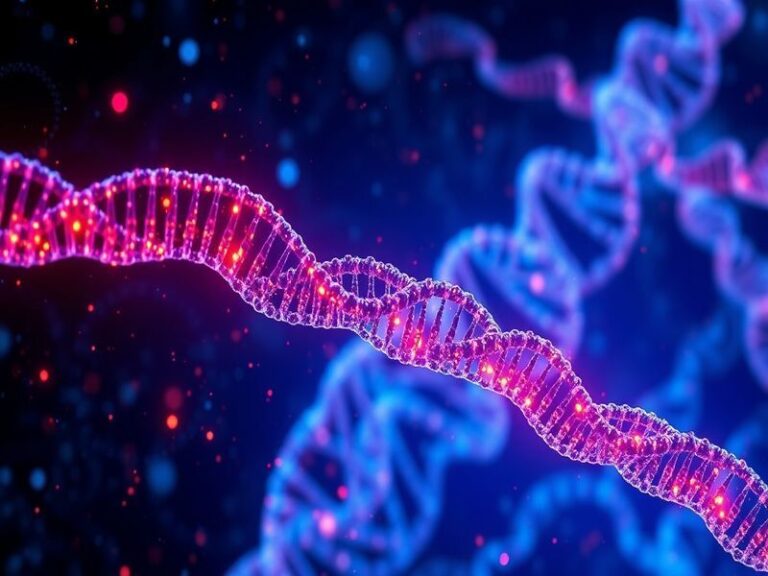
The human genome is composed of approximately 3 billion base pairs of DNA. Only about 2% of this DNA codes for proteins, which are the building blocks of life. The remaining 98%, often referred to as the “dark genome” or non-coding DNA, was once considered “junk DNA” with no apparent function. However, recent research has shown that this non-coding DNA plays a vital role in regulating gene expression, influencing various biological processes, and contributing to human health and disease.
### The Challenge of Decoding Non-Coding DNA
Decoding the dark genome presents a formidable challenge due to its complexity and the lack of a clear blueprint for understanding its function. Traditional methods of genetic analysis have focused on the protein-coding regions of the genome, leaving the non-coding regions largely unexplored. This is where AI and machine learning come into play, offering powerful tools to unravel the mysteries of the dark genome.
## DeepMind’s AI-Powered Breakthrough
### AlphaFold and Beyond
DeepMind’s AlphaFold, an AI system designed to predict the three-dimensional structure of proteins, has already made significant contributions to the field of genomics. Building on this success, DeepMind has developed new AI models specifically tailored to decode the non-coding regions of the genome. These models leverage deep learning techniques to analyze vast amounts of genetic data and identify patterns and regulatory elements within the dark genome.
### The Role of Machine Learning
Machine learning algorithms are particularly well-suited for the task of decoding the dark genome. These algorithms can process and analyze large datasets, identifying complex patterns and relationships that would be impossible for humans to discern. By training these algorithms on known regulatory elements and their functions, researchers can develop models that can predict the regulatory potential of non-coding DNA sequences with high accuracy.
## Practical Insights and Industry Implications
### Advancing Medical Research
The ability to decode the dark genome has profound implications for medical research. Understanding the regulatory elements within non-coding DNA can provide insights into the mechanisms underlying various diseases, including cancer, neurological disorders, and genetic diseases. This knowledge can pave the way for the development of new diagnostic tools, therapeutic targets, and personalized medicine approaches.
### Drug Discovery and Development
The pharmaceutical industry stands to benefit significantly from the decoding of the dark genome. By identifying regulatory elements that influence gene expression, researchers can develop drugs that target these elements, modulating gene activity to treat diseases. AI-powered tools can accelerate the drug discovery process, reducing the time and cost associated with bringing new therapies to market.
### Agricultural Innovations
Beyond human health, the decoding of the dark genome has applications in agriculture. Understanding the regulatory elements in plant genomes can lead to the development of crops with improved traits, such as drought resistance, disease resistance, and higher yields. This can help address global food security challenges and support sustainable agriculture practices.
## Future Possibilities
### Personalized Medicine
One of the most exciting prospects of decoding the dark genome is the potential for personalized medicine. By analyzing an individual’s non-coding DNA, healthcare providers can identify regulatory elements that influence their susceptibility to diseases and their response to treatments. This information can be used to develop personalized treatment plans tailored to the unique genetic makeup of each patient.
### Synthetic Biology
The decoding of the dark genome also opens up new avenues in synthetic biology. By understanding the regulatory elements within non-coding DNA, researchers can design and engineer synthetic genomes with specific functions. This can lead to the development of new biotechnological applications, such as biofuels, biomaterials, and biosensors.
### Ethical Considerations
While the decoding of the dark genome holds immense promise, it also raises ethical considerations. The use of AI and machine learning in genetic research must be conducted responsibly, ensuring that the benefits are widely shared and that privacy and security concerns are addressed. It is crucial to establish guidelines and regulations to govern the use of genetic data and AI technologies in this field.
## Conclusion
DeepMind’s breakthrough in decoding the dark genome represents a significant milestone in the field of genomics. By leveraging the power of AI and machine learning, researchers can unlock the secrets of the non-coding regions of the genome, paving the way for advancements in medicine, agriculture, and biotechnology. As we continue to explore the mysteries of the dark genome, it is essential to consider the ethical implications and ensure that these technologies are used responsibly to benefit society as a whole.