# AI-Powered Meeting Assistants: Beyond Simple Transcription
## The Evolution of Meeting Assistants
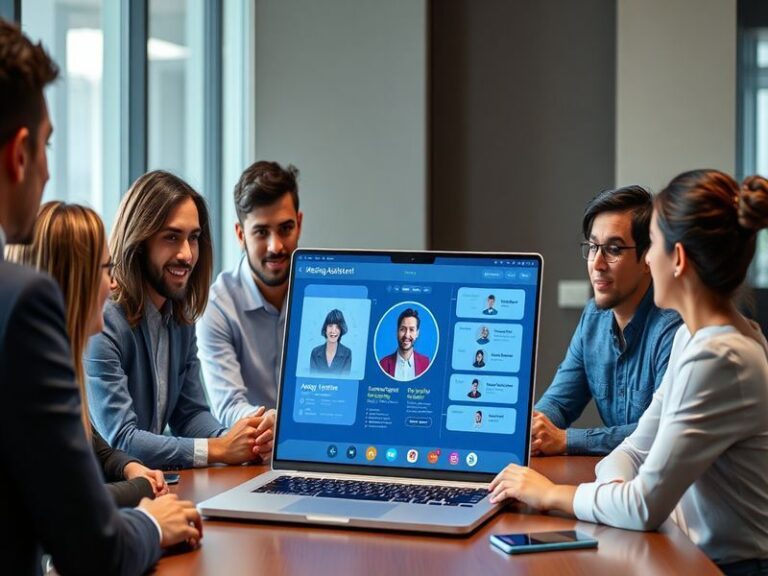
In the fast-paced world of business, meetings are a staple. However, the traditional approach to meeting notes—manual transcription and summarization—is often time-consuming and inefficient. Enter AI-powered meeting assistants like Granola, which are revolutionizing the way we capture, process, and act on meeting insights.
### From Transcription to Insights
AI-powered meeting assistants are no longer limited to simple transcription. These tools leverage advanced natural language processing (NLP) and machine learning algorithms to transform raw meeting data into actionable insights. Here’s how:
- Real-time Transcription: Advanced speech recognition technology converts spoken words into text with high accuracy, even in noisy environments.
- Contextual Understanding: AI can differentiate between action items, decisions, and general discussion, providing structured outputs.
- Sentiment Analysis: By analyzing tone and language, AI can gauge the mood of the meeting, identifying areas of agreement or conflict.
- Automated Summarization: AI can distill hours of meeting content into concise summaries, highlighting key points and action items.
## Practical Insights and Applications
### Enhancing Productivity
AI-powered meeting assistants can significantly enhance productivity by automating the tedious task of note-taking. This allows participants to focus on the discussion rather than scribbling notes. For example:
- Action Item Tracking: Tools like Granola can automatically identify and track action items, assigning them to the appropriate team members and setting deadlines.
- Meeting Summaries: AI-generated summaries can be shared with stakeholders who couldn’t attend, ensuring everyone is on the same page.
- Time Management: By analyzing meeting patterns, AI can suggest more efficient meeting structures and durations.
### Industry Implications
The impact of AI-powered meeting assistants extends across various industries:
- Healthcare: Medical professionals can use these tools to transcribe patient consultations, ensuring accurate records and freeing up time for patient care.
- Legal: Lawyers can automate the transcription of client meetings and court proceedings, reducing administrative overhead.
- Education: Educators can use AI to transcribe lectures and meetings, making them accessible to students and colleagues.
- Corporate: Businesses can streamline decision-making processes by ensuring that meeting insights are quickly and accurately documented.
## Future Possibilities
The future of AI-powered meeting assistants is bright, with several exciting developments on the horizon:
- Enhanced Personalization: AI will become more adept at understanding individual preferences and tailoring outputs accordingly.
- Integration with Other Tools: Seamless integration with project management software, CRM systems, and collaboration tools will further streamline workflows.
- Predictive Analytics: AI will be able to predict meeting outcomes based on historical data, helping teams prepare more effectively.
- Multilingual Support: Advanced NLP will enable real-time translation and transcription in multiple languages, breaking down language barriers.
## Challenges and Considerations
While the benefits are substantial, there are also challenges to consider:
- Data Privacy: Ensuring the security and privacy of sensitive meeting data is paramount. Companies must choose tools that comply with data protection regulations.
- Accuracy: While AI has made significant strides, there is still room for improvement in accuracy, especially in complex or technical discussions.
- Adoption: Resistance to change can be a barrier. Organizations must invest in training and change management to ensure successful adoption.
## Conclusion
AI-powered meeting assistants like Granola are transforming the way we conduct and document meetings. By moving beyond simple transcription to provide actionable insights, these tools are enhancing productivity, improving decision-making, and streamlining workflows across industries. As AI continues to evolve, the potential for these tools will only grow, making them an indispensable part of the modern workplace.