# AI Takes the Wheel: Autonomous Planning on Mars: How Claude’s Mission Planning Marks a Milestone in Space Exploration
## The Dawn of a New Era in Space Exploration
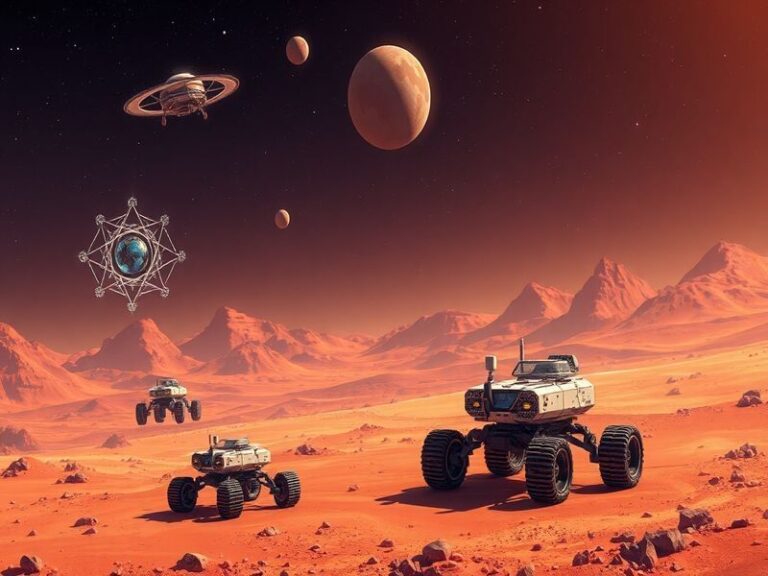
The landscape of space exploration is undergoing a revolutionary transformation, driven by advancements in artificial intelligence (AI) and machine learning (ML). At the forefront of this evolution is Claude, an AI system developed by NASA, which has recently demonstrated its capability to autonomously plan missions on Mars. This milestone marks a significant leap forward in our ability to explore distant planets, reducing reliance on Earth-based mission control and enabling more efficient, flexible, and responsive space exploration.
## The Role of AI in Space Exploration
### Autonomous Decision-Making
Traditionally, space missions have relied heavily on pre-programmed instructions and real-time communication with Earth-based control centers. However, the vast distances involved, particularly in missions to Mars, introduce significant communication delays. These delays can range from a few minutes to over 20 minutes, making real-time control impractical. AI systems like Claude are designed to overcome these challenges by enabling autonomous decision-making.
Claude’s ability to autonomously plan and execute missions is a game-changer. By leveraging advanced algorithms and real-time data analysis, Claude can make critical decisions on the fly, such as adjusting flight paths, selecting landing sites, and managing resource allocation. This autonomy not only enhances mission efficiency but also ensures the safety and success of the mission.
### Machine Learning and Adaptive Planning
Machine learning plays a pivotal role in Claude’s capabilities. By analyzing vast amounts of data from previous missions, simulations, and real-time sensor inputs, Claude can adapt its plans dynamically. This adaptive planning is crucial in the unpredictable environment of Mars, where conditions can change rapidly.
For instance, Claude can assess terrain data, weather patterns, and other environmental factors to optimize mission parameters. It can also learn from past experiences, continuously improving its decision-making processes. This iterative learning process is a hallmark of modern AI systems and is instrumental in achieving mission success.
## Practical Insights and Industry Implications
### Enhanced Mission Efficiency
The integration of AI into space mission planning offers numerous practical benefits. One of the most significant advantages is enhanced mission efficiency. By automating routine tasks and decision-making processes, AI systems like Claude can reduce the workload on human operators, allowing them to focus on more complex and strategic aspects of the mission.
Moreover, AI-driven planning can optimize resource utilization, ensuring that mission objectives are achieved with minimal waste. This is particularly important in space missions, where resources are limited and every decision can have a significant impact on the mission’s outcome.
### Cost Reduction and Risk Mitigation
Another key benefit of AI in space exploration is cost reduction. Traditional mission planning involves extensive human labor, which can be both time-consuming and expensive. By automating these processes, AI systems can significantly reduce operational costs.
Additionally, AI-driven planning can mitigate risks by identifying potential hazards and devising strategies to avoid them. For example, Claude can analyze data from Mars rovers and orbiters to detect potential obstacles, such as rocky terrain or dust storms, and adjust the mission plan accordingly. This proactive approach can prevent mission failures and ensure the safety of the spacecraft and its payload.
### Future Possibilities and Expanding Horizons
The successful deployment of AI in Mars mission planning opens up a world of possibilities for future space exploration. As AI technology continues to evolve, we can expect to see even more advanced systems capable of handling increasingly complex missions.
One exciting prospect is the use of AI in the exploration of other planets and moons within our solar system. Systems like Claude could be adapted to plan and execute missions to Europa, Titan, or even distant exoplanets. The ability to autonomously navigate and explore these environments would significantly expand our understanding of the universe.
Furthermore, AI could play a crucial role in the establishment of human colonies on other planets. Autonomous systems could manage life-support systems, resource management, and even construction processes, ensuring the sustainability and success of these colonies.
## Challenges and Considerations
While the potential of AI in space exploration is immense, there are also challenges and considerations that need to be addressed. One of the primary concerns is the reliability and robustness of AI systems. Space missions are inherently high-risk, and any failure in the AI system could have catastrophic consequences.
To mitigate these risks, extensive testing and validation are essential. AI systems must be rigorously tested in simulated environments and under various conditions to ensure their reliability. Additionally, redundant systems and fail-safes should be implemented to handle any potential failures.
Another consideration is the ethical implications of AI-driven decision-making. As AI systems become more autonomous, questions arise about the ethical framework governing their decisions. Ensuring that AI systems align with human values and ethical standards is crucial, particularly in missions that involve significant risks and resources.
## Conclusion
The successful deployment of Claude’s autonomous mission planning on Mars represents a significant milestone in space exploration. By leveraging the power of AI and machine learning, we are entering a new era of exploration that is more efficient, flexible, and responsive. The practical insights and industry implications of this advancement are profound, offering enhanced mission efficiency, cost reduction, and risk mitigation.
As we look to the future, the possibilities are endless. AI will continue to play a pivotal role in expanding our horizons, enabling us to explore distant planets, establish human colonies, and unlock the mysteries of the universe. However, it is essential to address the challenges and ethical considerations associated with AI-driven decision-making to ensure the responsible and sustainable use of this transformative technology.
The journey to Mars and beyond is just beginning, and AI is at the helm, guiding us into a new era of discovery and innovation.