AI in Cancer Detection: A Game-Changer in Healthcare
Artificial Intelligence (AI) is revolutionizing numerous industries, and healthcare is no exception. One of the most promising applications of AI in healthcare is in the field of cancer detection. AI algorithms are proving to be highly effective in improving cancer detection rates, reducing radiologist workloads, and ultimately saving lives. This article explores how AI is transforming cancer detection, the practical insights gained from recent advancements, industry implications, and future possibilities.
How AI is Improving Cancer Detection
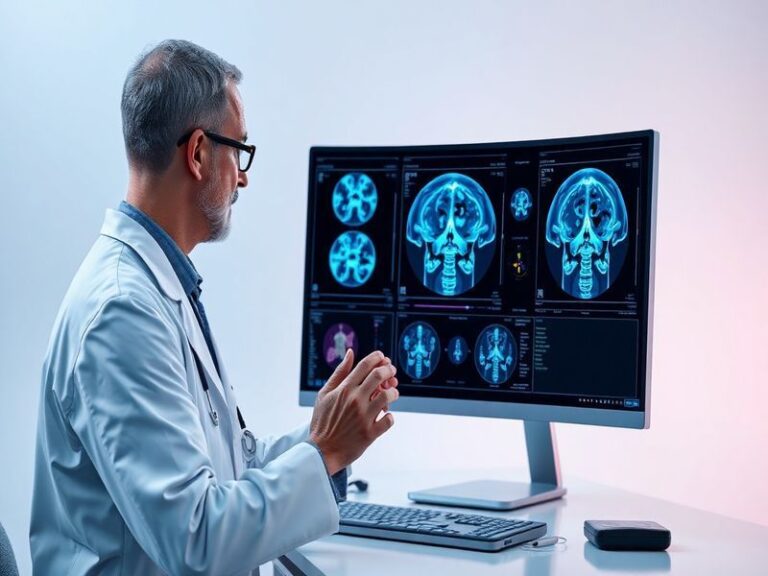
AI algorithms, particularly those based on machine learning (ML) and deep learning (DL), are being trained to analyze medical images with remarkable accuracy. These algorithms can detect subtle patterns and anomalies that might be missed by the human eye. Here are some key ways AI is enhancing cancer detection:
- Early Detection: AI can identify cancerous cells at an earlier stage, significantly improving the chances of successful treatment. For instance, AI algorithms have shown promise in detecting breast cancer in mammograms with high accuracy.
- Reducing False Positives: AI can help reduce the number of false positives, which can lead to unnecessary stress and additional medical procedures for patients.
- Enhancing Radiologist Performance: AI serves as a valuable tool for radiologists, helping them to make more accurate and timely diagnoses.
- Handling Large Volumes of Data: AI can quickly analyze vast amounts of medical data, making it an invaluable asset in busy healthcare settings.
Practical Insights and Industry Implications
The integration of AI into cancer detection has significant practical implications for the healthcare industry. Here are some key insights:
- Increased Efficiency: AI can automate routine tasks, allowing radiologists to focus on more complex cases. This not only improves efficiency but also enhances the overall quality of care.
- Cost Savings: Early detection and more accurate diagnoses can lead to significant cost savings for healthcare systems. Treating cancer at an early stage is generally less expensive than treating advanced stages of the disease.
- Improved Patient Outcomes: By enabling earlier and more accurate detection, AI can lead to better patient outcomes and improved survival rates.
- Regulatory and Ethical Considerations: As AI becomes more prevalent in healthcare, there will be a need for robust regulatory frameworks to ensure the safety, efficacy, and ethical use of these technologies.
Future Possibilities
The future of AI in cancer detection is bright, with several exciting possibilities on the horizon:
- Personalized Medicine: AI could help tailor treatment plans to individual patients based on their unique genetic makeup and medical history.
- Integration with Other Technologies: AI could be combined with other emerging technologies, such as wearable devices and telemedicine, to create a more holistic approach to cancer detection and treatment.
- Global Impact: AI has the potential to improve cancer detection and treatment in underserved regions, where access to specialized medical care is limited.
- Continuous Learning: AI algorithms can continuously learn and improve over time, becoming even more accurate and reliable in the future.
Challenges and Considerations
While the potential of AI in cancer detection is immense, there are also challenges and considerations that need to be addressed:
- Data Privacy and Security: The use of AI in healthcare involves the handling of sensitive patient data, raising concerns about privacy and security.
- Bias and Fairness: AI algorithms can inadvertently perpetuate biases present in the training data, leading to disparities in healthcare outcomes.
- Integration with Existing Systems: Integrating AI into existing healthcare systems can be complex and may require significant investments in infrastructure and training.
- Regulatory Approval: Obtaining regulatory approval for AI-based medical devices can be a lengthy and challenging process.
Conclusion
AI is poised to revolutionize cancer detection, offering numerous benefits for patients, healthcare providers, and the industry as a whole. While challenges remain, the potential of AI in improving cancer detection rates and reducing radiologist workloads is undeniable. As AI technology continues to evolve, we can expect even more innovative applications in the fight against cancer.
The future of AI in healthcare is not just about technological advancements; it’s about transforming lives. By harnessing the power of AI, we can make significant strides in early detection, accurate diagnosis, and effective treatment of cancer, ultimately saving countless lives.