# AI in Cancer Detection: How AI is Improving Early Detection Rates
## Introduction
Artificial Intelligence (AI) is revolutionizing the field of healthcare, particularly in the early detection of cancer. The ability to identify cancerous cells at an early stage can significantly improve treatment outcomes and save lives. AI technologies, including machine learning (ML) and deep learning (DL), are playing a pivotal role in enhancing the accuracy and efficiency of cancer detection. This article explores how AI is transforming cancer detection, the practical insights and industry implications, and the future possibilities of this innovative technology.
## The Role of AI in Cancer Detection
### Enhancing Diagnostic Accuracy
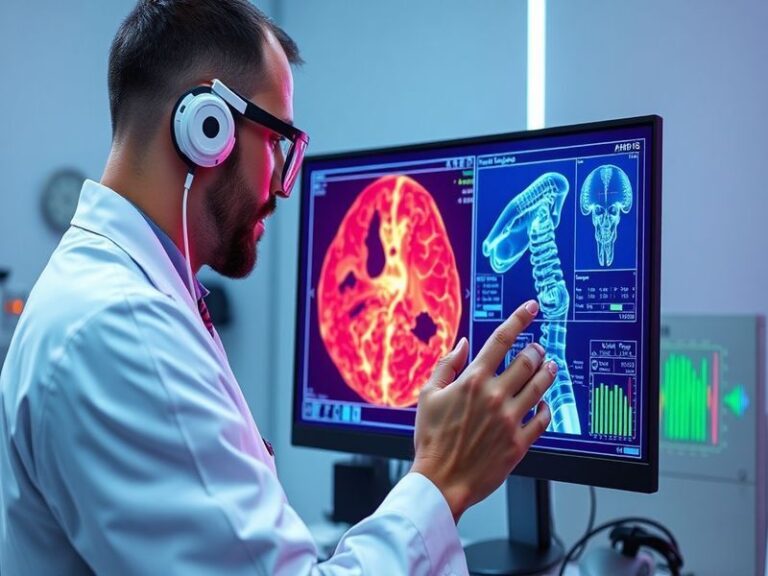
AI algorithms are trained on vast datasets of medical images, such as X-rays, MRIs, and CT scans, to identify patterns and anomalies that may indicate the presence of cancer. These algorithms can analyze images with a level of precision that surpasses human capabilities, leading to earlier and more accurate diagnoses.
For instance, AI-powered tools like Google’s DeepMind Health have demonstrated the ability to detect breast cancer in mammograms with a high degree of accuracy. These tools can identify subtle changes in tissue that might be missed by human radiologists, thereby improving early detection rates.
### Speeding Up the Diagnostic Process
Traditional cancer detection methods can be time-consuming and labor-intensive. AI technologies streamline the diagnostic process by automating the analysis of medical images, reducing the time required for diagnosis. This not only speeds up the treatment process but also allows healthcare providers to focus on other critical aspects of patient care.
AI algorithms can process thousands of images in a matter of minutes, providing rapid and reliable results. This efficiency is crucial in the early stages of cancer, where timely intervention can make a significant difference in patient outcomes.
### Personalized Medicine
AI is also paving the way for personalized medicine, where treatment plans are tailored to the individual characteristics of each patient. By analyzing genetic and molecular data, AI algorithms can identify specific biomarkers that are associated with different types of cancer. This personalized approach enables more targeted and effective treatments, improving the overall success rate of cancer therapy.
For example, AI-driven platforms like IBM’s Watson for Oncology analyze vast amounts of clinical and research data to provide personalized treatment recommendations. This approach ensures that patients receive the most appropriate and effective treatment for their specific type of cancer.
## Practical Insights and Industry Implications
### Improving Patient Outcomes
The integration of AI in cancer detection has the potential to significantly improve patient outcomes. Early detection of cancer increases the likelihood of successful treatment and survival. AI technologies enable healthcare providers to identify cancer at its earliest stages, when it is most treatable.
Studies have shown that AI-powered diagnostic tools can detect cancer with a higher accuracy rate compared to traditional methods. This improved accuracy leads to better treatment decisions and ultimately better patient outcomes.
### Reducing Healthcare Costs
Early detection of cancer not only improves patient outcomes but also reduces healthcare costs. Treating cancer at an advanced stage is significantly more expensive than treating it at an early stage. AI technologies help reduce the financial burden on healthcare systems by enabling early detection and intervention.
By identifying cancer at its earliest stages, AI-powered diagnostic tools can prevent the need for more expensive and invasive treatments. This cost-saving benefit is crucial in an era where healthcare costs are rising, and resources are limited.
### Enhancing Healthcare Provider Efficiency
AI technologies also enhance the efficiency of healthcare providers. By automating the analysis of medical images, AI algorithms reduce the workload of radiologists and other healthcare professionals. This allows them to focus on more complex cases and provide better patient care.
AI-powered tools can handle routine diagnostic tasks, freeing up healthcare providers to concentrate on more critical aspects of patient care. This improved efficiency leads to better overall healthcare delivery and patient satisfaction.
## Future Possibilities
### Advancements in AI Technology
The field of AI is rapidly evolving, and future advancements in AI technology hold even greater promise for cancer detection. Emerging technologies like quantum computing and neuromorphic engineering could further enhance the capabilities of AI algorithms, leading to even more accurate and efficient cancer detection.
Quantum computing, for example, has the potential to process vast amounts of data at unprecedented speeds, enabling AI algorithms to analyze medical images with even greater precision. Neuromorphic engineering, which mimics the human brain, could lead to the development of AI systems that can learn and adapt in real-time, further improving cancer detection rates.
### Integration with Other Technologies
The integration of AI with other emerging technologies, such as wearable devices and telemedicine, could revolutionize cancer detection and treatment. Wearable devices equipped with sensors can continuously monitor patients’ health and detect early signs of cancer. Telemedicine platforms can provide remote consultations and diagnostics, making cancer detection more accessible to patients in remote areas.
For instance, wearable devices like smartwatches and fitness trackers can monitor vital signs and detect anomalies that may indicate the presence of cancer. Telemedicine platforms can provide remote consultations and diagnostics, ensuring that patients receive timely and accurate cancer detection and treatment.
### Ethical Considerations
As AI technologies continue to advance, ethical considerations become increasingly important. Ensuring the privacy and security of patient data is paramount. AI algorithms must be designed to protect patient data and comply with regulatory requirements.
Ethical considerations also extend to the transparency and explainability of AI algorithms. Patients and healthcare providers must understand how AI algorithms make decisions to ensure trust and acceptance. Ethical guidelines and regulations must be established to govern the use of AI in healthcare and ensure that it is used responsibly and ethically.
## Conclusion
AI is transforming the field of cancer detection, improving early detection rates and patient outcomes. The integration of AI technologies in healthcare has the potential to revolutionize the way cancer is diagnosed and treated. As AI continues to evolve, the future possibilities for cancer detection are vast and promising. By embracing AI technologies and addressing ethical considerations, we can harness the full potential of AI to improve cancer detection and save lives.