# AI in Space Exploration: Claude’s Historic Mars Rover Mission
## The New Frontier of Autonomous Space Exploration
Space exploration has always been a testament to human ingenuity, but recent advancements in artificial intelligence (AI) are pushing the boundaries of what’s possible. One of the most groundbreaking developments in this arena is the integration of AI into space missions, particularly in autonomous mission planning. The Claude AI system, developed by NASA’s Jet Propulsion Laboratory (JPL), is revolutionizing how we explore Mars and beyond.
## The Role of AI in Mars Exploration
### Autonomous Navigation and Decision-Making
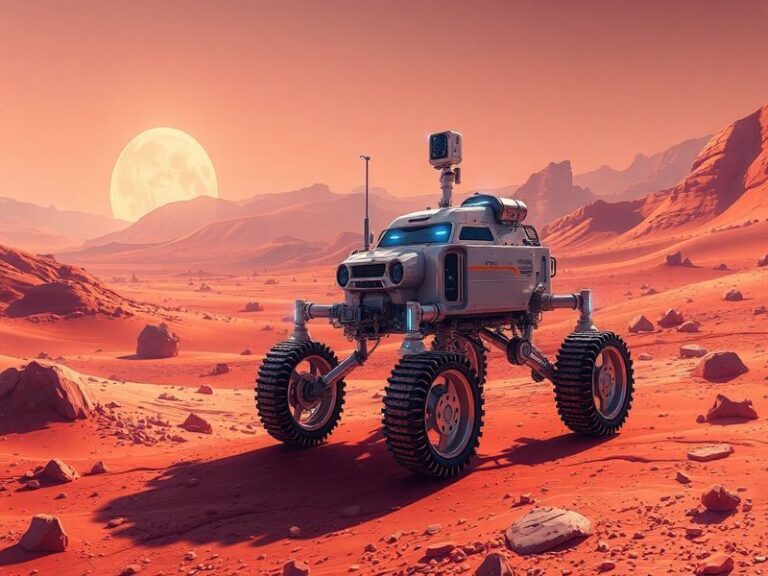
Traditionally, space missions have relied heavily on pre-programmed instructions and real-time communication with Earth-based control centers. However, the vast distances and communication delays make this approach increasingly impractical. AI systems like Claude are designed to autonomously navigate and make decisions in real-time, significantly enhancing the efficiency and safety of Mars rover missions.
Claude’s AI capabilities include:
- Path Planning: The system can analyze terrain data and plan optimal paths for the rover, avoiding obstacles and hazards.
- Obstacle Detection: Using advanced computer vision, Claude can identify and avoid obstacles, ensuring the rover’s safety.
- Energy Management: The AI optimizes the rover’s energy usage, balancing power consumption between scientific operations and movement.
- Scientific Decision-Making: Claude can prioritize scientific objectives based on real-time data, ensuring the most valuable research is conducted.
### Enhancing Scientific Discoveries
AI’s ability to process and analyze vast amounts of data in real-time is a game-changer for scientific exploration. Claude can identify patterns and anomalies that might be missed by human operators, leading to more significant discoveries. For instance, the AI can analyze soil samples, atmospheric conditions, and geological formations to provide insights into Mars’ past and present conditions.
## Practical Insights and Industry Implications
### Cost Efficiency and Mission Success
The integration of AI into space missions offers substantial cost savings and increases the likelihood of mission success. Autonomous systems reduce the need for constant human oversight, lowering operational costs. Additionally, AI’s ability to make real-time decisions minimizes the risk of mission failure due to unforeseen circumstances.
### Future Possibilities and Innovations
The success of AI systems like Claude paves the way for even more ambitious space exploration missions. Future possibilities include:
- Autonomous Sample Return Missions: AI could enable rovers to collect and return samples to Earth autonomously, a critical step in understanding Mars’ potential for past or present life.
- Human-Mars Missions: AI systems could support human missions to Mars by managing life support systems, conducting scientific experiments, and providing real-time assistance to astronauts.
- Deep Space Exploration: The technology developed for Mars missions can be extended to explore even more distant celestial bodies, such as Europa and Enceladus, which hold potential for extraterrestrial life.
- Interplanetary Communication Networks: AI could facilitate the development of advanced communication networks, enabling seamless data exchange between Earth and distant space probes.
## Challenges and Considerations
While the benefits of AI in space exploration are immense, there are also challenges to consider. Ensuring the reliability and robustness of AI systems in the harsh conditions of space is paramount. Additionally, ethical considerations, such as the potential impact of AI on human decision-making and the autonomy of space missions, need to be carefully addressed.
## Conclusion
The integration of AI into space exploration, exemplified by the Claude AI system in Mars rover missions, represents a significant leap forward in our quest to understand the cosmos. By enabling autonomous navigation, enhancing scientific discoveries, and reducing mission costs, AI is revolutionizing how we explore and interact with the universe. As we continue to push the boundaries of technology, the future of space exploration looks brighter than ever, with AI playing a central role in our journey to the stars.