# The State of AI in 2026: How AI-generated Code is Changing Developer Experiences
## Introduction
The year is 2026, and the landscape of software development has been dramatically reshaped by the rise of AI-generated code. Artificial intelligence has evolved from a supporting tool to a collaborative partner, revolutionizing the way developers write, debug, and maintain code. This transformation is not just about efficiency; it’s about redefining the very essence of software creation. Let’s dive into the state of AI in 2026 and explore how AI-generated code is changing developer experiences.
## The Evolution of AI-generated Code
### From Simple Autocompletion to Full Code Generation
In the early 2020s, AI-assisted coding tools like GitHub Copilot and Tabnine were groundbreaking. They offered intelligent code suggestions and autocompletion, significantly speeding up the development process. However, by 2026, these tools have evolved into sophisticated systems capable of generating entire codebases from high-level specifications.
These advanced AI models, trained on vast repositories of open-source code, can now understand context, infer intent, and produce functional, optimized code across multiple programming languages. They are not just completing lines of code; they are generating entire functions, classes, and even entire modules based on natural language descriptions.
### The Rise of AI Pair Programmers
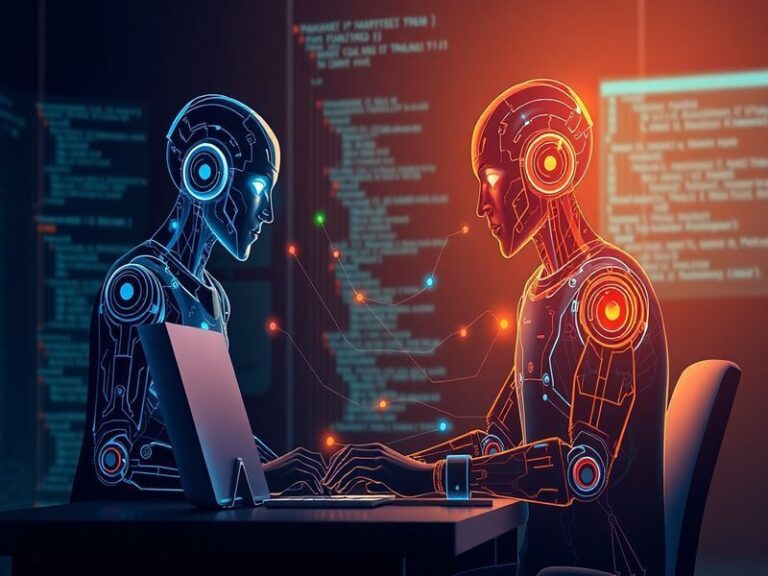
AI pair programmers have become an integral part of the development workflow. These AI systems act as virtual collaborators, providing real-time feedback, suggesting improvements, and even identifying potential bugs before they manifest. They are not just tools; they are partners in the coding process.
Developers in 2026 often describe their AI counterparts as “always-on” pair programmers who never tire, never get bored, and are always ready to brainstorm, debug, or optimize code. This symbiotic relationship has led to a significant increase in productivity and a reduction in the time-to-market for new software products.
## Practical Insights for Developers
### Enhancing Productivity and Creativity
One of the most significant impacts of AI-generated code is the enhancement of developer productivity. AI systems can handle repetitive tasks, allowing developers to focus on more creative and complex aspects of software development. This shift has led to a surge in innovation, as developers are freed from the mundane and can concentrate on solving higher-level problems.
Moreover, AI-generated code is not just about speed; it’s about quality. These systems are trained on best practices and can generate code that adheres to industry standards, reducing the likelihood of errors and vulnerabilities. This has led to a significant improvement in the overall quality of software products.
### Bridging the Skills Gap
The global demand for software developers has always outstripped supply. AI-generated code is helping to bridge this gap by enabling less experienced developers to contribute meaningfully to projects. AI systems can provide guidance, suggest best practices, and even generate code snippets, allowing junior developers to learn and grow more quickly.
This democratization of coding has led to a more inclusive development community, where individuals from diverse backgrounds can contribute to software projects. It has also opened up new opportunities for education and upskilling, as AI systems can provide personalized learning experiences tailored to individual needs.
## Industry Implications
### Transforming the Software Development Lifecycle
The software development lifecycle (SDLC) has undergone a profound transformation due to AI-generated code. Traditional phases like requirements gathering, design, coding, testing, and deployment have been streamlined and optimized.
AI systems can now assist in every stage of the SDLC, from generating initial code based on requirements to automating testing and deployment. This has led to a more agile and iterative development process, where software can be rapidly prototyped, tested, and deployed in real-world environments.
### Changing the Role of Developers
The role of developers has evolved from being primarily coders to becoming more akin to architects and overseers. With AI handling much of the low-level coding, developers can focus on higher-level design, system architecture, and strategic planning.
This shift has led to a new breed of “AI-augmented” developers who are proficient in both traditional coding and AI-assisted development. These professionals are in high demand, as they can leverage AI tools to their fullest potential and drive innovation in their organizations.
## Future Possibilities
### The Emergence of AI-first Development
As AI-generated code becomes more sophisticated, we are seeing the emergence of AI-first development methodologies. In this paradigm, AI systems are not just tools but are central to the development process. They are involved in every stage, from initial concept to final deployment.
This approach has the potential to revolutionize software development, making it faster, more efficient, and more innovative. It also raises important questions about the future of coding and the role of human developers in an AI-driven world.
### Ethical and Security Considerations
While AI-generated code offers numerous benefits, it also raises important ethical and security considerations. As AI systems become more integrated into the development process, ensuring the security and integrity of the code they generate is paramount.
Developers and organizations must be vigilant in monitoring AI-generated code for vulnerabilities, biases, and other potential issues. They must also ensure that AI systems are used ethically and responsibly, respecting user privacy and adhering to industry standards.
## Conclusion
The state of AI in 2026 is one of unprecedented transformation and innovation. AI-generated code has revolutionized the developer experience, enhancing productivity, creativity, and inclusivity. It has transformed the software development lifecycle and changed the role of developers, paving the way for a future where AI and human collaboration drives unprecedented progress.
As we look to the future, the possibilities are endless. AI-generated code is just the beginning of a new era in software development, one where the boundaries between human and machine are blurred, and the potential for innovation is limitless. The journey has just begun, and the future of AI in coding is bright and full of promise.