# OpenAI Codex App: A New Era for Developer Productivity
## Introduction
In the rapidly evolving landscape of artificial intelligence and software development, OpenAI continues to push the boundaries of innovation. The latest addition to their arsenal, the **OpenAI Codex App**, is set to revolutionize developer productivity. This mission control app for coding agents leverages the power of AI to streamline workflows, enhance collaboration, and accelerate development cycles. Let’s dive into the features, industry implications, and future possibilities of this groundbreaking tool.
## Understanding OpenAI Codex App
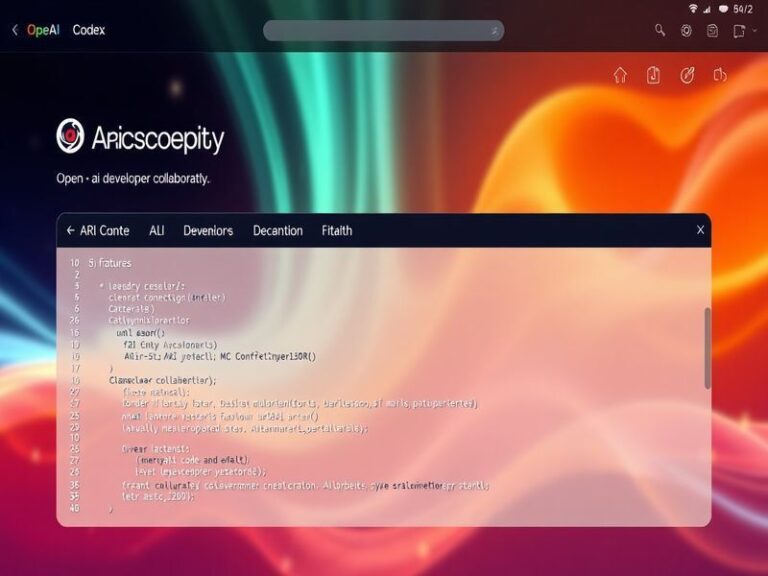
The OpenAI Codex App is designed to act as a **mission control center** for developers, integrating AI-driven coding agents into the development process. It builds on the capabilities of OpenAI’s Codex model, which has already demonstrated impressive abilities in understanding and generating code.
### Key Features
- **AI-Powered Code Generation**: The app can generate code snippets, complete functions, and even write entire programs based on natural language descriptions.
- **Code Completion and Suggestions**: It offers real-time code completion and suggestions, significantly speeding up the coding process.
- **Error Detection and Debugging**: The app can identify and suggest fixes for errors, making debugging more efficient.
- **Code Optimization**: It provides recommendations for optimizing code performance and readability.
- **Collaboration Tools**: The app facilitates seamless collaboration among developers, with features like shared workspaces and real-time editing.
## Practical Insights and Use Cases
### Streamlining Development Workflows
The OpenAI Codex App can integrate with popular development environments and version control systems, providing a seamless experience for developers. For instance, it can be used within **Visual Studio Code**, **JetBrains IDEs**, or **GitHub**, offering AI-assisted coding directly within the tools developers already use.
### Enhancing Collaboration
With features like shared workspaces and real-time editing, the app can enhance collaboration among distributed teams. Developers can work together on the same codebase, with the AI providing real-time suggestions and corrections.
### Accelerating Learning and Onboarding
For new developers or those learning new programming languages, the OpenAI Codex App can serve as a powerful learning tool. It can generate example code, explain concepts, and provide feedback on code written by learners.
## Industry Implications
### Impact on Software Development
The introduction of the OpenAI Codex App is poised to have a profound impact on the software development industry. By automating routine tasks and providing intelligent suggestions, it can significantly reduce the time and effort required to develop software.
### Job Market Dynamics
While some may worry about AI replacing human developers, the more likely scenario is that it will augment their capabilities. Developers who leverage AI tools like the OpenAI Codex App will be able to focus on more complex and creative aspects of software development, leading to higher job satisfaction and productivity.
### Ethical Considerations
As with any AI tool, ethical considerations are paramount. The OpenAI Codex App must be designed to ensure fairness, transparency, and accountability. Developers using the app should be aware of its limitations and potential biases, and steps should be taken to mitigate these risks.
## Future Possibilities
### Integration with Other AI Tools
The OpenAI Codex App could be integrated with other AI tools and platforms, creating a comprehensive ecosystem for AI-assisted development. For example, it could be combined with **AI-powered testing tools** to automate the testing process, or with **AI-driven design tools** to streamline the entire software development lifecycle.
### Expansion to Other Domains
While the initial focus is on software development, the underlying technology could be adapted for use in other domains. For instance, it could be used to generate and optimize **data analysis scripts**, **machine learning models**, or even **hardware design specifications**.
### Continuous Learning and Improvement
As more developers use the OpenAI Codex App, it will gather vast amounts of data on coding practices and preferences. This data can be used to continuously improve the app’s algorithms, making it even more powerful and intuitive over time.
## Conclusion
The OpenAI Codex App represents a significant leap forward in the field of AI-assisted software development. By leveraging the power of AI to streamline workflows, enhance collaboration, and accelerate learning, it has the potential to transform the way developers work. As the technology continues to evolve, we can expect even more innovative applications and integrations, paving the way for a new era of developer productivity.