# Intel Enters the GPU Market: A Challenge to Nvidia’s Dominance
## A Bold Move into the GPU Industry
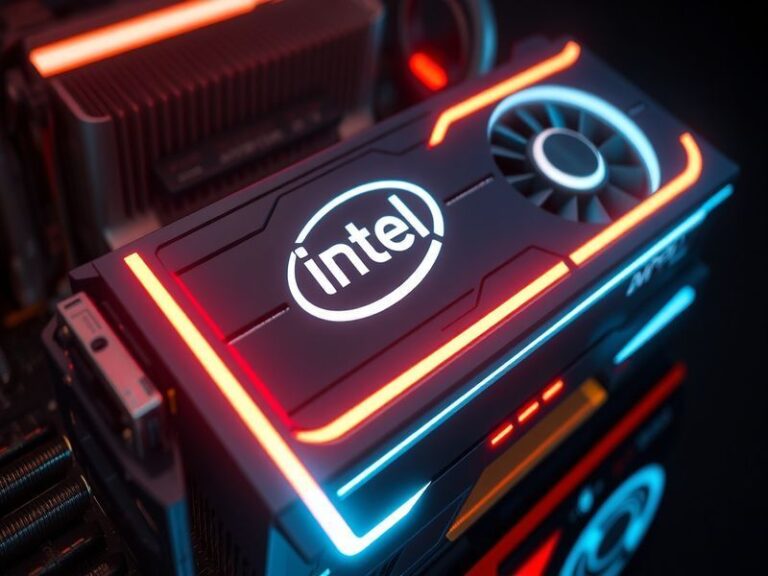
Intel, a titan in the CPU market, has made a significant foray into the graphics processing unit (GPU) arena with its latest lineup of discrete GPUs, the Intel Arc series. This move is not just about diversifying Intel’s product portfolio; it’s a direct challenge to Nvidia’s long-standing dominance in the GPU market. The implications for AI, machine learning, and emerging technologies are profound.
### The Rise of Intel’s Arc GPUs
Intel’s Arc GPUs are built on the company’s Xe architecture, which promises to deliver high performance and efficiency. The initial lineup includes the Intel Arc A770 and A750, targeting the mid-range to high-end market segments. These GPUs are designed to compete with Nvidia’s RTX 3060 and RTX 3070 series, offering features like ray tracing and AI-powered upscaling.
Intel’s entry into the GPU market is timely, as the demand for powerful graphics processing has surged. This demand is driven by several factors:
- AI and Machine Learning: GPUs are essential for training and deploying AI models, making them a critical component in the AI ecosystem.
- Gaming: The gaming industry continues to grow, with a constant need for more powerful GPUs to handle the latest games and technologies.
- Content Creation: Professionals in fields like video editing, 3D rendering, and graphic design require high-performance GPUs to handle complex workloads.
## Industry Implications
### A Shift in the GPU Market Dynamics
Intel’s entry into the GPU market is poised to disrupt the existing dynamics. Nvidia has long been the dominant player, with AMD as a significant competitor. Intel’s entry adds a third major player, which could lead to increased competition, innovation, and potentially lower prices for consumers.
For AI and machine learning, having more options in the GPU market is beneficial. Different architectures and approaches can lead to advancements in performance, efficiency, and new capabilities. This competition could accelerate the development of AI technologies and make them more accessible.
### Impact on AI and Machine Learning
GPUs are the backbone of AI and machine learning workflows. They provide the parallel processing power needed to train complex models quickly. Intel’s Arc GPUs, with their Xe architecture, offer a new option for AI researchers and developers.
Intel has also been investing heavily in AI technologies. The company’s oneAPI initiative aims to provide a unified programming model for heterogeneous computing, which includes GPUs. This could make it easier for developers to leverage Intel’s GPUs for AI workloads.
## Future Possibilities
### Advancements in GPU Technology
With Intel’s entry, we can expect advancements in GPU technology. Competition often drives innovation, and we may see improvements in performance, power efficiency, and new features that benefit AI, gaming, and content creation.
Intel’s focus on ray tracing and AI-powered features like upscaling could set new standards in the industry. These technologies are crucial for creating realistic and immersive experiences in gaming and virtual reality, as well as for enhancing AI-driven applications.
### Expanding the AI Ecosystem
The expansion of the GPU market could lead to a more diverse AI ecosystem. Different GPU architectures can cater to various AI workloads, from training large language models to deploying AI at the edge. This diversity can foster innovation and make AI technologies more accessible to a broader range of users.
Intel’s oneAPI initiative is particularly promising. By providing a unified programming model, Intel could simplify the development of AI applications that run on multiple types of hardware, including GPUs, CPUs, and FPGAs. This could lower the barrier to entry for AI development and accelerate the adoption of AI technologies.
## Practical Insights
### For Tech Enthusiasts and Gamers
For tech enthusiasts and gamers, Intel’s entry into the GPU market means more choices. The competition could lead to better performance, more features, and lower prices. The Arc GPUs offer a compelling alternative to Nvidia’s offerings, with features like ray tracing and AI-powered upscaling.
Intel’s GPUs also support DirectX 12 Ultimate and Vulkan, ensuring compatibility with the latest games and applications. As Intel continues to refine its GPU technology, we can expect even more impressive performance and features in the future.
### For AI Researchers and Developers
For AI researchers and developers, Intel’s GPUs provide a new option for accelerating AI workloads. The Xe architecture offers high performance and efficiency, making it suitable for training and deploying AI models. Additionally, Intel’s oneAPI initiative simplifies the development of AI applications that run on multiple types of hardware.
As Intel continues to invest in AI technologies, we can expect more tools and frameworks that make it easier to leverage Intel’s GPUs for AI workloads. This could lead to new advancements in AI research and more efficient AI applications.
## Conclusion
Intel’s entry into the GPU market is a significant development with far-reaching implications. It challenges Nvidia’s dominance, fosters competition, and drives innovation. For AI, machine learning, and emerging technologies, this means more options, better performance, and new possibilities. As Intel continues to refine its GPU technology and invest in AI, we can expect exciting advancements in the years to come.
The future of the GPU market is bright, and Intel’s presence is set to make it even more dynamic. Whether you’re a gamer, an AI researcher, or a tech enthusiast, Intel’s GPUs offer a compelling alternative and a glimpse into the future of graphics processing.