Waymo and DeepMind’s Innovative Simulator for Robotaxis
As the landscape of autonomous vehicles continues to evolve, companies like Waymo and DeepMind are pushing the boundaries of what is possible with innovative technologies. One of the most exciting developments in this field is the creation of a hyper-realistic simulator designed to help robotaxis navigate extreme weather scenarios. This technology not only enhances the safety and reliability of autonomous vehicles but also opens up new possibilities for their deployment in various environments.
The Role of Simulation in Autonomous Vehicle Development
Simulation plays a critical role in the development of autonomous vehicles. It allows engineers and researchers to test algorithms and systems under a myriad of conditions without the risks associated with real-world testing. In particular, hyper-realistic simulations can mimic complex environmental factors, such as:
- Severe weather conditions: Rain, snow, fog, and ice can significantly impact vehicle performance.
- Traffic scenarios: Simulating various traffic patterns, including accidents and road closures, helps prepare the vehicle’s AI for real-world challenges.
- Pedestrian interactions: Understanding how pedestrians behave in different weather conditions is essential for safe navigation.
Waymo and DeepMind’s collaboration leverages the power of machine learning and AI to create a simulator that closely mimics real-world scenarios, pushing the limits of what autonomous driving technology can achieve.
Hyper-Realistic Environments: A Game Changer for Robotaxis
The hyper-realistic simulator developed by Waymo and DeepMind utilizes advanced graphics and physics engines to create environments that closely resemble the real world. This level of detail is crucial for training robotaxi systems to handle extreme weather conditions effectively. Some of the key features of the simulator include:
- Real-time environmental feedback: The simulator provides immediate feedback on how various weather conditions affect vehicle performance.
- AI-driven weather modeling: By integrating AI models that predict weather patterns, the simulator can create dynamic scenarios that change in response to simulated conditions.
- Multi-agent simulations: The ability to simulate interactions between multiple vehicles, pedestrians, and cyclists enhances the realism of the training scenarios.
These features enable autonomous systems to learn how to react appropriately, ensuring that robotaxis can maintain safety and efficiency even in adverse conditions.
Practical Insights: Training for the Unexpected
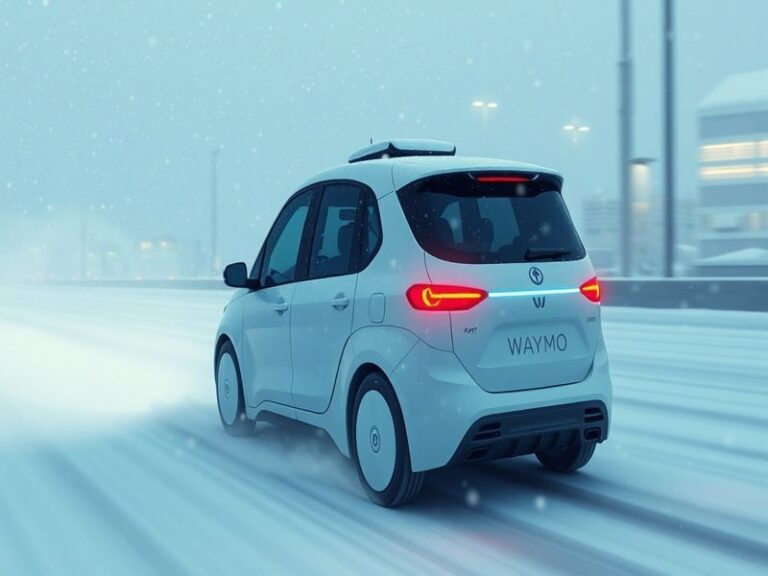
One of the primary advantages of using a hyper-realistic simulator is the ability to prepare for unexpected scenarios. For instance, during a sudden snowstorm, visibility may drop dramatically, and roads may become slippery. The simulator allows developers to:
- Test the vehicle’s response to reduced traction and braking distances.
- Evaluate decision-making processes when navigating through obstacles that appear suddenly.
- Understand how to optimize route planning during extreme weather events.
By exposing the AI models to such challenging situations, Waymo and DeepMind can ensure that their robotaxis are prepared for the unpredictable nature of real-world driving.
Industry Implications: Setting Standards for Autonomous Driving
The collaboration between Waymo and DeepMind is significant not only for the companies involved but for the entire autonomous vehicle industry. Some implications include:
- Improved safety standards: As robotaxis become more reliable in extreme weather, public trust in autonomous vehicles will likely increase, paving the way for broader acceptance.
- Regulatory advancements: Enhanced simulation capabilities may lead to more comprehensive regulations, ensuring that all autonomous vehicles meet high safety standards.
- Competitive edge: Companies that adopt such advanced simulation technology may gain a significant advantage in the race to deploy fully autonomous vehicles.
These factors could ultimately accelerate the timeline for the widespread adoption of robotaxis and similar technologies.
Future Possibilities: The Road Ahead
Looking forward, the potential applications for hyper-realistic simulation technology extend beyond just robotaxis. Here are some exciting possibilities:
- Urban planning: City planners could use these simulations to understand traffic flow and pedestrian behavior under various scenarios.
- Training for emergency responders: Emergency services could use simulations to train personnel on how to manage incidents in adverse weather conditions.
- Integration with smart city infrastructure: Hyper-realistic simulators could aid in designing intelligent traffic management systems that adapt to real-time weather data.
As advancements continue, the intersection of AI, simulation technology, and autonomous vehicles will undoubtedly reshape how we think about transportation and urban living.
In conclusion, the collaboration between Waymo and DeepMind on innovative simulators marks a significant step forward in the journey toward fully autonomous driving. By creating hyper-realistic environments capable of mimicking extreme weather conditions, they are paving the way for safer, more efficient robotaxi operations.