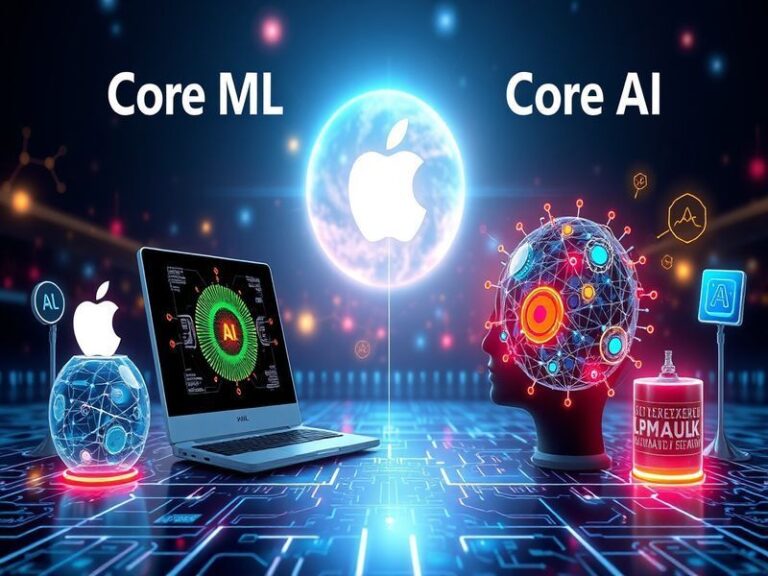
Apple Retires Core ML for Core AI: A Look at Apple’s Shift Towards Deeper AI Integration in Its Software Ecosystem
In an era where artificial intelligence (AI) is reshaping the technological landscape, Apple has announced a significant shift in its approach to AI development. The retirement of Core ML, the company’s machine learning framework, in favor of a more comprehensive solution dubbed Core AI signals Apple’s ambition to deepen AI integration within its software ecosystem. This transition may redefine not only how Apple approaches its products but also the entire tech industry.
Understanding Core ML
Core ML has been a cornerstone of Apple’s AI strategy, providing developers with tools to integrate machine learning models into their apps seamlessly. It allowed for various functionalities, such as image recognition, natural language processing, and recommendation systems. However, as the landscape of AI continues to evolve rapidly, the need for a more robust and versatile framework became apparent.
The Transition to Core AI
Core AI aims to transcend the capabilities of Core ML by offering a more holistic approach to AI. Here’s what we can expect from this transition:
- Unified Framework: Core AI promises to unify various AI capabilities into a single framework, potentially simplifying the development process for app creators.
- Enhanced Performance: By leveraging advanced algorithms and optimizations, Core AI is expected to deliver faster and more efficient processing power, leading to improved app performance.
- Greater Flexibility: Core AI will likely offer developers more flexibility in integrating AI functionalities, allowing for innovative applications that were previously difficult to implement.
- Deep Learning Integration: With a focus on deep learning, Core AI may facilitate more complex AI models, supporting cutting-edge applications such as real-time video analysis and sophisticated voice recognition.
Industry Implications
The shift from Core ML to Core AI is poised to have significant implications across various sectors:
1. Enhanced User Experience
As Apple incorporates deeper AI functionalities into its ecosystem, users can expect a more personalized experience. The integration of advanced AI features could lead to:
- More accurate predictive text and autocorrect features.
- Intelligent recommendations in the App Store and Apple Music.
- Improved accessibility features powered by AI, making devices easier to use for individuals with disabilities.
2. Competitive Edge
By investing in Core AI, Apple positions itself to compete more effectively against rivals like Google and Microsoft, which have already made significant strides in AI integration. The potential outcomes include:
- Accelerated development of AI-powered features in iOS and macOS.
- Increased attractiveness for developers looking for robust, integrated AI solutions.
- Potential shifts in market dominance as Apple offers unique AI capabilities.
3. Collaboration and Innovation
The introduction of Core AI may foster collaboration between developers and researchers, leading to innovations that push the boundaries of what’s possible with AI technology:
- Partnerships between Apple and educational institutions for AI research and development.
- Increased funding and support for startups focused on AI solutions that can leverage Core AI.
- Community-driven innovation as developers create unique applications using the new framework.
Future Possibilities
The retirement of Core ML in favor of Core AI opens the door to numerous future possibilities. Here are some predictions about what we might see in the coming years:
- AI-Powered Hardware: Apple may integrate AI capabilities directly into its hardware, allowing devices to process AI tasks locally for enhanced privacy and speed.
- Expansion into New Domains: Core AI could enable Apple to venture into new domains such as autonomous vehicles or advanced robotics, leveraging AI for navigation and decision-making.
- AI Ethics and Responsibility: As AI becomes more embedded in everyday devices, Apple will need to navigate the ethical implications of AI usage, focusing on user data protection and algorithmic fairness.
In conclusion, Apple’s retirement of Core ML in favor of Core AI is not just a strategic shift; it represents a significant evolution in how Apple envisions the role of AI in its products and services. As the tech giant embarks on this new journey, the industry will be watching closely to see how these changes will shape the future of technology. The implications are vast, and the possibilities are exciting, making this a pivotal moment in AI and software development.