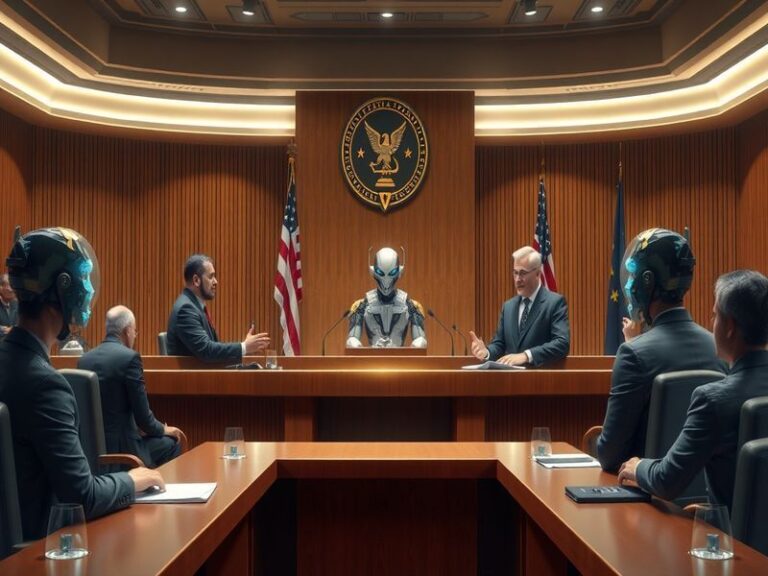
Anthropic’s Legal Battle with the Pentagon: Exploring the Implications of Lawsuits Against Military Designations in AI Technology
In a world where artificial intelligence (AI) is rapidly evolving, the intersection of technology and governance has never been more critical. A recent legal dispute involving Anthropic, a prominent AI research company, and the Pentagon has raised significant questions about the role of AI in military applications and the implications of lawsuits against military designations. This article explores the details of this legal battle, its implications for the AI industry, and what the future might hold for AI technologies in military contexts.
The Background of the Legal Dispute
Anthropic has emerged as a key player in AI development, focusing on creating systems that prioritize safety and alignment with human values. However, the Pentagon’s interest in AI technologies for military applications has sparked a contentious debate about the ethical and legal ramifications of deploying these systems in warfare.
In this context, the lawsuit filed by Anthropic against the Pentagon centers on:
- Military Designation: The classification of certain AI technologies as military applications, which can lead to strict regulations and limitations on their development and deployment.
- Transparency Issues: Concerns regarding the lack of transparency in how military designations are applied and the potential for misuse of AI technologies.
- Ethical Considerations: The moral implications of using AI in combat situations, including the risk of autonomous weapons systems making life-and-death decisions.
Industry Implications
The outcome of this legal battle could have far-reaching implications for the AI industry, particularly in how AI technologies are developed and utilized in military and defense sectors. Here are some critical points to consider:
- Regulatory Frameworks: If the court rules in favor of Anthropic, it may prompt a reevaluation of existing regulatory frameworks governing the military use of AI. This could lead to more stringent oversight and a clearer definition of what constitutes military applications.
- Innovation Stifling: Overregulation may stifle innovation in AI technology, particularly for companies that aim to create non-military applications but might inadvertently cross into military territory.
- Public Trust: The legal proceedings could influence public perception of AI technologies, particularly in the context of military applications. A transparent legal process may enhance public trust, while a lack of clarity could foster skepticism and opposition.
Practical Insights for AI Developers
As the legal landscape surrounding AI technologies continues to evolve, developers should consider several practical insights:
- Engagement with Policymakers: AI developers should proactively engage with policymakers to help shape regulations that promote innovation while addressing ethical concerns.
- Focus on Ethical AI: Emphasizing ethical AI development can help mitigate risks associated with military applications and foster trust among users and stakeholders.
- Legal Preparedness: Companies should be prepared for potential legal challenges by understanding the regulatory landscape and having legal counsel familiar with AI and military law.
Future Possibilities
Looking ahead, the implications of this legal battle extend beyond the immediate case. Here are some future possibilities for the AI and military landscape:
- Collaboration Between AI Companies and Governments: A clearer regulatory framework may encourage collaboration between AI companies and governments, allowing for shared goals in ethical AI development.
- Emergence of Ethical Guidelines: The legal outcomes could spur the development of comprehensive ethical guidelines for AI in military applications, balancing innovation with humanitarian considerations.
- Advancements in AI Safety Measures: The focus on legal and ethical implications may lead to advancements in AI safety measures, particularly in ensuring that AI systems operate within defined ethical boundaries.
Conclusion
The legal battle between Anthropic and the Pentagon serves as a critical juncture in the ongoing conversation about AI, ethics, and military applications. As the outcomes of such disputes shape the future of AI technology, stakeholders from both industry and government must work collaboratively to ensure that AI serves humanity’s best interests, especially in high-stakes environments like military operations. The resolution of these issues will undoubtedly influence the trajectory of AI development and deployment for years to come.