AI Simulates a Real Brain in a Virtual Body: Investigating the Groundbreaking Work of Emulating a Fruit Fly’s Brain and Its Potential Applications
In recent years, the intersection of artificial intelligence and neuroscience has yielded groundbreaking research, particularly in the realm of brain simulation. One of the most intriguing initiatives involves the emulation of the brain of a fruit fly. This project not only sheds light on the complexities of biological neural networks but also paves the way for significant advancements in various fields. In this article, we will explore the details of this research, its implications for industry, and the future possibilities it holds.
The Science Behind Brain Simulation
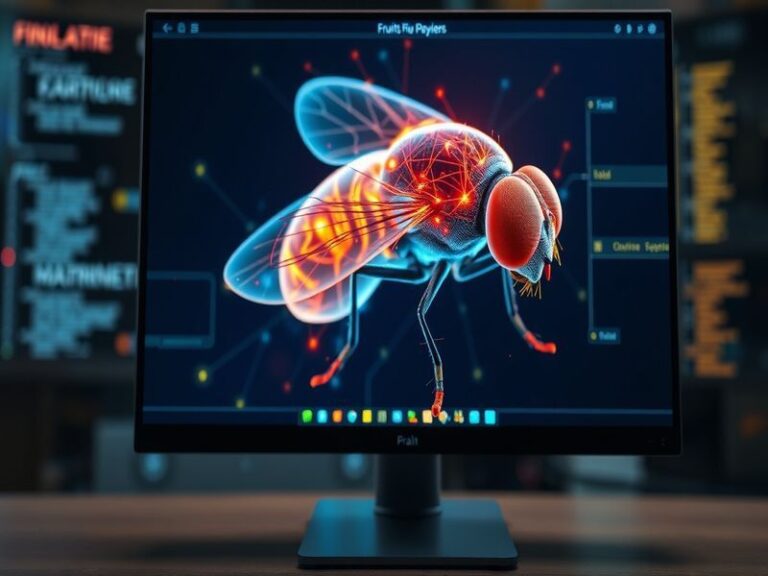
The fruit fly, or Drosophila melanogaster, serves as a model organism in many biological studies due to its relatively simple nervous system and genetic manipulability. The project aiming to simulate a fruit fly’s brain involves creating a digital representation of its neural circuitry, which is comprised of approximately 100,000 neurons and millions of synapses.
Researchers utilize a combination of machine learning and computational neuroscience to map the neural connections and functions. The goal is to create an accurate model that can mimic the fly’s behavior in a virtual setting. This intricate simulation provides insights into how neural networks process information, respond to stimuli, and execute motor functions.
Applications of the Research
The implications of successfully simulating a fruit fly’s brain are vast and varied. Here are some potential applications:
- Neuroscience Research: The simulation can serve as a platform for understanding complex brain functions and disorders, potentially leading to breakthroughs in treating neurological diseases.
- Artificial Intelligence Development: Insights gained from the simulation can inform the development of more efficient AI algorithms, particularly in the area of neural networks.
- Robotics: By understanding how a fruit fly navigates its environment, engineers could develop more advanced robotic systems that mimic biological processes.
- Education: The project can be used as a teaching tool, allowing students and researchers to visualize and interact with a real brain model.
Industry Implications
The implications of this research extend beyond academia into several industries:
- Healthcare: Advances in understanding brain function could lead to improved diagnostic tools and treatment options for neurological conditions.
- Technology: The insights into brain processing could enhance AI systems, making them more adaptable and efficient in real-world applications.
- Aerospace and Defense: Understanding sensory and motor functions in a biological context could improve drone technology and autonomous systems.
Future Possibilities
As research continues to evolve, the future of brain simulation holds exciting possibilities:
- Integration with Other Organisms: Following the success with fruit flies, researchers may expand their efforts to simulate more complex brains, such as those of mammals, which could yield even greater insights.
- Enhanced AI Models: By leveraging knowledge from biological systems, AI could become more adaptable, learning from environmental changes much like living organisms do.
- Neuroprosthetics: As understanding of brain functionality improves, so too does the potential for developing advanced neuroprosthetic devices that could restore lost functions in humans.
Conclusion
The simulation of a fruit fly’s brain in a virtual body is a remarkable achievement in the field of artificial intelligence and neuroscience. It not only provides a deeper understanding of biological processes but also opens up numerous applications that could benefit society at large. As researchers continue to refine these models, the potential for future innovations is boundless, promising to revolutionize our approach to both technology and biology.