Robot Swarms and AI in Military Training: China’s Advancements in Urban Combat Simulations
As the landscape of military strategy evolves, nations are increasingly turning to advanced technologies to enhance their combat training. Among these innovations, robot swarms and artificial intelligence (AI) have emerged as pivotal tools, particularly in urban combat scenarios. China, in particular, has made significant strides in utilizing drone swarms and robotic units for military training, aiming to create realistic simulations that prepare soldiers for the complexities of modern warfare.
The Rise of Drone Swarms in Military Training
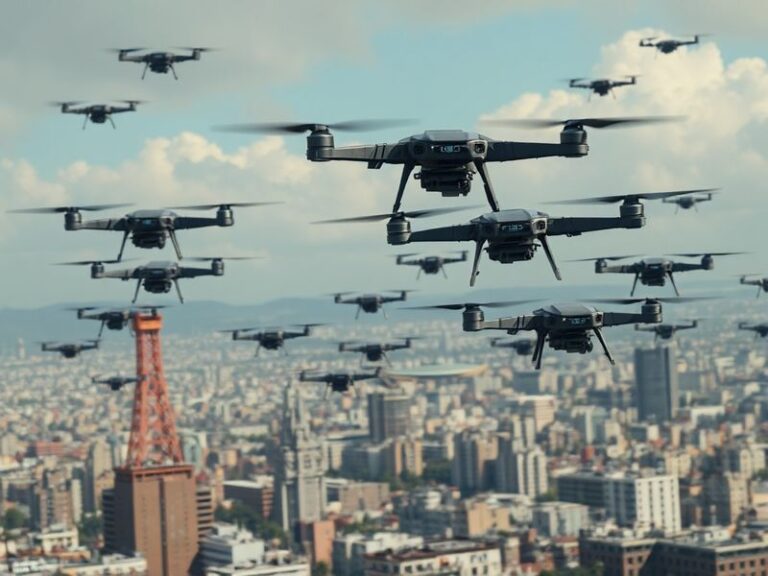
Drone swarms, which consist of multiple unmanned aerial vehicles (UAVs) operating in unison, are revolutionizing military training. These swarms can be programmed to execute complex maneuvers, engage in reconnaissance, and simulate enemy tactics. China’s advancements in this area are noteworthy:
- Autonomous Coordination: Chinese military researchers have developed algorithms that allow drone swarms to work together seamlessly. This coordination mimics the behavior of natural swarms, such as flocks of birds or schools of fish, enabling drones to adapt to dynamic environments.
- Urban Combat Simulations: Specialized training modules are designed to replicate urban combat situations. This includes the ability to navigate through buildings, avoid obstacles, and assess threats in real-time.
- Target Acquisition and Engagement: Swarms can be programmed to identify and engage potential targets, providing valuable data for soldiers during training exercises.
Robotic Units and Their Role in Training
In addition to drone swarms, robotic units are becoming increasingly integral to military training in urban environments. These units are designed to perform various roles, from logistics support to direct engagement with enemy forces. China’s development in this area reflects a commitment to enhancing operational effectiveness:
- Ground Robotics: Robotic units can traverse complex terrains, enabling them to serve as scouts or frontline support. They can gather intelligence and relay information back to command centers.
- Training Human Soldiers: Advanced AI systems are employed to train human soldiers. These systems can simulate enemy behaviors, allowing soldiers to practice decision-making and tactical responses.
- Interoperability: The integration of robotic units with existing military systems ensures that they can operate alongside traditional forces, enhancing overall combat effectiveness.
Practical Insights and Industry Implications
The implications of using AI-driven robot swarms and units in military training extend beyond immediate tactical advantages. Here are some critical insights:
- Enhanced Training Efficiency: By incorporating AI and robotics into training programs, military forces can significantly reduce the time required to prepare soldiers for complex combat scenarios. Simulations can be conducted more frequently and with greater realism, enhancing soldier readiness.
- Cost-Effectiveness: While the initial investment in these technologies is substantial, the potential for reduced training costs and improved operational outcomes makes them a worthwhile endeavor. Robotic units can minimize the need for live-fire exercises, which are often costly and resource-intensive.
- Ethical Considerations: As militaries adopt AI technologies, ethical concerns regarding the use of autonomous systems in combat must be addressed. Questions regarding accountability, decision-making, and the potential for unintended consequences must guide the development and deployment of these systems.
Future Possibilities
The future of military training using robot swarms and AI is poised for rapid evolution. Here are some possibilities on the horizon:
- Increased Autonomy: Future advancements may allow robotic units and drone swarms to operate with greater autonomy, reducing the need for human intervention in decision-making processes.
- Integration with AI Warfare Systems: As AI becomes more sophisticated, the integration of training systems with broader warfare strategies will become essential. This could lead to the development of fully autonomous combat units capable of executing complex missions with minimal human oversight.
- Global Impact: As countries like China continue to innovate in this field, other nations may feel compelled to enhance their own military capabilities, potentially leading to an arms race in AI and robotics within military contexts.
Conclusion
The advancements in robot swarms and AI for military training, particularly as demonstrated by China, signify a transformative period in modern warfare. By creating realistic urban combat simulations, these technologies are not only enhancing soldier preparedness but also reshaping the future of military strategy. As the industry continues to evolve, ethical considerations and international dialogue will be critical in ensuring that these powerful tools are used responsibly.