AI’s Role in Early Cancer Detection: Identifying Pancreatic Cancer Signs Before Traditional Methods
Cancer remains one of the leading causes of death worldwide, with pancreatic cancer being particularly notorious for its late diagnosis and poor prognosis. Traditional detection methods often rely on imaging techniques and invasive biopsies, which can be both time-consuming and invasive. However, the advent of artificial intelligence (AI) is transforming early cancer detection, offering innovative solutions to identify pancreatic cancer signs before traditional methods can. This article explores the role of AI in early cancer detection, highlighting practical insights, industry implications, and future possibilities.
The Challenge of Pancreatic Cancer Detection
Pancreatic cancer is often called a “silent killer” due to its subtle symptoms and late manifestation. Many patients do not experience noticeable symptoms until the disease has progressed to an advanced stage. This late diagnosis contributes significantly to the high mortality rate associated with the disease. Traditional methods for detection include:
- Imaging techniques like CT scans and MRIs
- Blood tests for specific tumor markers (e.g., CA 19-9)
- Invasive procedures such as endoscopic ultrasounds
While these methods are essential, they often fail to identify pancreatic cancer at an early stage when treatment could be more effective. This is where AI technologies come into play.
How AI is Revolutionizing Early Detection
AI models, particularly those utilizing machine learning algorithms, are being developed to analyze various data sources to detect signs of pancreatic cancer more effectively than traditional methods. The innovative approaches include:
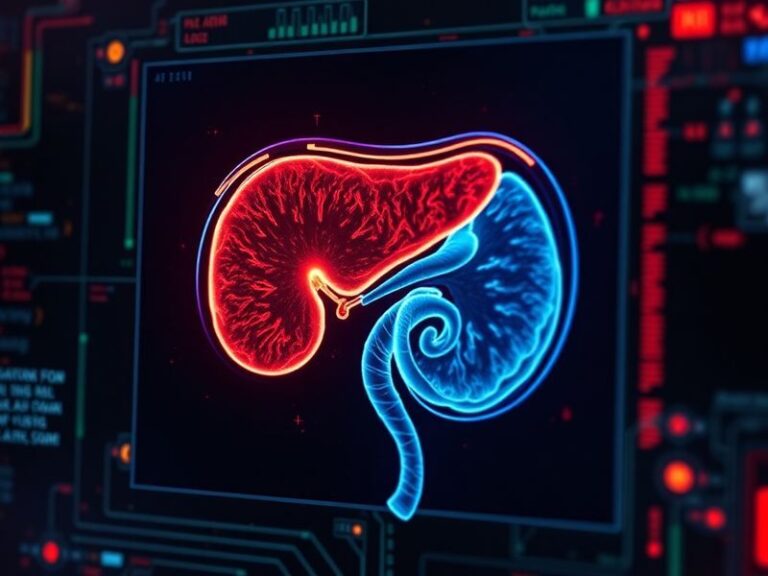
- Image Analysis: AI algorithms can analyze medical imaging data to identify subtle changes in the pancreas that may indicate cancer. For example, convolutional neural networks (CNNs) are particularly adept at recognizing patterns in imaging data.
- Genomic Data Interpretation: AI can process vast amounts of genomic data to pinpoint mutations associated with pancreatic cancer, allowing for earlier risk assessment.
- Clinical Data Integration: AI systems can aggregate and analyze patient data, including electronic health records, to identify risk factors and potential early signs of cancer based on patient history.
Case Studies and Practical Applications
Several research initiatives and companies are already making strides in the integration of AI for early pancreatic cancer detection:
- Google Health: In collaboration with various medical institutions, Google Health has developed AI models that analyze endoscopic ultrasound images to spot early signs of pancreatic cancer. Results from studies show a significant increase in detection rates compared to traditional methods.
- PathAI: This company employs AI to improve the accuracy of pathology reports. Their models assist pathologists in identifying cancerous cells in biopsy samples more efficiently, leading to earlier diagnosis.
- Thrive Earlier Detection: Thrive has developed a multi-cancer early detection test that uses AI to analyze blood samples for genomic alterations. This approach can potentially indicate the presence of pancreatic cancer before symptoms arise.
Industry Implications
The integration of AI in early cancer detection has several implications for the healthcare industry:
- Improved Outcomes: Early detection is crucial for improving survival rates in pancreatic cancer. AI’s ability to identify cases sooner can lead to timely interventions.
- Cost Efficiency: By reducing the reliance on invasive procedures and accelerating the diagnostic process, AI can help lower healthcare costs associated with late-stage cancer treatment.
- Personalized Medicine: AI can help create tailored treatment plans based on individual patient data, improving the overall effectiveness of cancer care.
Future Possibilities
As AI technology continues to evolve, its potential in early cancer detection will likely expand significantly. Future possibilities include:
- Enhanced Predictive Analytics: AI models could become more sophisticated, incorporating additional data sources (e.g., lifestyle factors, environmental influences) to refine risk assessments.
- Real-Time Monitoring: Wearable technology integrated with AI could provide continuous monitoring of patient health indicators, allowing for real-time alerts regarding potential cancer signs.
- Global Accessibility: AI-driven diagnostics could facilitate access to cancer screening in underserved regions, democratizing healthcare and enabling early detection where traditional methods are lacking.
In conclusion, the role of AI in early cancer detection, particularly for pancreatic cancer, is becoming increasingly pivotal. By harnessing innovative models and technologies, we can identify signs of this aggressive disease sooner, leading to improved patient outcomes and potentially saving lives. As AI continues to develop, the future holds promising possibilities for enhanced cancer screening and personalized treatment strategies.