AI Versus Humans by 2030: Why Ex-Google Execs Say Even CEOs Aren’t Safe
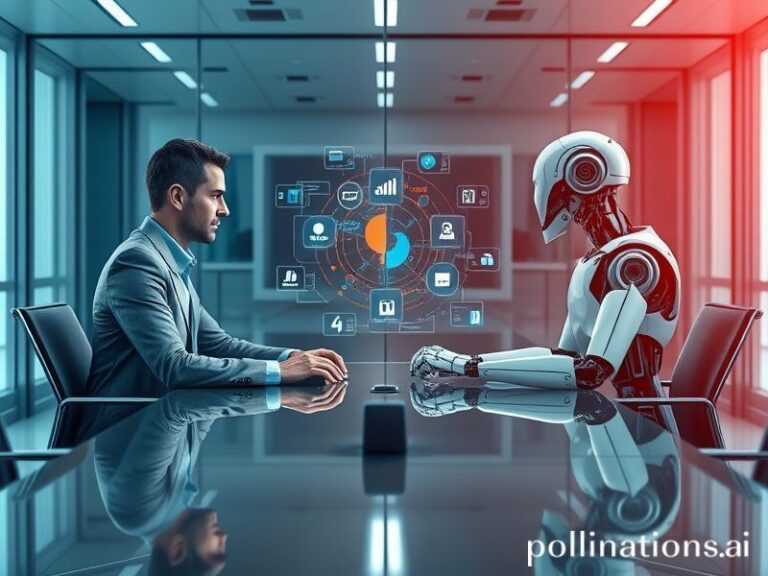
In the glass-walled boardrooms of Silicon Valley, a quiet revolution is brewing—one that could make even the most powerful executives obsolete. Former Google executives are sounding alarm bells that by 2030, artificial intelligence won’t just be replacing entry-level workers; it’s coming for the C-suite itself. The question isn’t whether AI will transform knowledge work—it’s whether you’ll still be relevant when it does.
The Great AI Displacement: Beyond the Hype
While headlines have focused on AI replacing customer service representatives and data entry clerks, the real disruption is happening in the corner office. Mo Gawdat, former Chief Business Officer at Google X, predicts that 80% of executive decisions could be automated by 2030. This isn’t speculation—it’s already beginning.
Consider the evidence: AI systems are already outperforming human analysts in financial forecasting, identifying market trends months before traditional methods catch up. Legal AI platforms are reviewing contracts faster and more accurately than seasoned attorneys. Medical AI is diagnosing complex conditions that stump experienced doctors. If these specialized professionals aren’t safe, what makes any knowledge worker immune?
The Executive Automation Timeline
Based on current trajectories and insider projections, here’s what’s coming:
- 2025-2026: AI handles 60% of middle management tasks including performance reviews, resource allocation, and basic strategic planning
- 2027-2028: Senior executives find 40% of their decision-making augmented or replaced by AI insights
- 2029-2030: Autonomous AI systems manage entire business units with minimal human oversight
Four Survival Skills for the AI Era
1. Meta-Learning: Teaching AI to Teach Itself
The most valuable humans won’t be those who know answers—they’ll be those who can rapidly teach AI systems to solve novel problems. This goes beyond prompt engineering; it’s about understanding how AI learns and being able to guide its learning process in real-time.
Practical application: Instead of spending months becoming an expert in one domain, focus on becoming proficient at identifying patterns across disciplines and translating that knowledge into AI-training protocols. Companies like DeepMind are already hiring “AI teachers” who specialize in this meta-skill.
2. Emotional Intelligence at Machine Scale
While AI excels at data processing, it still struggles with genuine emotional intelligence. However, this advantage is temporary. The survivors will be those who can leverage AI tools to enhance their emotional intelligence rather than compete against them.
Industry example: Salesforce’s Einstein AI can predict customer emotions and suggest responses, but it takes human insight to weave these predictions into authentic relationship-building. The future belongs to professionals who use AI as an emotional intelligence amplifier, not those who ignore it.
3. Creative Synthesis Across Domains
AI can generate content within established patterns, but breakthrough innovation happens at the intersection of unrelated fields. Your survival depends on becoming a “creative aggregator”—someone who can take AI-generated insights from multiple domains and synthesize them into entirely new concepts.
Actionable strategy: Dedicate 30% of your learning time to fields completely unrelated to your expertise. If you’re in finance, study biology. If you’re in tech, explore philosophy. The goal is building mental models that AI hasn’t been trained on yet.
4. Ethical Navigation in Autonomous Systems
As AI systems gain decision-making authority, society will desperately need humans who can navigate the ethical implications. This isn’t about having strong opinions—it’s about understanding the complex trade-offs in AI governance and being able to build frameworks for ethical automation.
Career opportunity: Major corporations are creating “Chief Ethics Officers” specifically to handle AI governance. These roles require understanding both technical capabilities and human values—a combination AI cannot replicate.
The Industry Transformation Already Underway
Finance: The Algorithmic Takeover
Goldman Sachs’ trading floor, once populated by 600 traders, now operates with just three humans supervising AI systems. But new roles have emerged: “Algorithm whisperers” who can interpret and adjust AI trading strategies in real-time, earning salaries that exceed the traders they replaced.
Healthcare: AI Doctors and Human Healers
At Mayo Clinic, AI systems diagnose certain cancers more accurately than human specialists. Rather than replacing doctors, this has created a new role: “AI-augmented diagnosticians” who combine AI insights with human intuition, achieving outcomes neither could reach alone.
Legal: From Case Law to Code Law
Law firms using AI for document review have reduced associate attorney hours by 80%. However, they’ve increased demand for “Legal AI strategists”—lawyers who understand both legal principles and AI capabilities, creating new service offerings that didn’t exist five years ago.
The Future Possibilities: Beyond Survival
The AI revolution isn’t just about keeping your job—it’s about reimagining what human work can become. As AI handles routine cognition, humans are freed to explore unprecedented possibilities:
- Collective Intelligence Architects: Designing systems where human-AI collaboration produces insights neither could achieve alone
- Reality Designers: Creating hybrid physical-digital experiences as AR/AI convergence accelerates
- Consciousness Explorers: Investigating human potential as AI handles practical concerns
Your 90-Day Action Plan
The window for preparation is closing rapidly. Here’s your immediate roadmap:
- Week 1-2: Audit your current role. Identify which 40% of tasks could be automated today.
- Week 3-6: Learn one AI tool relevant to your field. Don’t just use it—understand how it works.
- Week 7-10: Find a problem in your organization that AI struggles with. Become the expert in solving it.
- Week 11-12: Build a prototype human-AI workflow that improves on either alone.
The Choice Ahead
By 2030, there will be two types of knowledge workers: those who compete against AI and lose, and those who partner with AI and thrive. The ex-Google executives warning about CEO displacement aren’t trying to spread fear—they’re offering a final call to action.
The AI revolution isn’t coming; it’s here. The question isn’t whether you’ll be replaced—it’s whether you’ll be ready to replace yourself with something greater. Your human intelligence, augmented by artificial intelligence, can create value we can barely imagine today. But only if you start building that future now.
The clock is ticking. What will you choose to become?