Alibaba’s New AI Chip: A Leap in Performance
In the rapidly evolving landscape of artificial intelligence, hardware advancements are crucial. Alibaba, a titan in e-commerce and cloud computing, has recently unveiled its latest AI chip, significantly enhancing its capabilities compared to its predecessor. This article explores how Alibaba’s new chip triples its predecessor’s performance, the implications for AI applications, and what this means for the future of AI technology.
The Evolution of Alibaba’s AI Chip Technology
Alibaba’s journey in AI chip development began with the introduction of the Hanguang 800 chip in 2020. This chip was designed to optimize AI workloads, primarily focusing on tasks such as image recognition, natural language processing, and data analysis. With the launch of its new chip, Alibaba aims to push the boundaries of AI performance even further.
Performance Metrics: Tripling Capabilities
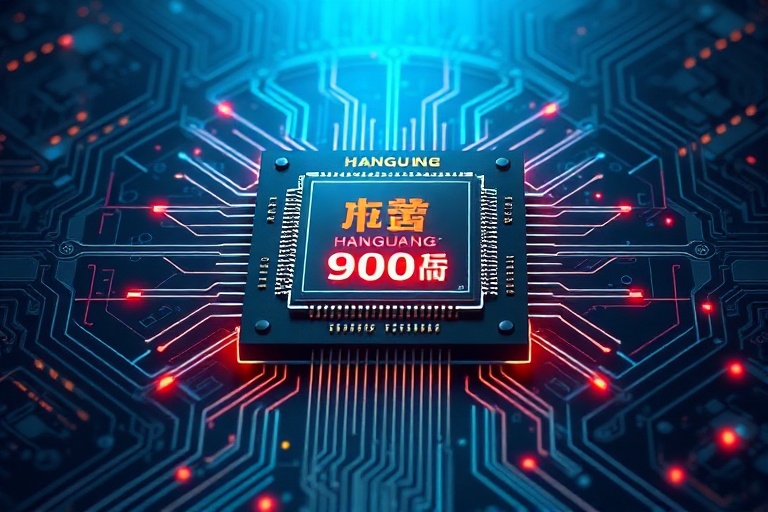
The new AI chip, dubbed the Hanguang 900, showcases remarkable advancements in computational power, efficiency, and versatility. Here are some key performance metrics:
- Threefold Performance Increase: The Hanguang 900 can process three times the data compared to the Hanguang 800, enabling faster training and inferencing times for AI models.
- Advanced Architecture: Utilizing a novel architecture, the new chip integrates more cores and higher memory bandwidth, facilitating better multitasking and handling of complex algorithms.
- Energy Efficiency: The Hanguang 900 is designed to maintain high performance while consuming less power, addressing a critical concern in the AI industry regarding sustainability.
Practical Insights: How This Impacts AI Applications
The implications of Alibaba’s new chip are profound. Here are several practical insights into how this leap in performance will affect various AI applications:
- Enhanced Machine Learning Models: With the ability to process vast amounts of data rapidly, machine learning models can be trained more effectively, leading to higher accuracy and better predictive capabilities.
- Real-Time Processing: Applications such as autonomous vehicles and smart city infrastructure can benefit from the chip’s ability to perform real-time data analysis, significantly improving response times and decision-making.
- Natural Language Processing (NLP): The advancements in processing capabilities will allow for more sophisticated NLP applications, enhancing customer service chatbots and virtual assistants.
Industry Implications: A Competitive Edge
Alibaba’s new chip not only strengthens its position in the AI market but also raises the stakes for competitors. Key implications include:
- Increased Competition: Companies like NVIDIA and Google, who dominate the AI hardware market, may face intensified competition from Alibaba, forcing them to innovate more rapidly.
- Market Expansion: With improved AI capabilities, Alibaba can expand its services in cloud computing, offering more powerful tools for businesses looking to leverage AI.
- Collaborative Opportunities: The new chip opens doors for collaborations with other tech companies, especially those focusing on AI research and development.
Future Possibilities: Shaping AI’s Landscape
The launch of Alibaba’s Hanguang 900 chip is a pivotal moment for the AI industry. As AI applications become more integral to business and daily life, the performance of underlying hardware will play a crucial role. Here are some future possibilities:
- AI Democratization: As hardware becomes more accessible and powerful, smaller companies and startups will have the opportunity to leverage advanced AI capabilities, driving innovation across various sectors.
- AI in Edge Computing: The enhanced performance of the Hanguang 900 could lead to more efficient edge computing solutions, where AI processes data closer to the source, improving latency and reducing bandwidth use.
- New AI Applications: The increased performance could enable entirely new applications of AI that were previously impractical, such as complex simulations in healthcare or finance.
In conclusion, Alibaba’s new AI chip represents a significant leap in performance, with the potential to reshape the AI landscape. As companies across industries embrace these advancements, we can anticipate a future where AI capabilities are not just enhanced but revolutionized.