The Evolution of LLMs: Insights from AlphaGo and Self-Play
In the rapidly evolving landscape of artificial intelligence (AI), large language models (LLMs) have emerged as a critical component in the advancement of natural language processing (NLP). The principles of self-play, famously exemplified by AlphaGo, offer intriguing insights into how these models can be developed and refined. This article delves into the evolution of LLMs through the lens of self-play, exploring its implications for the future of AI technologies.
Understanding Self-Play
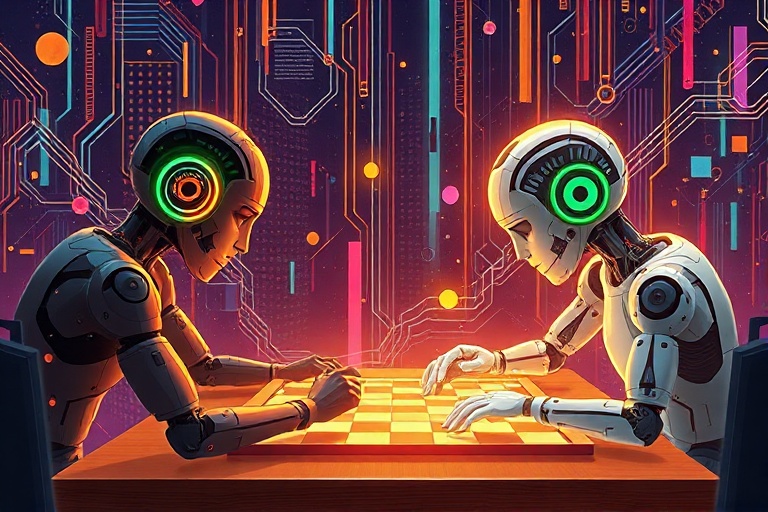
Self-play is a technique wherein an AI model learns to improve its performance by competing against itself. This method was integral to AlphaGo’s success in mastering the complex board game Go, outperforming human champions through a combination of reinforcement learning and self-play. The AI would simulate countless games against itself, refining its strategies and adapting to various scenarios without requiring external input.
How Self-Play Can Influence LLM Development
The principles of self-play can be effectively applied to the development of LLMs. Here are several ways in which self-play might shape the future of these models:
- Enhanced Learning Efficiency: By utilizing self-play, LLMs can generate their own training data, allowing for more efficient learning cycles. This self-generated data can include diverse language patterns and contextual nuances, leading to a more robust understanding of human language.
- Reduction of Human Bias: Training LLMs with self-play can help minimize human biases that often permeate datasets. By allowing models to learn from their own iterations, they can develop more impartial language understanding and generation capabilities.
- Exploration of Novel Strategies: Just as AlphaGo discovered unconventional strategies through self-play, LLMs can explore unique language constructs and innovative communication methods that might not be evident in traditional training datasets.
- Robustness to Adversarial Attacks: Self-play can also be employed to test the resilience of language models against adversarial input. By simulating various forms of attack, models can learn to defend against malicious prompts and maintain coherence in their outputs.
Practical Insights for AI Professionals
For AI practitioners and researchers, the integration of self-play principles into LLM development presents several practical insights:
- Creating Synthetic Datasets: AI developers can leverage self-play to create synthetic datasets that simulate real-world language use. This can be particularly useful in low-resource languages or niche domains where data is scarce.
- Iterative Improvement: Implementing self-play can facilitate an iterative development process, where models continually refine their outputs based on previous interactions. This can lead to more adaptive systems that respond better to user input.
- Cross-Domain Applications: Insights gained from self-play in LLMs can extend to other AI domains, such as robotics or game design, where learning through self-competition can optimize performance and innovation.
Industry Implications
The implications of integrating self-play into LLMs extend beyond technical enhancements; they also impact various industries:
- Content Creation: With enhanced LLMs, industries focused on content generation—such as marketing, journalism, and entertainment—can benefit from more creative and contextually aware AI systems that can produce high-quality content efficiently.
- Customer Service: Improved LLMs can lead to more sophisticated chatbots and virtual assistants, capable of understanding and responding to user queries with greater empathy and relevance, ultimately enhancing customer experience.
- Education: In educational settings, LLMs can provide personalized tutoring by adapting to individual learning styles and needs, making learning more accessible and effective.
Future Possibilities
The future of LLMs, informed by the principles of self-play, holds vast potential. Here are some possibilities to consider:
- Self-Improving Systems: The development of LLMs that can autonomously refine themselves over time may lead to systems that continuously adapt to new linguistic trends and user preferences.
- Collaborative Learning: Future models may engage in collaborative self-play with other AI systems, allowing for shared learning and the creation of more comprehensive language understanding across different models.
- Ethical AI Development: By reducing biases and enhancing fairness through self-play techniques, the future of LLMs can align more closely with ethical AI principles, fostering trust in AI-generated content.
In conclusion, the evolution of large language models through the lens of self-play mirrors the transformative journey witnessed with AlphaGo. As AI technology continues to advance, the integration of self-play principles will not only refine LLMs but also drive innovation across industries, shaping a future where AI and human interaction becomes ever more seamless and effective.