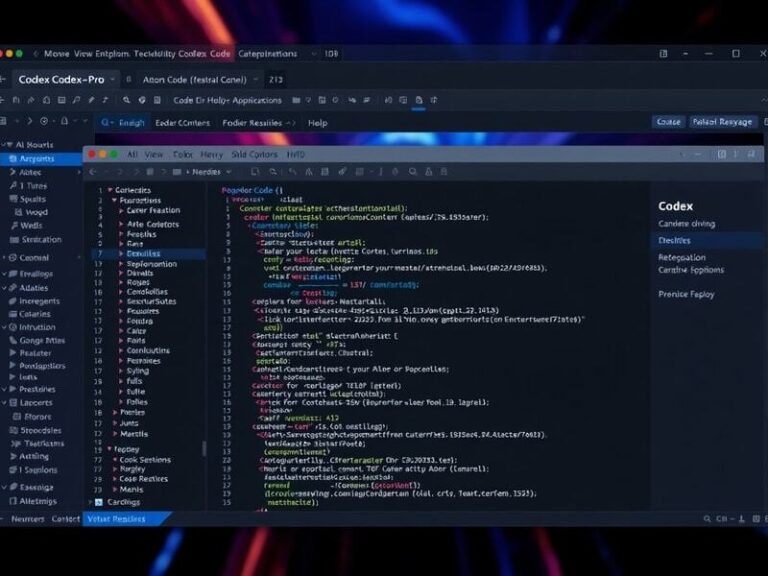
OpenAI Launches Free Codex Pro for Developers: Enhancing Open-Source Software Development with Advanced AI Tools
In a significant move to bolster the open-source software community, OpenAI has unveiled Codex Pro, a new initiative aimed at providing developers with advanced AI tools at no cost. This launch marks a pivotal moment in the intersection of artificial intelligence and software development, promising to enhance productivity and foster innovation across various industries.
Understanding Codex Pro
Codex Pro is an advanced iteration of OpenAI’s Codex, the AI model known for its ability to understand and generate code. By leveraging machine learning and natural language processing, Codex Pro allows developers to interact with code in a more intuitive manner, making programming more accessible and efficient.
Key Features of Codex Pro
- Free Access: OpenAI has made Codex Pro free for developers, democratizing access to powerful AI tools that were previously available only through paid subscriptions.
- Enhanced Code Generation: Codex Pro can generate code snippets based on natural language prompts, making it easier for developers to translate ideas into functional code.
- Integration with Popular IDEs: The tool seamlessly integrates with widely used integrated development environments (IDEs), allowing developers to access its capabilities without disrupting their workflow.
- Support for Multiple Programming Languages: Codex Pro supports a variety of programming languages, catering to a broad spectrum of developers and projects.
Practical Insights for Developers
With the introduction of Codex Pro, developers can expect a range of practical benefits that can streamline their work processes:
- Increased Efficiency: By generating boilerplate code and providing instant code suggestions, Codex Pro can significantly reduce the time spent on routine coding tasks.
- Improved Collaboration: Codex Pro’s ability to understand and generate code comments means that teams can collaborate more effectively, ensuring that everyone is on the same page.
- Learning Tool: For novice programmers, Codex Pro serves as an excellent educational resource, allowing them to learn coding practices by observing how the AI generates code.
- Rapid Prototyping: Developers can quickly prototype applications, testing ideas and features without committing extensive resources to coding from scratch.
Industry Implications
The launch of Codex Pro is poised to have a profound impact on various sectors, particularly in software development, education, and entrepreneurship:
- Software Development: Companies can leverage Codex Pro to accelerate development cycles and improve product quality, leading to faster time-to-market for new applications.
- Startups: Entrepreneurs can harness the power of Codex Pro to build MVPs (Minimum Viable Products) without needing extensive coding knowledge, democratizing innovation.
- Education: Educational institutions can integrate Codex Pro into their curricula, offering students hands-on experience with AI tools that are becoming integral to modern software development.
Future Possibilities
As Codex Pro continues to evolve, its potential applications extend far beyond simple code generation. Here are some future possibilities:
- Integration with AI-Driven DevOps: Codex Pro could be integrated with DevOps tools to automate deployment and continuous integration processes, leading to more streamlined software delivery.
- AI-Powered Debugging: Future iterations may include advanced debugging capabilities, allowing developers to identify and resolve issues with greater speed and precision.
- Collaborative AI Systems: As Codex Pro matures, it may evolve into a collaborative tool that learns from team dynamics and coding styles, personalizing its assistance to individual developers.
- Open-Source Contributions: By enabling more developers to contribute easily, Codex Pro could lead to a surge in open-source projects, fostering community-driven innovation.
Conclusion
OpenAI’s Codex Pro represents a transformative step in the realm of software development, providing a powerful set of tools that can enhance productivity, collaboration, and innovation. As this initiative unfolds, it is set to redefine not only how developers work but also how the future of software is shaped. The implications for the industry are vast, promising a more inclusive and efficient development landscape.