The Rise of AI in Medical Diagnostics
The integration of artificial intelligence (AI) into medical diagnostics is revolutionizing the healthcare industry. As AI technologies advance, they are uncovering answers to previously unsolved medical cases, providing solutions that enhance diagnostic accuracy and patient outcomes. This article explores the implications of AI in medical diagnostics, offering insights into its practical applications, industry effects, and future possibilities.
Understanding AI in Medical Diagnostics
Medical diagnostics involves the identification of diseases and conditions based on patient data, including symptoms, medical history, and diagnostic tests. Traditionally, this process heavily relies on human expertise, which, while invaluable, can be limited by cognitive biases and the sheer volume of information. AI, specifically through the use of machine learning algorithms, offers a powerful alternative by processing large datasets rapidly and accurately.
Key Applications of AI in Diagnostics
AI is being employed across various medical fields, demonstrating its potential to transform diagnostics:
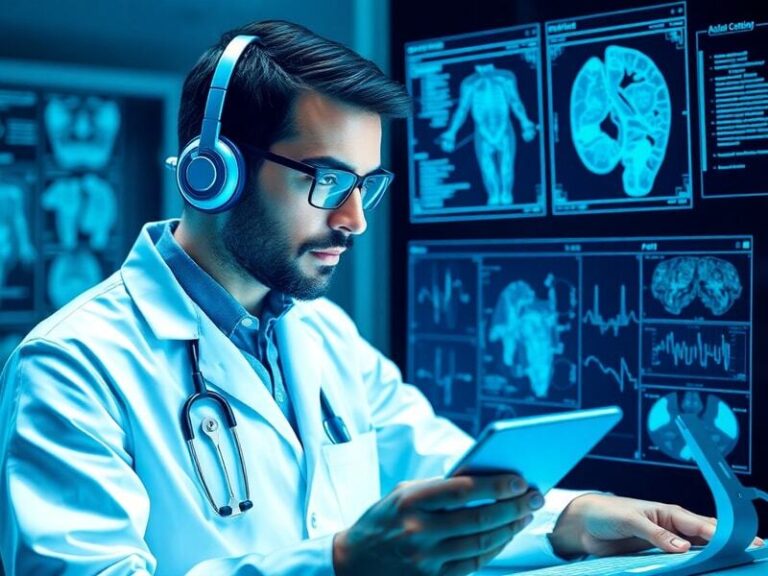
- Radiology: AI algorithms are increasingly used to analyze images from X-rays, MRIs, and CT scans. These systems can identify anomalies such as tumors or fractures with precision, often outperforming human radiologists in specific scenarios.
- Pathology: In analyzing tissue samples, AI tools can detect cancerous cells and assess their characteristics more quickly and accurately than manual examination.
- Genomics: AI facilitates the interpretation of genomic data, allowing for personalized medicine approaches that tailor treatments based on individual genetic profiles.
- Cardiology: Machine learning models can predict cardiovascular events by analyzing patient data, leading to early interventions that can save lives.
Practical Insights: How AI is Reshaping Diagnostics
The application of AI in diagnostics is not just theoretical; it is being implemented in real-world settings, leading to significant improvements in efficiency and accuracy:
- Enhanced Accuracy: AI systems have demonstrated the ability to reduce false positives and negatives in diagnostic tests. For instance, studies show AI can identify skin cancers with a lower error rate than dermatologists.
- Time Efficiency: AI can process vast amounts of data in seconds, allowing healthcare professionals to focus more on patient care rather than data analysis.
- Cost Reduction: By improving diagnostic precision, AI can help reduce unnecessary procedures and treatments, ultimately lowering healthcare costs.
Industry Implications
The rise of AI in medical diagnostics also carries significant implications for the healthcare industry:
- Shifting Roles: As AI takes on more diagnostic responsibilities, the role of healthcare professionals is evolving. Physicians are becoming more like data interpreters, focusing on patient communication and treatment plans rather than solely on diagnostic functions.
- Regulatory Challenges: The rapid advancement of AI technologies in healthcare poses regulatory challenges, as existing frameworks may not adequately address the complexities of AI-driven diagnostics.
- Ethical Considerations: The use of AI raises ethical questions, particularly concerning data privacy, consent, and the potential for bias in AI algorithms that may lead to unequal care.
Future Possibilities
The future of AI in medical diagnostics holds exciting possibilities. As technology continues to evolve, we can expect:
- Integration with Telemedicine: AI can enhance telemedicine platforms by providing real-time diagnostic support, enabling healthcare providers to make informed decisions remotely.
- Continuous Learning: AI systems will become increasingly adept at learning from new data, improving their diagnostic capabilities over time and adapting to emerging health trends.
- Broader Accessibility: With advancements in AI, diagnostic tools may become more accessible to underserved populations, bridging gaps in healthcare disparities.
In conclusion, the rise of AI in medical diagnostics is paving the way for a more efficient, accurate, and equitable healthcare system. As we navigate the future, it is crucial to address the accompanying challenges to fully harness AI’s potential in solving previously unsolvable medical cases.