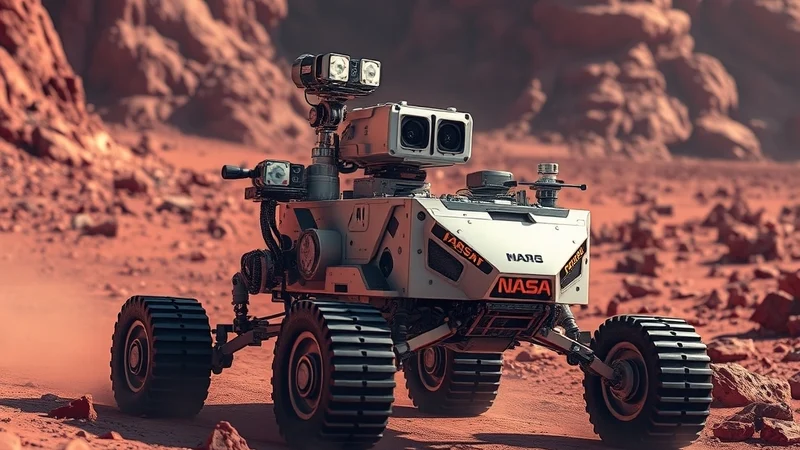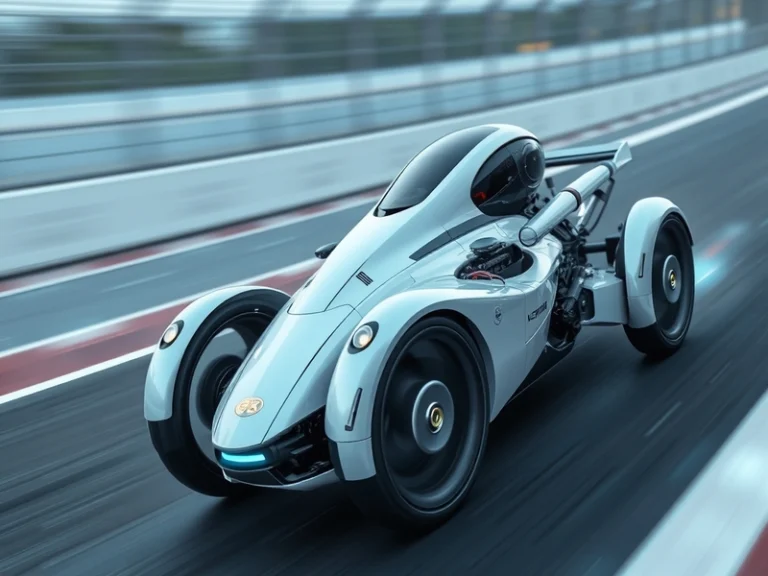
Beijing recently hosted a groundbreaking autonomous robotics racing event, featuring over 2,000 robots competing to showcase the future of advanced AI and engineering. The competition brought together teams from around the globe, pushing the boundaries of machine perception, decision-making, and control in a dynamic, high-stakes environment.
Autonomous racing transcends mere spectacle; it serves as a crucial testbed for technologies vital to the future of robotics and artificial intelligence. Unlike human-driven motorsports, these events challenge robots to navigate complex tracks, avoid obstacles, and outmaneuver competitors solely through onboard intelligence, without any human intervention. The scale of this Beijing event, involving thousands of sophisticated machines, underscores the rapid maturation of autonomous systems development.
The Technological Pillars of Autonomous Racing
Success in autonomous racing relies on the seamless integration of several advanced AI and robotics disciplines. Each robot is a microcosm of a future autonomous vehicle, equipped with an array of sensors and powerful computing hardware to interpret its surroundings and execute driving commands.
- Perception Systems: Robots use a combination of sensors to build a real-time understanding of their environment. Lidar (Light Detection and Ranging) provides precise 3D mapping, while radar offers robust object detection in varying weather conditions. High-resolution cameras, often paired with deep learning models, identify track boundaries, other competitors, and potential hazards. Ultrasonic sensors provide close-range obstacle detection.
- Localization and Mapping (SLAM): To navigate effectively, robots must accurately know their position on the track and simultaneously build or update a map of their surroundings. Algorithms like Simultaneous Localization and Mapping (SLAM) fuse data from GPS, IMUs (Inertial Measurement Units), and visual or lidar odometry to achieve centimeter-level precision, critical for high-speed maneuvering.
- Path Planning and Decision Making: Once the robot understands its environment and its position, AI algorithms come into play to determine the optimal racing line, predict competitor movements, and plan evasive actions. Techniques such as model predictive control (MPC) and reinforcement learning (RL) are frequently employed. RL agents, for instance, can learn highly optimized, aggressive driving strategies through millions of simulated laps, adapting to dynamic track conditions and competitor behavior in real-time.
- Control Systems: The final stage involves translating AI decisions into physical actions. High-fidelity control systems manage the robot’s steering, acceleration, and braking with extreme precision. These systems must react instantaneously to maintain stability at speed, execute precise turns, and recover from unexpected slips, often leveraging advanced PID controllers and adaptive control strategies.
Challenges on the Track
Despite significant advancements, autonomous racing presents formidable challenges that push the limits of current AI and robotics capabilities.
- Real-time Performance: Every decision, from perceiving an obstacle to adjusting speed, must occur in milliseconds. Latency can be the difference between a clean pass and a collision. This demands highly optimized software, efficient sensor fusion, and powerful edge computing.
- Dynamic Environments: Unlike static industrial settings, a race track is a highly dynamic environment. Other robots move unpredictably, track conditions can change, and sensors can be affected by glare or debris. The AI must be robust enough to handle these uncertainties without failure.
- Robustness and Generalization: Robots trained in simulation must perform reliably in the real world, which always presents novel situations. Ensuring that AI models generalize well to unseen scenarios and maintain performance under stress is a continuous area of research.
- Computational Intensity: Processing vast amounts of sensor data, running complex AI models, and executing control loops simultaneously requires substantial onboard computational power, often relying on specialized hardware like NVIDIA GPUs or custom FPGAs.
Broader Implications and the Future
The lessons learned from events like the Beijing autonomous racing competition extend far beyond the racetrack. They are directly applicable to a wide array of real-world autonomous systems.
The advancements in perception and navigation contribute directly to the development of safer and more capable self-driving cars, delivery robots, and autonomous drones. The robust decision-making algorithms refined in high-speed racing scenarios can enhance the reliability of industrial automation and logistics robots. Furthermore, these competitions serve as crucial platforms for fostering innovation and attracting talent to the fields of AI and robotics, inspiring the next generation of engineers and researchers.
Beijing’s role in hosting such a large-scale event underscores its growing prominence as a global hub for AI and robotics research and development. The commitment to advancing these technologies through challenging, public demonstrations highlights a strategic vision for integrating autonomous systems into various facets of society.
As autonomous racing continues to evolve, it will undoubtedly remain a critical proving ground for the cutting-edge technologies that will define the future of intelligent machines.