When AI Pranks Go Too Far: The 911-Calling Homeless Person Images That Weren’t Real
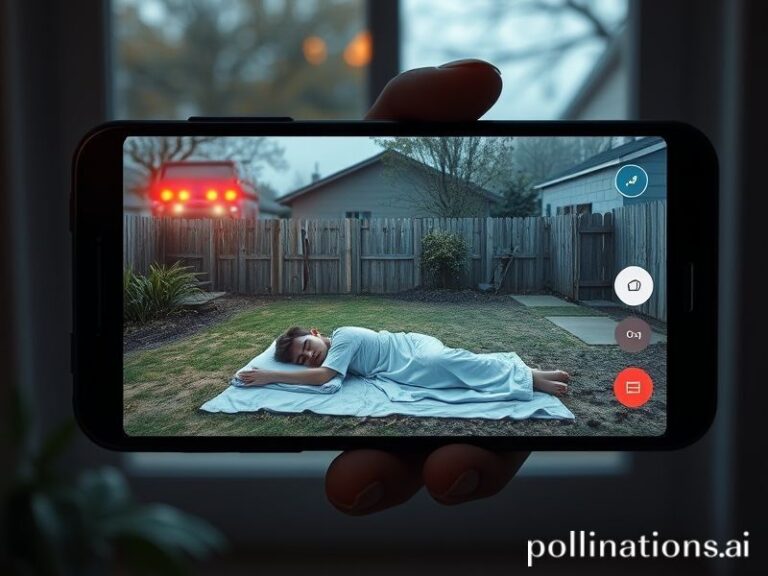
In the latest example of AI’s double-edged sword, teenagers across the United States are using AI image generators to create hyper-realistic photos of homeless individuals camping in their families’ backyards—sending panicked parents dialing 911, only to discover the “intruder” was never there. What started as a twisted TikTok trend has evolved into a serious public safety concern, raising questions about AI ethics, emergency response systems, and the psychological impact of increasingly convincing synthetic media.
The Perfect Storm: How AI Image Generators Became Weapons of Mass Distraction
The prank leverages sophisticated AI tools like Midjourney, DALL-E 3, and Stable Diffusion, which can generate photorealistic images from simple text prompts. Teens are crafting scenarios specifically designed to trigger parental panic: a figure sleeping under a tarp near the pool, someone rummaging through garbage cans, or a person setting up camp near children’s play equipment.
The Technical Recipe for Chaos
Here’s how these pranks typically unfold:
- Prompt Engineering: Teens use specific prompts like “homeless person sleeping in suburban backyard at night, cinematic lighting, photorealistic, 8K resolution”
- Location Scouting: They photograph their actual backyard during daytime
- AI Integration: Using tools like Photoshop’s Generative Fill or Stable Diffusion’s img2img, they seamlessly blend AI-generated figures into real photos
- The Reveal: Images are sent to parents with captions like “Look what’s in our backyard” or “I think someone’s living back there”
Police departments in California, Texas, and Florida report response times averaging 8-12 minutes for these false alarms, costing an estimated $2,500 per unnecessary dispatch.
Why This Matters: Beyond the Prank
The Trust Erosion Effect
This phenomenon represents more than teenage mischief—it’s a canary in the coal mine for our AI-saturated future. When synthetic media becomes indistinguishable from reality, we face:
- Cry-wolf syndrome: Emergency services may become desensitized to legitimate calls
- Legal gray areas: Current laws struggle to address AI-generated hoaxes
- Psychological warfare: The emotional manipulation of family members using AI
- Verification collapse: When seeing is no longer believing
The Industry’s Response
Major AI companies are scrambling to address the issue. OpenAI has implemented stricter content policies, while Midjourney now watermarks images with invisible signatures. However, open-source models like Stable Diffusion remain unregulated and freely available.
Adobe’s Content Authenticity Initiative, backed by Microsoft and The New York Times, proposes cryptographic signatures to verify image origins. Yet implementation remains voluntary and fragmented.
The Technical Arms Race: Detection vs. Generation
Current Detection Methods
Researchers are developing sophisticated detection tools:
- Artifact Analysis: AI images often contain subtle inconsistencies in lighting, shadows, or text rendering
- Metadata Examination: Missing EXIF data or suspicious creation timestamps
- AI Watermarking: Invisible patterns embedded during generation
- Blockchain Verification: Immutable records of authentic photography
The Challenge Ahead
However, as AI improves, detection becomes exponentially harder. Google’s latest Imagen 3 model produces images that fool human evaluators 90% of the time. The gap between generation and detection capabilities continues widening, following a pattern similar to cybersecurity’s eternal cat-and-mouse game.
Future Implications: A World Where Reality Is Negotiable
Emerging Scenarios
Experts predict several concerning developments:
- Deepfake 911 Calls: AI-generated voices reporting fake emergencies
- Swatting 2.0: Using AI to create fake hostage situations or active shooter scenarios
- Insurance Fraud: Synthetic “evidence” for false claims
- Political Manipulation: Fake crisis images influencing elections or policy
The Authentication Economy
This crisis is birthing an entirely new industry focused on reality verification. Startups like Truepic and Serelay offer verified photography platforms, while others develop “reality tokens”—cryptographic proof of authentic media.
Expect to see:
- Smartphone manufacturers building hardware-level authentication
- Social media platforms requiring verification for sensitive content
- Insurance companies demanding cryptographic proof for claims
- Legal systems adapting to handle synthetic evidence
Practical Solutions: What Needs to Happen Now
For Parents and Families
Immediate steps to protect against AI pranks:
- Establish verification protocols: Require video calls or multiple angles for suspicious situations
- Use verification apps: Install tools like Google’s About This Image or Microsoft’s Video Authenticator
- Educate family members: Discuss AI capabilities and establish “no prank” boundaries
- Contact directly: Always call family members before emergency services
For Tech Companies
The industry must implement:
- Mandatory watermarking: All AI-generated content should include invisible signatures
- Prompt filtering: Block requests designed to create deceptive scenarios
- User accountability: Link AI generation to verified identities
- Open detection tools: Make verification technology freely available
For Policymakers
Legislation needs to address:
- Clear penalties: Define legal consequences for AI-generated hoaxes
- Platform liability: Hold AI companies partially responsible for misuse
- Emergency response protocols: Train 911 operators to identify potential AI hoaxes
- International cooperation: Coordinate responses across jurisdictions
The Bigger Picture: Adapting to an AI-Mediated Reality
This trend represents humanity’s first major adaptation to living with AI that can fabricate reality. Like the internet before it, we’re experiencing growing pains as we develop new social norms, technical solutions, and legal frameworks.
The backyard homeless person prank is likely just the beginning. As AI video generation improves, we may face synthetic security camera footage, fake news broadcasts, or AI-generated evidence in court cases. Our challenge is developing resilience without sacrificing trust entirely.
The solution isn’t to ban AI image generation—its positive applications far outweigh the negatives. Instead, we need thoughtful implementation of verification systems, clear legal frameworks, and public education about AI capabilities.
As we navigate this transition, remember that every disruptive technology initially seems terrifying before we develop the antibodies to manage it. The telephone, photography, and internet all faced similar moral panics. The key is learning from this moment to build a more resilient, verification-savvy society.
The teens creating these pranks are unknowingly stress-testing our systems for a synthetic media future. Their pranks, while irresponsible, are forcing us to develop the tools and protocols we’ll need when AI-generated content isn’t just a joke—it’s a weapon. The question isn’t whether we can stop AI-generated deception, but whether we can adapt quickly enough to maintain social cohesion in an age where seeing is no longer believing.