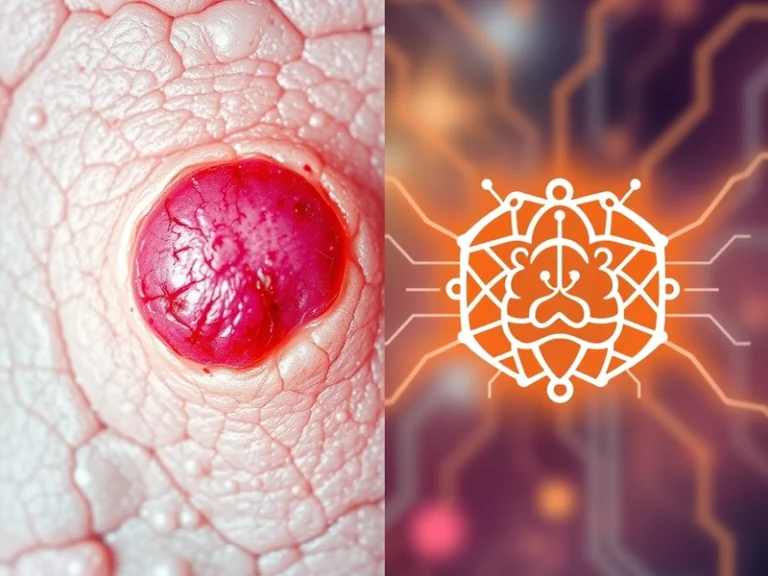
A recent study indicates that specialized artificial intelligence tools designed for medical image analysis may be more reliable than modern general-purpose chatbots in detecting skin conditions, including potential skin cancer.
The findings highlight a critical distinction between purpose-built AI systems and the broad capabilities offered by large language models (LLMs) that power contemporary chatbots. While LLMs have demonstrated remarkable proficiency across a vast array of tasks, their performance in highly specialized diagnostic scenarios, particularly those involving nuanced visual interpretation, appears to lag behind systems specifically engineered and trained for such applications.
Purpose-Built vs. General-Purpose AI
The “old AI” referenced in the study’s premise typically refers to deep learning models, often convolutional neural networks (CNNs), which have been developed over the past decade or more specifically for image classification tasks. These models are trained on massive, curated datasets of medical images, such as dermatoscopic photographs of moles, lesions, and other skin abnormalities. Their training is focused on identifying specific visual features indicative of various skin conditions, including melanoma, basal cell carcinoma, and squamous cell carcinoma.
In contrast, modern chatbots, exemplified by models like OpenAI’s GPT series or Google’s Gemini, are primarily large language models. While many have evolved to become multimodal, allowing them to process and generate content across text, images, and other data types, their core architecture and training are optimized for understanding and generating human language. Their multimodal capabilities are often an extension of this linguistic foundation, enabling them to interpret images in the context of a broader, more general understanding of the world.
Why Specialized AI Excels in Diagnostics
The observed performance gap can be attributed to several fundamental differences in how these two AI paradigms are designed and operate:
- Specialized Training Data: Purpose-built diagnostic AI models are trained on vast, meticulously labeled datasets of medical images, often curated by dermatologists and pathologists. These datasets contain hundreds of thousands or even millions of images, explicitly annotated for lesion type, malignancy, and other clinical features. LLMs, while trained on immense datasets, pull from a much broader and less specialized collection of internet data, which may not contain the depth or specificity of expert-curated medical image archives.
- Optimized Architecture: CNNs are inherently designed for image feature extraction and hierarchical pattern recognition, making them exceptionally good at discerning subtle visual cues within images. While multimodal LLMs can process images, their architecture is not solely optimized for fine-grained visual medical diagnosis in the same way.
- Task Specificity: Specialized AI models are optimized for a singular, critical task: accurate classification or segmentation of medical images. Every parameter and training iteration is geared towards improving this specific diagnostic capability. Chatbots, on the other hand, are designed for generality, balancing performance across a myriad of tasks from writing poetry to answering factual questions. This breadth necessarily comes at the cost of depth in highly specialized domains.
- Clinical Validation and Regulatory Pathways: AI tools intended for medical diagnosis undergo rigorous clinical validation and often require regulatory approval (e.g., from the U.S. Food and Drug Administration or European CE marking bodies) before they can be used in clinical settings. This process ensures their safety and efficacy for their intended medical use. General-purpose chatbots are not currently subject to the same stringent medical device regulations.
- Risk of Hallucination and Bias: LLMs are known to sometimes generate plausible but incorrect information, a phenomenon often referred to as “hallucination.” In medical diagnosis, even a small percentage of incorrect or misleading information can have severe consequences. While specialized medical AI tools are not infallible, their errors are typically different in nature and often better understood and mitigated through specific clinical safeguards.
This research underscores that while large language models are transforming many industries with their versatility, high-stakes applications like medical diagnosis require a level of precision, reliability, and domain specificity that currently remains the domain of purpose-built AI solutions. The general applicability of chatbots should not be conflated with diagnostic accuracy in critical fields where even minor errors can have significant patient outcomes.
The findings serve as an important reminder that AI in medicine should be seen as a spectrum of tools, each with its own strengths and limitations. For complex diagnostic tasks, human oversight remains paramount, and AI’s role is best served as an assistive technology, with specialized, validated systems offering the most reliable support.