Uber’s Quiet Revolution: When Drivers Become the Teachers of Their Potential Replacements
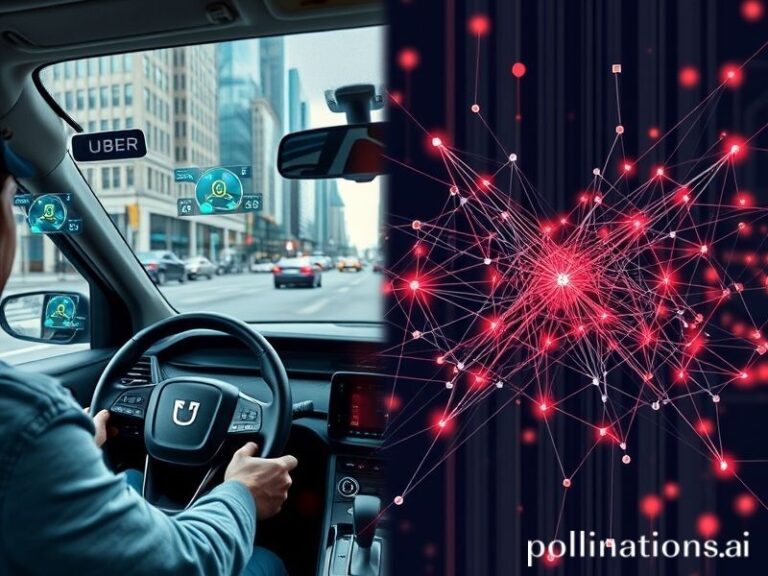
In the predawn darkness of Los Angeles, Uber driver Maria Santos completes her 47th ride of the week. But as she navigates the city’s labyrinthine streets, she’s doing something far more consequential than earning her next fare—she’s unconsciously training the artificial intelligence systems that might one day make her job obsolete.
This paradox sits at the heart of Uber’s latest technological evolution: transforming its vast network of human drivers into an unprecedented data-labeling workforce, all while racing toward a future of autonomous vehicles.
The Hidden Classroom on Wheels
Uber’s transformation of drivers into AI trainers represents one of the most sophisticated examples of human-in-the-loop machine learning in the gig economy. Every turn, brake, acceleration, and route decision becomes a data point that feeds neural networks hungry for real-world driving intelligence.
The Mechanics of Driver-Powered AI Training
Uber’s system captures driver behavior through multiple channels:
- Telematics sensors record acceleration patterns, braking intensity, and cornering speeds
- GPS data maps optimal routes and real-time traffic navigation decisions
- Camera feeds (where legally permitted) capture visual recognition of road conditions, obstacles, and traffic signals
- Time-stamped decisions document how drivers handle edge cases like construction zones or accident detours
- Passenger feedback correlates driving smoothness with human comfort preferences
This data collection happens continuously, with drivers generating terabytes of training material daily. Unlike traditional data labeling farms where workers consciously tag images or text, Uber’s drivers label data through the simple act of doing their jobs—a process researchers call “implicit annotation.”
The Economic Paradox of Self-Training AI
What makes Uber’s approach particularly notable is the economic efficiency of this data collection model. While companies like Waymo invest billions in dedicated test vehicles and professional safety drivers, Uber has effectively created a distributed AI training network that pays for itself through ride revenue.
Quantifying the Value Proposition
Industry analysts estimate that a single Uber driver generates approximately $50-100 worth of training data per shift, based on current market rates for specialized driving datasets. With over 5 million drivers globally, this represents a potential $250-500 million daily value creation in AI training data—though drivers see none of this upside directly.
The asymmetry raises fundamental questions about value distribution in the AI economy. As one driver, James Chen from San Francisco, told us: “We’re basically working two jobs—driving passengers and teaching robots— but only getting paid for one.”
Technical Innovations in Driver-Derived Learning
Uber’s AI team has developed several breakthrough techniques for extracting actionable intelligence from driver behavior:
- Behavioral Cloning Networks: Deep learning models that directly map sensor inputs to driver actions, creating a digital replica of human driving patterns
- Adversarial Comparison Systems: AI drivers compete against human drivers on identical routes, with performance gaps highlighting areas needing improvement
- Contextual Reasoning Engines: Systems that extract not just what drivers do, but why they make specific decisions based on environmental factors
- Uncertainty Quantification: Methods for identifying situations where human drivers disagree, flagging these as particularly challenging scenarios for autonomous systems
Industry Implications Beyond Transportation
Uber’s model represents a template that extends far beyond ride-sharing. The concept of “gig workers as AI trainers” is rapidly proliferating across industries:
- Delivery services like DoorDash and Instacart use similar approaches to train route optimization and customer interaction systems
- Freight companies extract driving patterns from truckers to develop autonomous shipping logistics
- Retail workers unknowingly train inventory management AI through their daily stocking and organization decisions
- Customer service representatives provide conversation training data that powers the chatbots designed to replace them
The Democratization of AI Training Data
This shift has profound implications for AI development accessibility. Traditionally, building sophisticated AI required massive upfront investment in data collection and labeling. The “gig worker as trainer” model dramatically lowers these barriers, potentially accelerating AI adoption across industries.
Ethical Considerations and Worker Rights
The rise of unconscious AI training raises complex ethical questions about consent, compensation, and the future of work. Unlike traditional employment where workers might negotiate around automation, gig workers often lack the collective bargaining power to address these concerns.
Emerging Regulatory Responses
Several jurisdictions are beginning to address these issues:
- California’s Proposition 22 includes provisions requiring companies to disclose when worker data trains AI systems
- EU’s proposed AI Act mandates transparency when personal data contributes to AI training
- New York City recently passed ordinances requiring gig platforms to disclose AI training practices
Future Possibilities: From Replacement to Augmentation
While much discussion focuses on AI replacement of human workers, the driver-training paradigm suggests alternative futures. Rather than full automation, we might see:
- Hybrid Systems: AI handles routine driving while humans manage complex edge cases remotely
- Skill Augmentation: AI coaches that help drivers improve efficiency and safety in real-time
- New Job Categories: Professional “AI trainers” who deliberately generate specific types of training data
- Data Dividends: Compensation models where workers share in AI value creation
The Road Ahead
As Uber continues refining its driver-derived AI training, the company stands at a crossroads. Will it maintain the current asymmetrical model, where drivers provide valuable AI training data without sharing in the long-term value creation? Or will it pioneer new forms of AI-era worker compensation that could become industry standards?
The answer will likely shape not just the future of transportation, but the broader relationship between human workers and the AI systems they increasingly train. For drivers like Maria Santos, these abstract questions carry very real implications for their economic future.
As she puts it, watching another autonomous test vehicle glide past her parked car: “Every ride I give is a lesson for the robot that might take my job. I just hope someone remembers the teacher when the students graduate.”
In the race toward autonomous transportation, Uber has discovered that the fastest route to AI capability runs directly through its human workforce. Whether that journey ends in replacement or reinvention remains the defining question for the future of work in an AI-driven economy.