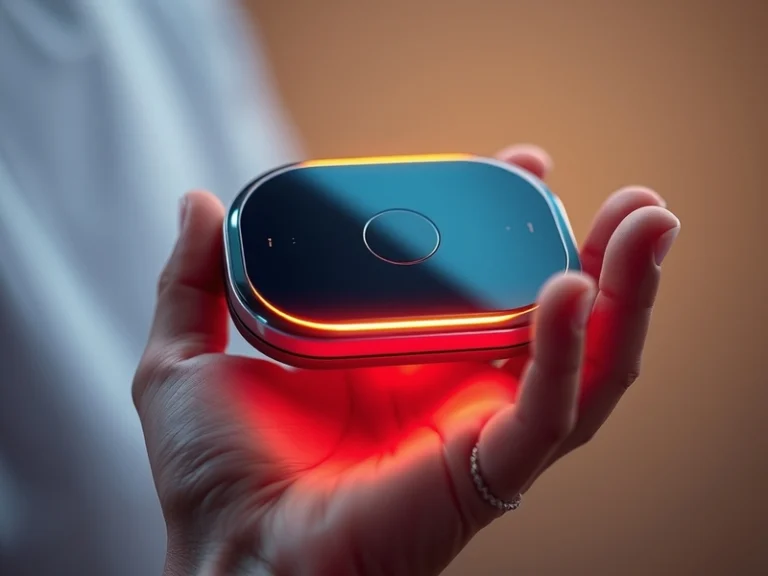
The integration of artificial intelligence into tangible, interactive devices marks a significant evolution in personal stress management, exemplified by the emerging concept of AI-driven stress toys designed to enhance emotional well-being through adaptive feedback.
For decades, stress balls and fidget spinners have offered rudimentary tactile relief. However, the advent of sophisticated sensor technology and machine learning algorithms is transforming these simple tools into intelligent companions. Imagine a device like “TruTru,” not merely a passive object, but one capable of sensing a user’s physiological state and responding with personalized, dynamic interventions. This represents a shift from static stress relief to a proactive, adaptive approach.
Beyond Traditional Fidgeting: How AI Elevates Interaction
The core innovation in AI-driven stress toys lies in their ability to perceive and interpret subtle cues from the user. Unlike a standard stress ball, which provides uniform resistance, an AI-enhanced device incorporates a suite of sensors to gather real-time data. These may include:
- Haptic Sensors: Detecting pressure, grip strength, and patterns of interaction.
- Biometric Sensors: Measuring heart rate variability (HRV), skin conductance, and even subtle temperature changes, which are indicators of physiological stress.
- Proximity Sensors: Understanding how the device is being held or manipulated.
This raw data is then fed into an onboard or cloud-based AI model, typically utilizing machine learning algorithms. The AI’s role is to identify patterns indicative of stress, anxiety, or even relaxation. For instance, a sudden increase in grip pressure coupled with elevated heart rate variability might signal rising tension, while a gentle, rhythmic interaction could suggest a state of calm. Based on these interpretations, the AI can then trigger a range of adaptive responses from the device itself.
Adaptive Responses for Personalized Relief
The interventions offered by an AI-driven stress toy are designed to be dynamic and personalized, evolving with the user’s immediate needs and long-term patterns. These responses can manifest in several ways:
- Dynamic Haptic Feedback: Varying vibration patterns, intensity, or rhythm to guide breathing exercises or provide soothing counter-stimuli. For example, a slow, gentle pulse might encourage deeper, more deliberate breaths.
- Thermal Changes: Gradually warming or cooling surfaces to provide comfort or a grounding sensation.
- Texture Modulation: Employing micro-actuators to subtly change the tactile feel of the device, offering different textures that might be more calming or engaging depending on the user’s state.
- Integrated Light and Sound Cues: Subtle light patterns or embedded speakers emitting calming ambient sounds or guided mindfulness prompts, all synchronized with the user’s physiological data.
Over time, the AI can learn individual preferences and tailor its responses more effectively. If a user consistently finds a particular vibration pattern or cooling sensation more effective in reducing their stress, the AI can prioritize those interventions in future interactions. This personalization moves beyond a one-size-fits-all approach, offering a truly bespoke stress management experience.
Enhancing Emotional Well-being and Self-Awareness
The potential benefits of such interactive stress toys extend beyond immediate relief. By providing a tangible, responsive interface, these devices can help users develop greater self-awareness regarding their stress triggers and coping mechanisms. The data collected by the device, if presented thoughtfully, could offer insights into daily stress patterns, helping individuals identify times and situations where their stress levels peak. This data can be integrated with companion applications, allowing users to visualize their emotional landscape over time and potentially share insights with mental health professionals.
Furthermore, the physical interaction itself can serve as a grounding mechanism, drawing attention away from internal rumination and focusing it on the present moment. This is a principle central to many mindfulness practices, and an AI-driven toy can facilitate this by providing a consistent, responsive anchor.
Challenges and Ethical Considerations
Despite the promise, the development and deployment of AI-driven stress toys come with significant challenges and ethical considerations:
- Data Privacy and Security: These devices collect sensitive biometric and behavioral data. Robust privacy protocols and transparent data handling policies are paramount to ensure user trust and prevent misuse.
- Accuracy and Efficacy: The AI’s ability to accurately detect and interpret emotional states is crucial. Misinterpretations could lead to ineffective or even counterproductive interventions. Rigorous testing and validation are essential.
- Over-Reliance and Displacement: There is a risk that users might become overly reliant on the device, potentially displacing other important coping strategies or professional support. These tools should be seen as augmentative, not substitutive, for comprehensive mental health care.
- Accessibility and Cost: Advanced AI-driven devices may be expensive, limiting access for those who could benefit most. Efforts to make these technologies more affordable and widely available will be important for equitable impact.
As AI continues to permeate various aspects of personal health, the emergence of interactive stress toys like the conceptual “TruTru” represents a compelling intersection of technology and well-being. Their potential to offer personalized, adaptive, and immediate relief is significant, provided that their development prioritizes user privacy, scientific validation, and ethical deployment within a broader framework of mental wellness support.