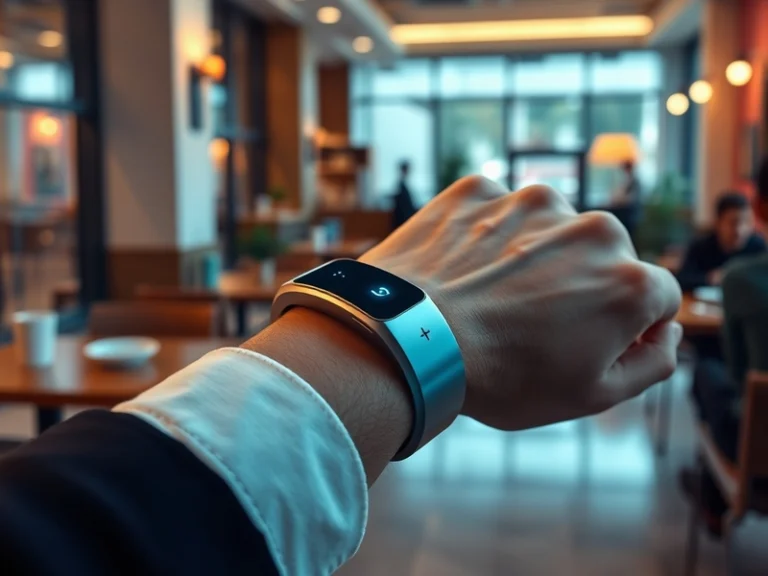
A new AI-powered device, the Vexo Band, has been introduced, aiming to serve as a personal memory aid by capturing and organizing daily conversations directly from the user’s wrist.
The Vexo Band positions itself as an innovative solution for individuals seeking to offload the burden of remembering intricate details from their daily interactions. Its core promise is to leverage artificial intelligence to record spoken exchanges and then process them into an organized, easily retrievable format. This concept taps into a growing demand for tools that augment human memory, particularly in fast-paced professional environments and increasingly complex personal lives.
How the Vexo Band Aims to Function
While specific technical specifications are not yet widely detailed, the foundational capabilities of such a device generally involve several key AI and hardware components:
- Audio Capture: Embedded microphones are essential for continuous or on-demand recording of conversations in the user’s vicinity. The quality and directionality of these microphones would significantly impact the clarity of the captured audio, especially in noisy environments or when multiple speakers are present.
- Speech-to-Text Transcription: Once audio is captured, sophisticated speech recognition models, likely running either on the device itself or via a connected cloud service, convert spoken words into text. The accuracy of these models, particularly across various accents, dialects, and speaking styles, is paramount for the utility of the device.
- Natural Language Processing (NLP): Beyond mere transcription, the “organizing” aspect relies heavily on NLP. This involves AI algorithms that can identify key topics, extract summaries, pinpoint action items, and potentially even distinguish between different speakers (speaker diarization). This processing transforms raw transcripts into actionable or searchable information.
- Data Storage and Retrieval: The processed textual data, and potentially the original audio, would need to be stored securely, likely in a cloud-based system accessible via a companion application on a smartphone or computer. A robust search interface would be crucial for users to quickly find specific conversations or details.
The form factor of a wristband suggests an emphasis on unobtrusive, always-on or always-ready functionality, allowing for seamless capture without requiring users to actively pull out a phone or dedicated recorder.
Potential Applications and Benefits
The Vexo Band could offer tangible benefits across various scenarios:
- Professional Productivity: For business professionals, the device could automatically generate meeting notes, track commitments made during discussions, and help recall specific details from client interactions or team collaborations. This could reduce the need for manual note-taking and improve follow-through.
- Personal Organization: Beyond work, the band could assist in remembering specific instructions from doctors, details from family conversations, or even mundane but important facts discussed with friends. For individuals juggling many responsibilities, this could alleviate mental load.
- Memory Support: For those experiencing mild memory challenges or simply wishing to augment their natural recall abilities, a device that reliably archives and organizes spoken information could be a powerful tool.
Technical and Ethical Considerations
The ambition of the Vexo Band, while compelling, immediately brings to light significant technical challenges and profound ethical questions that any such device must address.
Technical Hurdles
- Accuracy in Real-World Environments: Achieving high-fidelity audio capture and accurate transcription in diverse, often noisy, real-world settings (e.g., crowded cafes, busy offices, outdoor environments) is a formidable task. Background noise, overlapping speech, and varying acoustic conditions can severely degrade performance.
- Battery Life and Processing Power: Continuous audio capture and on-device AI processing demand substantial battery power. Balancing a sleek, wearable form factor with sufficient battery life for daily use, potentially including local AI inference, is a significant engineering challenge.
- Data Volume and Management: Daily conversations generate a vast amount of data. Managing the storage, processing, and secure transmission of this data, especially if original audio files are retained, presents considerable infrastructure and cost implications.
Ethical and Privacy Implications
Perhaps the most critical aspect of a device designed to record ambient conversations is its impact on privacy and social norms. Unlike a phone where recording is often overt, a wristband might be less conspicuous, raising questions about consent.
- Consent and Transparency: A fundamental ethical concern is whether all parties in a conversation are aware they are being recorded and have given their consent. Laws regarding consent for recording conversations vary significantly by jurisdiction (e.g., one-party vs. all-party consent states/countries). Users of the Vexo Band would bear a significant responsibility to understand and adhere to these legal and social norms.
- Data Security and Ownership: Who owns the recorded data? How is it secured from unauthorized access, hacking, or misuse? The sensitive nature of personal conversations necessitates robust encryption, secure storage, and clear policies regarding data retention, sharing, and potential use by the device manufacturer for training AI models.
- Social Acceptability: The presence of an always-listening device could alter social interactions, potentially fostering distrust or making people feel less comfortable speaking freely. Integrating such technology into daily life requires careful consideration of its social ramifications.
- Potential for Misuse: Like any powerful tool, the Vexo Band could be misused for surveillance, recording sensitive information without permission, or other unethical purposes.
The Broader Context of AI Memory Aids
The Vexo Band enters a nascent but growing market for AI-powered memory and productivity tools. While dedicated meeting transcription services like Otter.ai and Fathom already utilize AI for transcribing and summarizing virtual and in-person meetings, they typically rely on existing hardware (laptops, phones) or dedicated conference microphones. Smartwatches from companies like Apple and those running Wear OS offer basic voice recording capabilities, but generally lack the deep AI integration for organization and summarization that the Vexo Band promises.
The Vexo Band’s innovation lies primarily in its dedicated, wearable form factor and its explicit focus on comprehensive, organized personal conversation capture. As AI continues to become more sophisticated and miniaturized, devices like the Vexo Band represent a step towards a future where technology plays a more integrated role in augmenting human cognitive functions. However, for such devices to gain widespread acceptance, they must not only deliver on their technical promises but also navigate the complex ethical and privacy landscape with utmost care and transparency.