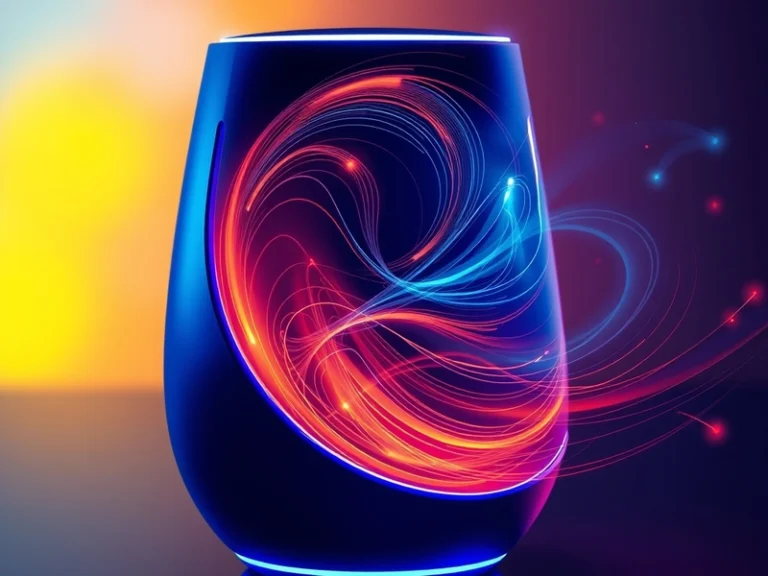
Kata, a new entrant in the smart home assistant market, is differentiating itself by visually communicating its listening and thinking processes, aiming to create a more transparent and intuitive user experience.
Unlike existing smart speakers that typically rely on simple LED rings or static lights to indicate activity, Kata is designed to offer dynamic visual cues that articulate its internal state. This goes beyond the binary “on/off” or “listening/not listening” signals common in devices like Amazon Echo or Google Nest, instead attempting to convey when the assistant is actively listening, processing speech, recognizing intent, or even encountering an ambiguity in a request.
Addressing Core User Frustrations
This approach addresses several long-standing frustrations with current voice assistants:
- Reducing Ambiguity: Users often find themselves wondering if their command was fully understood. Kata’s dynamic visuals could indicate not just that it heard something, but perhaps even *what* it thinks it heard, or if it’s grappling with ambiguity, prompting the user for clarification before an incorrect action is taken.
- Building Trust and Transparency: By making the “thinking” process visible, Kata aims to demystify AI interactions. This transparency can foster greater trust, as users gain a clearer understanding of the device’s capabilities and limitations in real-time.
- Enhancing User Experience: Beyond simple functionality, a more communicative assistant can lead to a more intuitive and less frustrating experience. It transforms a black box into a more interactive and predictable entity, reducing the cognitive load on the user.
- Improving Accessibility: For individuals with hearing impairments or those in noisy environments where auditory cues are insufficient, visual confirmation that a command has been registered and is being processed can be invaluable.
Technical and Design Implications
Implementing such a feature set presents significant technical and design challenges. On the technical front, it requires tight integration between the device’s speech recognition engine, natural language understanding (NLU) module, and its visual output system. The NLU component would need to generate not only an intent but also confidence scores and potentially identify areas of ambiguity that can then be translated into a specific visual state. This demands highly efficient, real-time processing to ensure the visual feedback is instantaneous and reflective of the assistant’s current understanding.
From a design perspective, crafting an intuitive and non-distracting visual language is paramount. The visual cues must be informative without being overly complex or visually noisy. This likely involves sophisticated LED arrays, subtle screen animations, or even projected light patterns that gracefully evolve with the assistant’s internal state. The goal is to provide clarity without overwhelming the user or adding unnecessary visual clutter to the smart home environment.
Differentiating from Current Market Leaders
Current market leaders like Amazon’s Alexa, Google Assistant, and Apple’s Siri primarily rely on auditory cues (chimes, spoken confirmations) and relatively simple visual indicators (e.g., a blue ring on an Echo, colored lights on a HomePod) to signal activity. These indicators are generally limited to very broad states such as “waking up,” “listening,” or “processing.” None currently offer granular visual feedback that communicates the *content* or specific *state* of their understanding. For instance, an Amazon Echo device’s blue ring merely spins; it doesn’t indicate *what* it’s processing or if it’s struggling with a particular part of a command. Kata’s approach represents a significant departure from this established paradigm, aiming for a richer, more descriptive interaction model.
Potential Industry Impact
If Kata successfully implements this concept, it could set a new benchmark for smart home assistant design. Other manufacturers might feel compelled to integrate similar transparency features to remain competitive, potentially leading to a broader shift in how we interact with ambient AI. This could foster greater user confidence and potentially enable more complex, multi-turn conversations by providing users with immediate feedback on the assistant’s comprehension. The focus on visual transparency could also influence the design of other voice-controlled interfaces, from automotive systems to enterprise tools, promoting a more intuitive and less ambiguous interaction with AI across various domains.