GitHub’s Agent HQ Unifies Rival Coding Bots in One Mission-Control Dashboard: OpenAI, Anthropic and Google models now share a cockpit for plan-mode programming
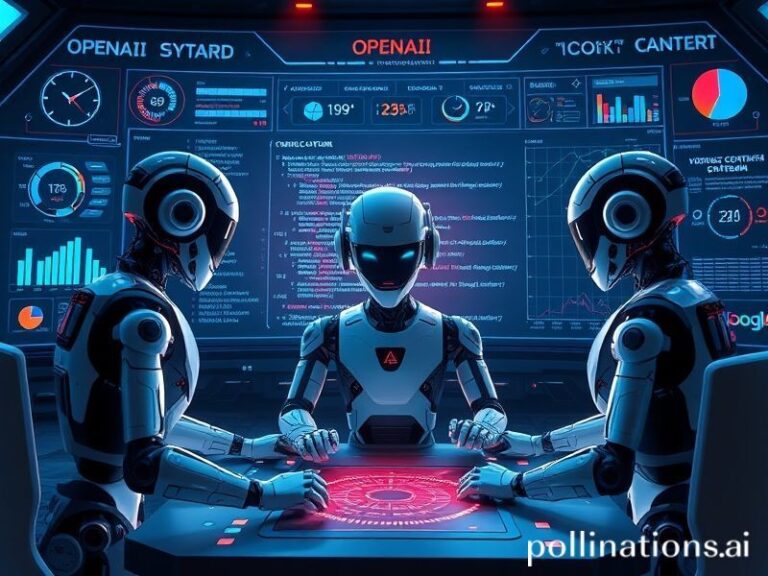
In a move that could reshape how developers interact with AI coding assistants, GitHub has unveiled Agent HQ—a revolutionary mission-control dashboard that brings together competing AI models from OpenAI, Anthropic, and Google under one unified interface. This groundbreaking platform promises to end the fragmentation plaguing AI-assisted development by allowing multiple language models to collaborate on complex programming tasks.
The announcement marks a significant shift from the current landscape where developers must choose between different AI coding tools, each with their own strengths and limitations. Agent HQ introduces a new paradigm where plan-mode programming becomes the norm, with AI agents working together like a coordinated team of specialists rather than isolated tools.
The Architecture of Collaboration
Agent HQ’s architecture represents a fundamental reimagining of how AI assistants should operate. Rather than forcing developers to switch between different platforms or settle for a single model’s capabilities, the dashboard creates a collaborative environment where multiple AI agents can contribute their unique strengths to solve complex programming challenges.
Key Features of Agent HQ
- Multi-Model Synchronization: Real-time coordination between GPT-4, Claude, and Gemini models
- Task Decomposition Engine: Automatically breaks down complex projects into subtasks best suited for different AI models
- Conflict Resolution System: Intelligently merges code suggestions from multiple AI sources
- Performance Analytics: Tracks which models excel at specific types of programming tasks
- Contextual Memory Sharing: Allows AI models to build upon each other’s work seamlessly
The platform’s plan-mode programming approach goes beyond simple code completion. It enables AI agents to engage in strategic planning, architectural decision-making, and collaborative problem-solving that mirrors how human development teams operate.
Industry Implications and Market Disruption
GitHub’s unified approach could trigger a seismic shift in the AI development tools market. By creating a neutral ground where competing AI models must work together, the company is positioning itself as the Switzerland of AI-assisted development—a move that could consolidate its dominance in the developer tools space.
Immediate Industry Impacts
- Reduced Vendor Lock-in: Developers no longer need to commit to a single AI provider
- Accelerated Innovation: Competition shifts from exclusive features to collaborative capabilities
- Standardization Pressure: Other platforms may need to adopt similar multi-model approaches
- Enterprise Adoption Boost: Companies can leverage multiple AI strengths without managing separate contracts
The implications extend beyond convenience. By demonstrating that rival AI models can work together productively, GitHub is setting a precedent for AI collaboration that could influence how other industries approach AI integration.
Practical Insights for Developers
Early beta testers report significant productivity gains when using Agent HQ for complex projects. The platform’s ability to match specific programming challenges with the most suitable AI model has proven particularly valuable for full-stack development tasks.
Real-World Use Cases
- API Integration Projects: Claude handles documentation while GPT-4 manages implementation logic
- Performance Optimization: Google’s Gemini analyzes bottlenecks while OpenAI models suggest optimizations
- Security Auditing: Multiple models cross-verify code for vulnerabilities using different approaches
- Legacy Code Migration: AI agents collaborate to understand, refactor, and modernize existing codebases
Developers particularly appreciate the confidence scoring system that indicates when multiple AI models agree or disagree on solutions, providing valuable insights into code reliability and best practices.
Technical Challenges and Solutions
Creating a unified interface for competing AI models presented numerous technical hurdles. GitHub’s engineering team had to develop novel approaches to handle everything from conflicting coding styles to incompatible API structures.
Overcoming Integration Obstacles
The platform employs sophisticated adapter layers that translate between different AI models’ preferred input formats and coding conventions. A proprietary harmonization engine ensures that code contributions from different models maintain consistency in style, documentation, and architectural patterns.
Perhaps most impressively, Agent HQ includes a meta-learning system that continuously improves collaboration efficiency by analyzing which model combinations produce the best results for specific types of programming tasks.
Future Possibilities and Evolution
The introduction of Agent HQ opens tantalizing possibilities for the future of AI-assisted development. Industry observers speculate about potential expansions that could further transform how software is created.
Emerging Opportunities
- Specialized AI Agent Marketplaces: Third-party developers could create niche AI agents for specific frameworks or industries
- Autonomous Development Teams: AI agents could self-organize to tackle entire projects with minimal human oversight
- Cross-Language Collaboration: Models specializing in different programming languages could seamlessly translate and integrate code
- AI-to-AI Code Review: Multiple models could review each other’s work, catching bugs and suggesting improvements
The platform’s architecture also suggests possibilities beyond coding. Similar collaborative frameworks could emerge for other creative and technical fields, from design to data science to content creation.
The Road Ahead
While Agent HQ represents a significant leap forward, challenges remain. Questions about cost optimization, model bias mitigation, and intellectual property attribution in collaboratively generated code need addressing. Additionally, the platform’s success will depend on maintaining cooperation between AI providers who remain competitors in other arenas.
Nevertheless, GitHub’s bold experiment in AI unification marks a watershed moment in developer tools. By proving that rival AI models can work together effectively, Agent HQ points toward a future where AI collaboration, rather than competition, drives innovation forward.
For developers, the message is clear: the future of programming isn’t about choosing the best AI assistant—it’s about orchestrating a team of them. As Agent HQ evolves from beta to full release, it may well become the mission control center for a new era of collaborative AI-assisted development.