

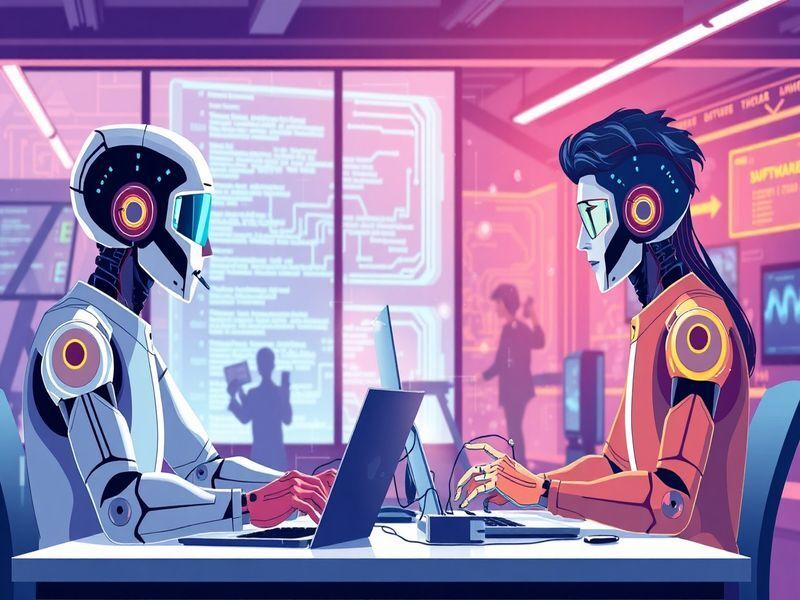
Agentic Engineering: A Paradigm Shift in AI Development
In the evolving landscape of artificial intelligence (AI), the concept of Agentic Engineering, as envisioned by industry leader Andrej Karpathy, presents a revolutionary shift in how AI systems are developed and utilized. This approach focuses on creating AI agents that can autonomously write and improve their own code, significantly altering the dynamics of software development and technological innovation.
What is Agentic Engineering?
Agentic Engineering refers to the methodology of designing AI systems that possess the capacity to operate independently in programming environments. Instead of relying solely on human developers to write and refine code, these AI agents can learn from their experiences, generate new code, and enhance existing programs with minimal human intervention.
The Vision of Andrej Karpathy
Andrej Karpathy, a prominent figure in AI and deep learning, has articulated a vision where AI agents can autonomously handle software development tasks. His insights suggest that the future of coding may involve:
- Self-Improving Algorithms: AI systems capable of analyzing their own performance and making adjustments to optimize outcomes.
- Collaborative Coding: AI agents working alongside human developers, enhancing productivity and allowing for more complex projects to be tackled efficiently.
- Reduced Development Time: By automating routine coding tasks, projects can be completed faster, leading to quicker deployment of software solutions.
Industry Implications
The implications of Agentic Engineering for various industries are profound. Here are several key areas where this technology could have a significant impact:
- Software Development: Traditional coding practices may evolve as AI agents take over repetitive tasks, allowing developers to focus on higher-level problem-solving and creativity.
- Quality Assurance: AI agents can continuously test and improve code, identifying bugs and inefficiencies at a pace that far exceeds human capabilities.
- Custom Software Solutions: Businesses could leverage AI agents to create tailored applications that adapt to their specific needs, enhancing operational efficiency.
Practical Insights for Implementation
For organizations looking to adopt Agentic Engineering principles, several practical insights can guide the integration of AI agents into their development processes:
- Invest in Training Data: The effectiveness of AI agents largely depends on the quality of training data. Organizations should focus on curating comprehensive datasets that reflect diverse coding practices.
- Encourage Collaboration: Foster a culture where human developers and AI agents can work together, sharing insights and improving one another’s outputs.
- Monitor Performance: Implement systems to continuously evaluate the performance of AI agents, ensuring they meet the necessary standards and adapt to changing requirements.
Future Possibilities
The future of Agentic Engineering holds exciting possibilities. As AI technology advances, we can anticipate:
- Increased Autonomy: AI agents may reach a level of sophistication where they can independently manage entire projects from inception to deployment.
- Interdisciplinary Applications: Beyond software development, the principles of Agentic Engineering could be applied in fields such as healthcare, finance, and education, where AI could streamline operations and enhance decision-making.
- Ethical Considerations: The rise of autonomous AI systems will necessitate a robust conversation about ethics in AI, including accountability, transparency, and the impact on employment.
Conclusion
Agentic Engineering represents a bold leap forward in AI development, as articulated by Andrej Karpathy. The potential for AI agents to autonomously write and improve code could revolutionize the tech industry, driving innovation and efficiency to unprecedented levels. As organizations begin to explore this paradigm shift, the interplay between human ingenuity and machine autonomy will define the future of software development and beyond.