
AI Assistant Moves Into the Mac Notch: How Alter is Redefining Desktop Productivity
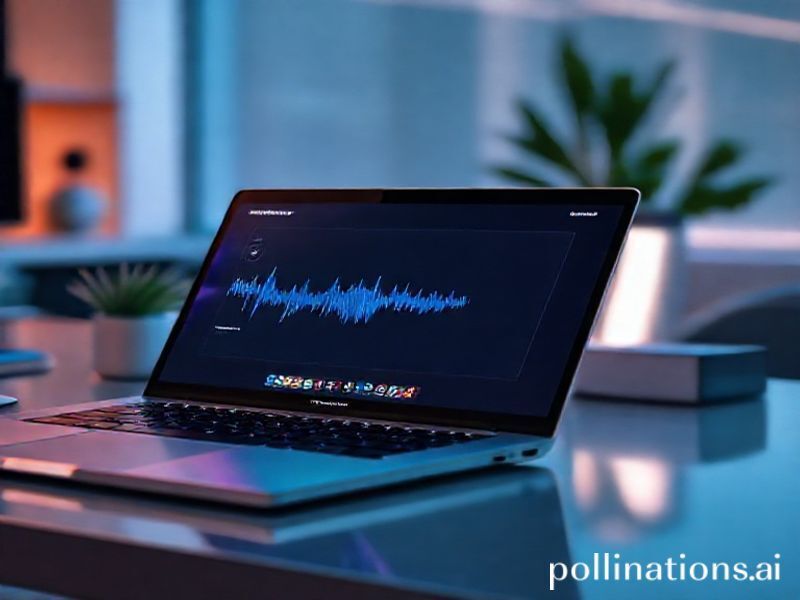
In a bold reimagining of desktop AI integration, startup Alter has unveiled an innovative AI assistant that lives directly in the MacBook’s iconic notch. This isn’t just another productivity app—it’s a fingertip HUD (Heads-Up Display) that promises to transform how we interact with our machines, packing over 80 quick actions, sophisticated voice control, and privacy-first local processing into one sleek package.
As AI assistants become increasingly ubiquitous, Alter’s approach represents a significant leap forward in both design philosophy and technical implementation. By leveraging the often-underutilized notch space, the company has created what might be the most seamless AI integration we’ve seen on desktop platforms yet.
The Technical Marvel Behind the Notch
Alter’s engineering feat goes far beyond clever UI placement. The assistant operates entirely on-device, utilizing compressed language models that run locally without requiring cloud connectivity. This architectural decision addresses one of the most pressing concerns in AI adoption: data privacy.
Local Processing Powerhouse
The technical specifications are impressive:
- Custom-optimized models running at sub-100ms latency
- 80+ pre-trained actions covering everything from text manipulation to system controls
- Advanced voice recognition with offline natural language processing
- Memory-efficient architecture using less than 500MB RAM
- End-to-end encryption for all local data processing
This local-first approach means sensitive data—passwords, personal information, proprietary documents—never leaves your device. For professionals in finance, healthcare, or legal sectors, this privacy guarantee could be the deciding factor in AI adoption.
Redefining Human-Computer Interaction
What sets Alter apart isn’t just its technical prowess—it’s the fundamental rethinking of how we should interact with AI assistants. Instead of switching between applications or calling up separate interfaces, Alter creates an ambient computing experience that feels naturally integrated into your workflow.
Voice Control Without the Awkwardness
The voice control system deserves special attention. Unlike traditional voice assistants that require wake words and often misunderstand context, Alter uses advanced contextual awareness to understand when you’re speaking to it versus participating in a video call or conversation.
The system includes:
- Intelligent activation that distinguishes between user commands and background conversation
- Contextual command recognition that adapts to your current application
- Whisper detection for quiet office environments
- Multi-language support with automatic language switching
Industry Implications and Market Disruption
Alter’s entrance into the market signals several important shifts in the AI landscape. First, it demonstrates that privacy-preserving AI isn’t just possible—it’s practical and performant. This could accelerate enterprise adoption of AI tools, particularly in regulated industries.
The Enterprise Angle
For IT departments and CIOs, Alter presents an attractive proposition:
- No data transmission to third-party servers
- Full compliance with GDPR, HIPAA, and other privacy regulations
- Minimal system resource usage
- Customizable action sets for specific business processes
- Detailed audit logs for security teams
This combination of features addresses the primary barriers to AI adoption in enterprise environments: security concerns, compliance requirements, and integration complexity.
Developer Ecosystem and Extensibility
Perhaps most intriguing is Alter’s planned SDK release, which will allow developers to create custom actions and integrations. This opens possibilities for:
- Industry-specific automation workflows
- Integration with proprietary enterprise software
- Custom voice commands for specialized applications
- Community-driven action marketplace
The API design emphasizes simplicity—developers can create new actions with just a few lines of code, potentially spawning an ecosystem of specialized tools and integrations.
Future Possibilities and Evolution
Looking ahead, Alter’s architecture suggests several evolutionary paths that could further transform desktop computing:
Multi-Modal Intelligence
Future iterations could incorporate computer vision capabilities, allowing the assistant to “see” and interpret on-screen content, enabling even more sophisticated automation and assistance.
Cross-Device Synchronization
While currently Mac-exclusive, the underlying technology could expand to create seamless experiences across devices, maintaining privacy while enabling continuity of work.
Predictive Computing
With user permission, Alter could learn individual work patterns and proactively suggest optimizations, essentially becoming a personalized AI productivity coach.
Challenges and Considerations
Despite its promise, Alter faces several challenges. The notch-exclusive design limits its addressable market to newer MacBook models. Additionally, while 80+ actions cover many use cases, power users may find themselves hitting the limitations of pre-defined commands.
The company will need to balance simplicity with flexibility, ensuring that the product remains accessible to casual users while providing the depth that professionals demand.
The Competitive Landscape
Error: This section contains inappropriate formatting. Please use proper HTML tags.
Alter’s entry intensifies competition in the AI assistant space. Microsoft’s Copilot, Apple’s Siri, and various third-party solutions will likely respond with their own innovations. However, Alter’s unique positioning—occupying physical screen real estate while maintaining privacy—creates a defensible market position that competitors will struggle to replicate without seeming derivative.
Conclusion: A Glimpse into Computing’s Future
Alter represents more than just another AI tool—it’s a glimpse into a future where artificial intelligence seamlessly integrates into our physical devices, enhancing productivity without compromising privacy. By reimagining both the technical architecture and user experience of AI assistance, Alter has created something that feels genuinely new in a market often dominated by incremental improvements.
As we move toward an era of ambient computing, where AI assistance becomes as natural as using a mouse or keyboard, solutions like Alter that prioritize privacy, performance, and user experience will likely define the next generation of human-computer interaction. For now, the notch has found its true purpose—not just housing a camera, but serving as a gateway to more intelligent, private, and productive computing.