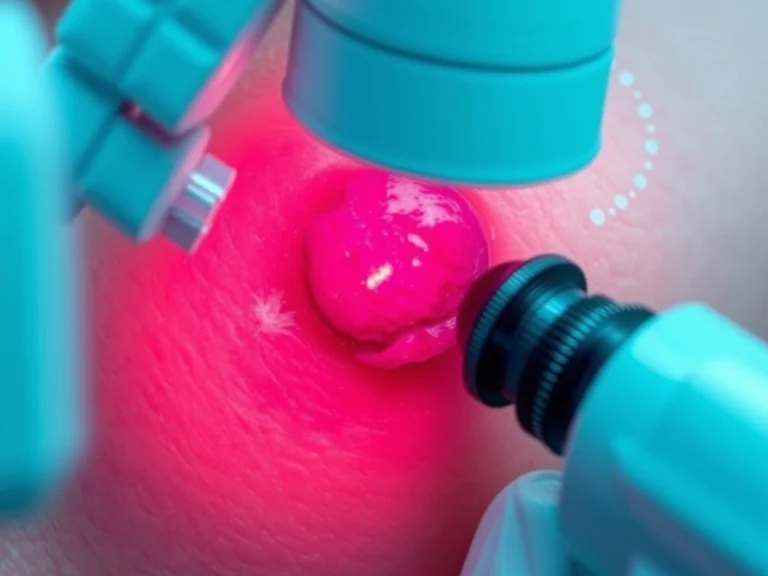
Artificial intelligence is increasingly enhancing the diagnostic capabilities of dermatologists, with AI-powered skin scanners emerging as a significant tool in the early detection of potential skin cancer during patient examinations. These advanced systems are designed to assist clinicians in identifying suspicious lesions that might otherwise be overlooked or require more invasive follow-up.
The primary challenge in dermatological cancer detection, particularly for melanoma, lies in distinguishing malignant lesions from benign ones, often under time constraints and with varying levels of experience among practitioners. Visual assessment, even with the aid of dermoscopy, can be subjective. Melanoma, while representing a smaller percentage of skin cancers, accounts for the vast majority of skin cancer deaths, underscoring the critical need for early and accurate diagnosis.
How AI Augments Dermatological Exams
AI-powered skin scanners typically integrate several technological components to provide an assistive diagnostic layer.
- High-Resolution Image Acquisition: The process begins with capturing high-quality images of skin lesions. This is often done using specialized dermoscopes, which provide magnified, cross-polarized, or non-polarized views of skin structures, or through dedicated camera systems equipped with advanced optics. These devices can capture macroscopic images of large skin areas or microscopic details of individual moles.
- Automated Image Analysis: Once captured, these images are fed into an AI algorithm, most commonly a type of deep learning model known as a Convolutional Neural Network (CNN). These networks are trained on extensive datasets comprising tens of thousands to hundreds of thousands of dermatoscopic images, meticulously labeled by expert dermatologists as either benign or malignant, or classified into specific types of lesions (e.g., melanoma, basal cell carcinoma, squamous cell carcinoma, nevus).
- Pattern Recognition: The AI model learns to identify subtle patterns, textures, colors, and structural characteristics within the images that are indicative of malignancy. Unlike human eyes, which might struggle with microscopic variations or fatigue during lengthy examinations, the AI can consistently apply its learned knowledge to each image. It can detect asymmetries, irregular borders, varied color patterns, and changes in diameter, often referred to by dermatologists using the “ABCDE” criteria, but with a computational precision.
- Risk Assessment and Output: The output from the AI system typically comes in the form of a risk score, a classification (e.g., “low suspicion,” “moderate suspicion,” “high suspicion”), or a visual overlay on the image highlighting areas of concern. This information is then presented to the dermatologist as a supplementary insight, designed to guide their decision-making process.
Benefits for Clinicians and Patients
The integration of AI into skin cancer screening offers several compelling advantages:
- Enhanced Accuracy: By providing a consistent, data-driven analysis, AI can help reduce diagnostic variability and potentially improve the accuracy of early detection, leading to fewer missed melanomas and, in some cases, fewer unnecessary biopsies of benign lesions.
- Early Detection: The ability of AI to identify subtle indicators of malignancy can lead to earlier detection of skin cancers, which is directly correlated with better patient prognoses and survival rates.
- Increased Efficiency: For dermatologists managing a high volume of patients, AI tools can act as a triage system, helping to prioritize which lesions require immediate, in-depth human review, thereby streamlining workflows.
- Educational Tool: AI systems can also serve as an educational aid for medical residents and less experienced practitioners, providing a “second opinion” that helps refine their diagnostic skills.
- Objective Assessment: Unlike human assessment, which can be influenced by fatigue or subjective interpretation, AI provides an objective, repeatable analysis based purely on the visual data presented.
Challenges and the Human Element
Despite their promise, AI skin scanners are not without challenges and are not intended to replace human expertise.
- Data Bias: The performance of AI models is heavily dependent on the quality and diversity of their training data. If the datasets predominantly feature specific skin types or ethnicities, the AI’s accuracy might diminish when applied to underrepresented populations.
- “Black Box” Problem: Many deep learning models, while highly effective, operate as “black boxes,” meaning it can be difficult to fully understand *why* they arrive at a particular conclusion. This lack of interpretability can be a barrier to trust and clinical adoption.
- Regulatory Hurdles: Like all medical devices, AI skin scanners must undergo rigorous testing and receive regulatory approvals (such as FDA clearance in the United States or CE Mark in Europe) to ensure their safety and efficacy in clinical settings.
- Integration into Workflow: Seamless integration of these technologies into existing clinical workflows, including electronic health records and diagnostic pathways, is crucial for their practical utility.
- Cost and Accessibility: The cost of advanced AI-powered dermoscopy systems can be substantial, potentially limiting their accessibility, especially in resource-constrained healthcare environments.
- The Need for Human Oversight: Crucially, AI in dermatology remains an assistive technology. Dermatologists retain the ultimate responsibility for diagnosis and treatment decisions. The AI provides a sophisticated tool, but the nuanced understanding of a patient’s medical history, the ability to perform physical examinations, and the empathy required for patient care remain firmly within the domain of human practitioners.
As AI technology continues to mature and datasets become more comprehensive and diverse, the role of AI-powered skin scanners in dermatology is expected to expand. Their primary contribution will likely remain in augmenting human capabilities, providing dermatologists with powerful new tools to combat skin cancer through earlier and more accurate detection.