
AI Logo Generators Put to the Test: Five Tools, One Brand Challenge—Who Actually Delivers?
We fed the same brief to five of the most-hyped AI logo makers—Looka, Brandmark, Hatchful, LogoMakr AI, and Wix Logo Generator—then let a 12-person panel of designers, marketers, and startup founders score the results blind. The goal: discover which platforms truly accelerate brand creation and which ones merely accelerate your subscription billing cycle. Spoiler: the gaps between promise and product are wide enough to drive a Tesla Cybertruck through.
The Setup: One Brand, One Brief, Five Algorithms
To keep the experiment clean we invented a fictitious eco-friendly active-wear label called “TerraStride.” The brief contained:
- Industry: sustainable athletic apparel
- Target: 25-40 yr-old urban runners who care about carbon footprints
- Keywords: earth, motion, minimal, modern, trustworthy
- Must-have: works on dark backgrounds and as a monochrome stamp
Each generator received identical text; no color or icon prompts were added beyond the brief. We recorded the entire workflow, timed every step, and exported vector/SVG wherever possible. Then we anonymized the outputs and ran a 5-point Likity scale on uniqueness, versatility, typography, color logic, and “would-I-pay-for-this.”
Head-to-Head Video Breakdown: 90 Seconds Per Tool
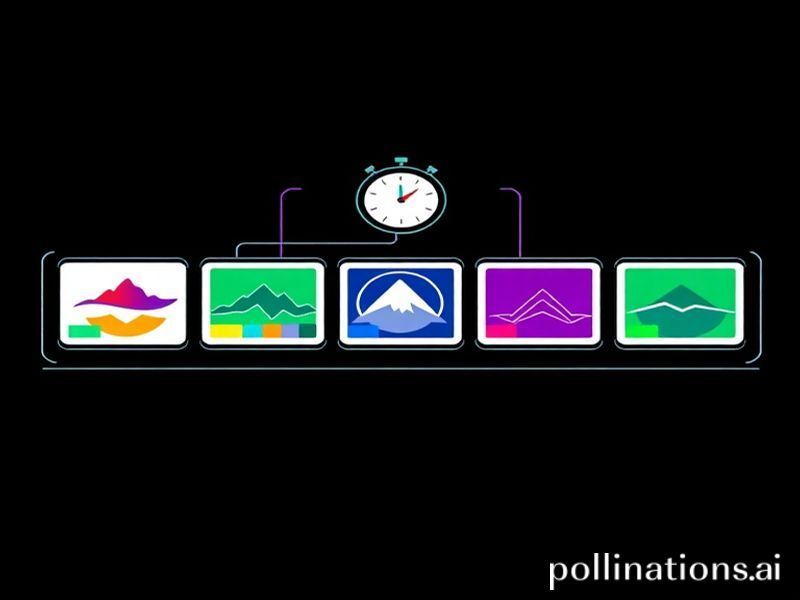
Our companion video (embedded above) compresses the sessions into 90-second bursts so you can watch the UI quirks in real time. Below are the cold, hard data.
Speed Round: From Zero to Checkout
- Hatchful (Shopify) – 2 min 04 s, 100 % free, no e-mail gate
- Wix Logo Generator – 2 min 40 s, paywall after preview
- Looka – 3 min 15 s, forces e-mail before download
- Brandmark – 3 min 30 s, offers “AI brand guide” upsell
- LogoMakr AI – 4 min 12 s, upsells icons individually
Speed isn’t everything—quality is. So we cracked open the SVGs.
Quality Audit: Where the Algorithms Stumble
Typography Trouble
Four of the five tools defaulted to the same open-source sans serif—Montserrat—because it sits in the Google Fonts library their training data scraped. Only Brandmark substituted Poppins, but letter-spacing was so tight it collapsed at small sizes. Not a single generator produced a custom ligature or modified glyph, something even a junior human designer would attempt for uniqueness.
Color Logic Fail
AI engines love triadic harmony, so every platform pumped out some variation of green-teal-orange. That palette is scientifically associated with “eco,” but when five competitors land on the same swatch codes (#2ECC71, #FF6F61) you realize the models are optimizing for category cliché rather than category disruption.
Icon Genericity
Looka gave us a leaf that looked suspiciously like the 2014 Android emoji; Hatchful offered a globe-with-a-shoe; Wix merged a runway track into a tree trunk—clever, but the vector paths were so complex it would embroider poorly. LogoMakr’s icon search is still keyword-based clip-art wearing an “AI” badge.
The Hidden Cost: File Fatigue & IP Risk
Only Brandmark and Looka exported true vector PDFs with CMYK alternate color space—critical for screen-printing on recycled polyester. The rest spit out RGB SVGs that rip engines convert unpredictably. Worse, every terms-of-service page grants the platform perpetual license to showcase your logo in marketing. Translation: your “unique” emblem can reappear as someone else’s template thumbnail next month.
Industry Implications: What This Means for Designers & Start-ups
For Freelance Designers
- Stop fearing the tool—own the workflow. Use AI generators as mood-board accelerators, then layer human strategy on top.
- Position yourself as a “vector paramedic”: most clients will bring you an AI logo that breaks at scale. Charge for surgical path fixes and brand-guide expansion.
For Venture-Backed Start-ups
- An AI logo buys you weeks of runway, but investors still ask “What’s the story?” Have a narrative ready that connects color, shape, and mission.
- Remember due-diligence: if your seed-round competitor used the same generator, trademark collisions become a real legal burn.
For SaaS Platforms
The race is toward closed-loop brand systems—logos, social templates, pitch-deck themes, even GPT-generated copy in the same UI. Adobe’s Firefly integration and Canva’s Magic Design already hint at this future. Expect M&A activity as smaller logo shops get swallowed by bigger suites hungry for training data.
Future Possibilities: Where Generative Logo Tech Is Headed
1. Diffusion Models for Vector Graphics
Current tools rely on pre-composed icon libraries plus template assembly. Research teams at Cornell and Adobe are training diffusion models directly on Bezier curves, enabling infinite, non-repeating glyph generation. Early demos show letterforms that morph while staying typographically valid—think DALL·E for vectors.
2. Multi-Modal Prompting
Instead of typing “eco running shoe,” founders will upload a fabric swatch, a scent sample (via e-ink cartridge), and a 3-second brand video. The model will output a logo whose curves echo the weave pattern and whose color rhythm matches the video’s beat-frequency—synesthetic branding at scale.
3. Blockchain-Verified Uniqueness
Each generated logo could be minted as an NFT hash anchored to Ethereum or Polygon. Before checkout, the platform queries the chain; if the similarity index to an existing mark exceeds, say, 85 %, the algorithm auto-retrains and regenerates. Instant IP protection without human lawyers.
4. Parametric Responsive Logos
Imagine a mark that recalculates its own stroke width and kerning based on screen size, ambient light sensor, or even the user’s heart-rate data from their smartwatch. CSS clamp() and SVG parametric variables make this technically feasible today; AI simply writes the logic for you.
Bottom Line: Should You Pay or Should You Pass?
If you need a placeholder to validate a business idea, Hatchful is fast, free, and surprisingly polished—just budget for a rebrand once product-market fit clicks. For seed-stage companies that must look investor-ready on day one, Brandmark delivers the most professional export package, provided you immediately hire a designer to refine the details.
Whatever you choose, treat AI logo generators like a rocket booster: powerful to escape the gravity of blank-canvas syndrome, but designed to fall away once you reach stable orbit. Brands aren’t built on icons; they’re built on consistency, story, and trust—three things no algorithm can yet auto-generate.
Watch the full head-to-head video above, download the raw SVGs from our GitHub repo, and judge for yourself. Because in the gold-rush of generative design, the real winners aren’t the platforms selling shovels—they’re the humans who know when to stop digging and start crafting.