

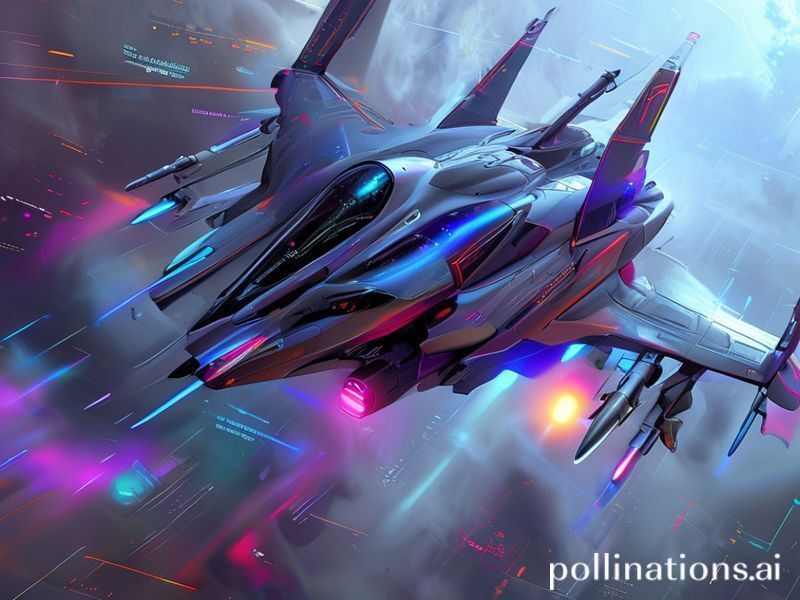
AI-Powered Autonomous Fighter Jets: How Anduril Built a Revolutionary Aircraft in Record Time
In the rapidly evolving landscape of military technology, artificial intelligence (AI) and autonomous systems are at the forefront of innovation. One of the most groundbreaking developments in this arena is the creation of AI-powered autonomous fighter jets. Anduril Industries, a cutting-edge defense technology company, has made significant strides in this domain, building an autonomous fighter jet in record time. This article explores the technology behind this achievement, its practical implications, and the future possibilities it opens up.
The Technology Behind Anduril’s Autonomous Fighter Jet
Anduril’s autonomous fighter jet is a testament to the power of AI and advanced robotics. The jet leverages several key technologies:
- AI and Machine Learning: The fighter jet uses sophisticated AI algorithms to process vast amounts of data in real-time. Machine learning models enable the aircraft to learn from its environment, adapt to new situations, and make autonomous decisions.
- Computer Vision: Equipped with advanced sensors and cameras, the jet can “see” and interpret its surroundings. This capability is crucial for navigation, target identification, and avoiding obstacles.
- Autonomous Control Systems: The jet’s autonomous control systems allow it to perform complex maneuvers without human intervention. These systems integrate AI, robotics, and advanced control algorithms to ensure precise and reliable operation.
- Edge Computing: By processing data on-board, the jet can make rapid decisions without relying on external inputs. This reduces latency and enhances the aircraft’s responsiveness.
The Development Process: Building a Fighter Jet in Record Time
Anduril’s ability to build an autonomous fighter jet in record time is a testament to its innovative approach and agile development processes. Here are some of the key factors that contributed to this achievement:
- Modular Design: Anduril adopted a modular design approach, which allowed for rapid prototyping and iteration. This flexibility enabled the team to quickly test and integrate new components and technologies.
- Collaborative Development: The company fostered a collaborative environment, bringing together experts from various fields, including AI, robotics, and aerospace engineering. This interdisciplinary approach accelerated the development process.
- Leveraging Existing Technologies: Anduril leveraged existing technologies and platforms, such as AI algorithms and autonomous control systems, to reduce development time and costs.
- Agile Methodologies: By employing agile development methodologies, Anduril was able to iteratively improve the fighter jet, incorporating feedback and making continuous enhancements.
Practical Insights and Industry Implications
The development of AI-powered autonomous fighter jets has significant implications for the defense industry and beyond. Here are some practical insights and industry implications:
- Enhanced Capabilities: Autonomous fighter jets can operate in environments that are too dangerous or inaccessible for human pilots. They can perform missions with greater precision and efficiency, reducing the risk to human life.
- Cost Efficiency: While the initial development costs are high, autonomous fighter jets can reduce long-term operational costs. They require less maintenance and can be deployed more frequently than manned aircraft.
- Strategic Advantage: Nations that invest in autonomous fighter jets gain a strategic advantage in military operations. These aircraft can provide real-time intelligence, surveillance, and reconnaissance (ISR) capabilities, enhancing situational awareness and decision-making.
- Ethical Considerations: The development of autonomous weapons raises ethical questions about the use of AI in warfare. It is crucial to establish clear guidelines and regulations to ensure the responsible and ethical use of these technologies.
Future Possibilities
The successful development of AI-powered autonomous fighter jets opens up a world of possibilities for the future of military technology and beyond. Here are some potential developments:
- Advanced AI Capabilities: Future iterations of autonomous fighter jets will likely incorporate even more advanced AI capabilities, such as predictive analytics, natural language processing, and advanced decision-making algorithms.
- Swarm Technology: The concept of swarm technology, where multiple autonomous aircraft operate in coordination, could revolutionize military operations. Swarms of autonomous fighter jets could work together to achieve complex missions with greater efficiency and effectiveness.
- Integration with Other Systems: Autonomous fighter jets could be integrated with other autonomous systems, such as drones and unmanned ground vehicles, to create a fully autonomous military force. This integration would enhance coordination and communication between different systems.
- Commercial Applications: The technologies developed for autonomous fighter jets have potential commercial applications, such as autonomous cargo transport, advanced air traffic control, and disaster response.
Conclusion
Anduril’s development of an AI-powered autonomous fighter jet in record time is a remarkable achievement that highlights the transformative potential of AI and autonomous systems. This innovation not only enhances military capabilities but also opens up new possibilities for the future of technology. As we continue to explore and develop these technologies, it is essential to consider their ethical implications and ensure their responsible use.
The rapid advancement of AI-powered autonomous fighter jets is a testament to the power of innovation and collaboration. By leveraging cutting-edge technologies and agile development processes, Anduril has set a new standard for the defense industry. As we look to the future, the potential applications of these technologies are vast, promising to revolutionize not only military operations but also various aspects of our daily lives.