

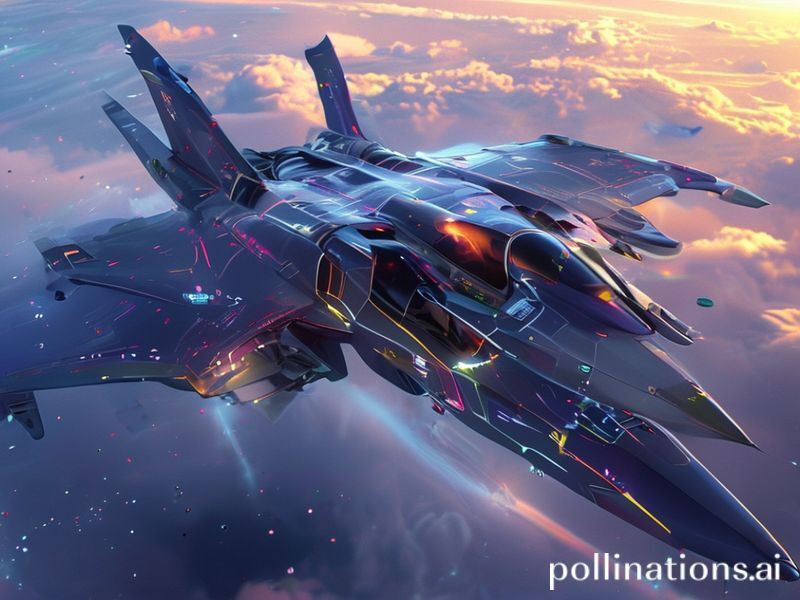
# AI-Powered Autonomous Fighter Jets: How Anduril Built a Revolutionary Aircraft in Record Time
## The Dawn of Autonomous Warfare
The landscape of modern warfare is undergoing a seismic shift, driven by rapid advancements in artificial intelligence (AI) and autonomous systems. At the forefront of this transformation is Anduril Industries, a cutting-edge defense technology company that has made headlines with its groundbreaking development of an AI-powered autonomous fighter jet. This aircraft, dubbed the “X-6,” represents a monumental leap in military aviation, demonstrating how AI and machine learning (ML) can revolutionize defense capabilities.
## The X-6: A Marvel of Engineering and AI
Anduril’s X-6 is not just another fighter jet; it is a fully autonomous, AI-driven aircraft designed to operate without human intervention. The development of the X-6 is a testament to Anduril’s innovative approach, combining state-of-the-art engineering with advanced AI algorithms. Here’s a closer look at the key components that make the X-6 a game-changer:
### 1. **AI-Powered Autonomy**
The X-6’s autonomy is powered by sophisticated AI systems that enable it to perform complex missions, including reconnaissance, target identification, and engagement. These AI systems are trained using vast datasets, allowing the aircraft to make real-time decisions based on dynamic battlefield conditions.
### 2. **Advanced Sensor Fusion**
The X-6 is equipped with a suite of advanced sensors, including radar, electro-optical/infrared (EO/IR) sensors, and electronic warfare systems. These sensors work in tandem to provide a comprehensive situational awareness picture, enabling the aircraft to detect, track, and engage threats with unprecedented accuracy.
### 3. **Machine Learning for Adaptive Decision-Making**
One of the most impressive aspects of the X-6 is its ability to learn and adapt. Machine learning algorithms allow the aircraft to analyze data from previous missions, identify patterns, and optimize its performance. This adaptive decision-making capability ensures that the X-6 can effectively respond to evolving threats and changing battlefield dynamics.
### 4. **Swarm Technology**
The X-6 is designed to operate as part of a swarm, where multiple autonomous aircraft work together to achieve a common objective. This swarm technology enhances the overall effectiveness of the system, as individual aircraft can share data and coordinate their actions in real-time.
## The Development Process: Speed and Innovation
Anduril’s ability to develop the X-6 in record time is a testament to its agile and innovative approach to technology development. Here are some of the key factors that contributed to the rapid development of the X-6:
### 1. **Agile Development Methodologies**
Anduril adopted agile development methodologies, which emphasize iterative development, continuous testing, and rapid prototyping. This approach allowed the company to quickly iterate on designs, incorporate feedback, and accelerate the development process.
### 2. **Leveraging Commercial Off-the-Shelf (COTS) Technology**
Rather than developing everything from scratch, Anduril leveraged COTS technology, which significantly reduced development time and costs. By integrating proven technologies, the company was able to focus on the unique aspects of the X-6, such as its AI and autonomy systems.
### 3. **Collaborative Ecosystem**
Anduril fostered a collaborative ecosystem, partnering with leading technology companies, research institutions, and defense contractors. This collaborative approach enabled the company to tap into a wealth of expertise and resources, further accelerating the development process.
## Industry Implications: A New Era in Defense
The development of the X-6 has significant implications for the defense industry, as well as for global security. Here are some of the key implications:
### 1. **Enhanced Capabilities**
The X-6’s advanced capabilities, including its AI-powered autonomy, sensor fusion, and swarm technology, represent a significant leap forward in military aviation. These capabilities will enhance the effectiveness of defense forces, enabling them to respond more quickly and accurately to emerging threats.
### 2. **Cost-Effective Solutions**
The use of COTS technology and agile development methodologies has made the X-6 a cost-effective solution. This approach has the potential to democratize access to advanced defense technologies, enabling smaller nations and defense forces to enhance their capabilities without breaking the bank.
### 3. **Ethical and Legal Considerations**
The development of autonomous weapons systems raises important ethical and legal considerations. As AI and autonomy become more prevalent in defense, it will be crucial to establish clear guidelines and regulations to ensure the responsible use of these technologies.
## Future Possibilities: The Next Frontier
The X-6 is just the beginning of a new era in autonomous warfare. As AI and ML continue to advance, we can expect to see even more sophisticated and capable autonomous systems. Here are some of the future possibilities:
### 1. **Advanced AI and ML Algorithms**
Future autonomous systems will be powered by even more advanced AI and ML algorithms, enabling them to perform increasingly complex tasks. These systems will be able to analyze vast amounts of data, identify patterns, and make decisions with a level of accuracy and precision that is currently beyond our reach.
### 2. **Integration with Other Autonomous Systems**
Autonomous fighter jets like the X-6 will increasingly be integrated with other autonomous systems, such as drones, unmanned ground vehicles, and cyber systems. This integration will create a seamless, interconnected defense network capable of responding to threats in real-time.
### 3. **Human-Machine Collaboration**
While autonomous systems will play an increasingly important role in defense, human-machine collaboration will remain crucial. Future systems will be designed to augment human capabilities, enabling defense forces to operate more effectively and efficiently.
## Conclusion
Anduril’s development of the X-6 represents a monumental leap forward in military aviation, demonstrating the transformative potential of AI and autonomy. As these technologies continue to advance, we can expect to see even more sophisticated and capable autonomous systems, reshaping the landscape of modern warfare. However, it is crucial to approach these advancements with a focus on ethical and responsible use, ensuring that these powerful technologies are harnessed for the benefit of all.
—