AI-Powered Exoskeletons: The Future of Physical Assistance
In recent years, advancements in artificial intelligence (AI) have led to remarkable innovations across various sectors. One of the most compelling applications of AI is in the development of exoskeletons, which are wearable devices designed to enhance physical capabilities. These AI-powered exoskeletons hold the promise of revolutionizing mobility aids, especially for individuals navigating challenging terrains. This article delves into how AI technology is transforming the landscape of mobility assistance, its implications for industries, and the future possibilities it presents.
Understanding AI-Powered Exoskeletons
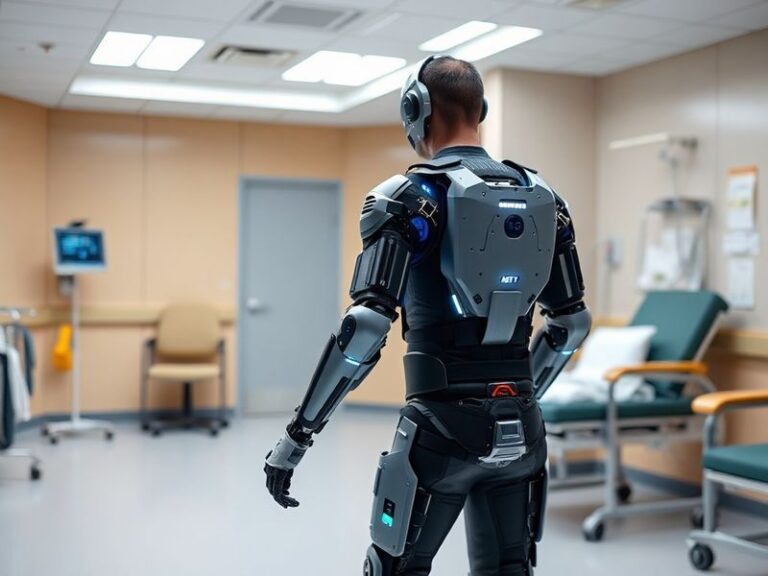
Exoskeletons have traditionally been used in rehabilitation settings to assist patients recovering from injuries or surgeries. However, the integration of AI technology has significantly enhanced their functionality and adaptability. AI-powered exoskeletons are designed to analyze the user’s movements and adjust in real time, providing tailored support and improving overall mobility.
Some of the key features of AI-powered exoskeletons include:
- Adaptive Control: These devices use machine learning algorithms to learn from the user’s movements and adapt their support accordingly.
- Real-Time Feedback: Sensors embedded in the exoskeleton provide continuous data on the user’s posture and movement, allowing for instantaneous adjustments.
- Terrain Adaptation: AI systems can analyze different terrains and adjust the exoskeleton’s gait and support to ensure stability and safety.
Practical Insights: How AI Enhances Mobility Aids
The integration of AI in exoskeleton technology not only enhances user experience but also broadens the application scope in various domains. Here are some practical insights into how AI is making a difference:
- Rehabilitation: AI-powered exoskeletons are being used in physical therapy to help patients regain mobility after spinal cord injuries or strokes. The intelligent design allows for personalized rehabilitation programs that adapt to the patient’s progress.
- Industrial Applications: In manufacturing and construction, exoskeletons equipped with AI can assist workers in lifting heavy objects, reducing the risk of injury and enhancing productivity.
- Military Uses: The military is exploring AI-powered exoskeletons to enhance the endurance and strength of soldiers, enabling them to carry heavier gear over challenging terrains.
Industry Implications
The rise of AI-powered exoskeletons presents several implications for various industries:
- Healthcare: As the population ages, the demand for rehabilitation technologies will grow. AI exoskeletons can help address this need while also providing a solution for physical therapists.
- Agriculture: Farmers may utilize exoskeletons to mitigate physical strain during labor-intensive activities, improving efficiency and reducing injuries.
- Logistics: In warehouses, AI exoskeletons can help workers move items more efficiently, streamlining operations and reducing the physical demands of the job.
The Future of AI-Powered Exoskeletons
The future of AI-powered exoskeletons is promising, with ongoing research and development paving the way for more sophisticated devices. Future possibilities include:
- Improved AI Algorithms: Enhanced machine learning algorithms will lead to more intuitive and responsive exoskeletons, capable of predicting user needs and adjusting accordingly.
- Integration with IoT: The Internet of Things (IoT) will enable exoskeletons to communicate with other devices, creating a more comprehensive ecosystem for mobility support.
- Cost Reduction: As technology advances and production scales, the cost of AI-powered exoskeletons is expected to decrease, making them more accessible to a broader audience.
Moreover, as societal acceptance of robotic assistance grows, we may see a cultural shift towards embracing these technologies not only in rehabilitation but also in everyday life. The integration of AI-powered exoskeletons into daily activities could redefine mobility for individuals with disabilities and the elderly, offering independence and improving quality of life.
Conclusion
AI-powered exoskeletons represent a significant leap forward in the field of mobility assistance. By leveraging advanced AI technology, these devices are becoming more adaptive, efficient, and user-friendly than ever before. As industries continue to explore their potential, the future looks bright for individuals who face mobility challenges. With continued innovation, AI exoskeletons could soon become an essential part of our lives, enhancing mobility and enabling new possibilities.