

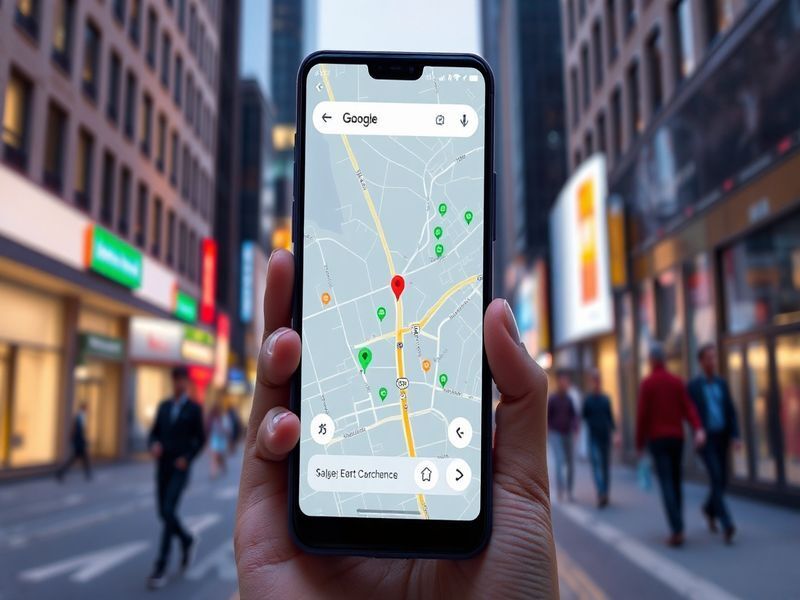
# AI-Powered Navigation: Google Maps’ Hands-Free Features for Walkers and Cyclists
## Enhancing Mobility with Real-Time, Context-Aware Navigation Assistance
In the ever-evolving landscape of artificial intelligence and machine learning, one of the most impactful applications is in the realm of navigation. Google Maps, a pioneer in this field, has recently introduced AI-powered, hands-free features specifically designed for walkers and cyclists. These innovations are not only enhancing mobility but also setting new standards for real-time, context-aware navigation assistance.
### The Evolution of Navigation Technology
Navigation technology has come a long way from the days of paper maps and static GPS devices. Today, AI-driven navigation systems leverage a plethora of data sources to provide dynamic, personalized, and highly accurate directions. Google Maps’ latest features for walkers and cyclists are a testament to this evolution.
Google Maps’ AI-powered navigation system uses a combination of machine learning algorithms, real-time data, and context-aware computing to offer a seamless experience. For walkers, the system provides step-by-step directions, including turn-by-turn instructions and real-time updates on traffic conditions, pedestrian crossings, and even the best routes to avoid congestion. For cyclists, the system offers route suggestions that consider factors like bike lanes, traffic lights, and even the terrain.
### Practical Insights: How It Works
The AI-powered navigation system in Google Maps is built on several key technologies:
- Machine Learning Algorithms: These algorithms analyze vast amounts of data to predict the best routes for walkers and cyclists. They consider historical data, real-time traffic conditions, and even weather patterns to provide the most accurate directions.
- Real-Time Data: The system continuously updates its recommendations based on real-time data from various sources, including other users’ data, traffic cameras, and even weather forecasts.
- Context-Aware Computing: This technology enables the system to understand the context of the user’s environment. For example, it can recognize when a user is approaching a busy intersection and provide timely alerts.
### Industry Implications
The introduction of AI-powered navigation features for walkers and cyclists has significant implications for the industry. It sets a new benchmark for what users can expect from navigation systems, pushing other companies to innovate and improve their offerings.
Moreover, these features have the potential to make cities more walkable and bike-friendly. By providing accurate, real-time navigation assistance, Google Maps can encourage more people to choose walking or cycling as a mode of transportation, thereby reducing traffic congestion and promoting a healthier lifestyle.
### Future Possibilities
The future of AI-powered navigation is bright and full of possibilities. Here are a few areas where we can expect to see significant advancements:
- Integration with Smart Cities: As cities become smarter, navigation systems will be able to integrate with various city infrastructure elements, such as traffic lights and public transportation, to provide even more seamless and efficient navigation.
- Personalized Recommendations: AI algorithms will become better at understanding individual preferences and habits, offering personalized route suggestions that align with the user’s lifestyle and preferences.
- Enhanced Safety Features: Future navigation systems will incorporate advanced safety features, such as collision avoidance and real-time hazard alerts, to ensure the safety of walkers and cyclists.
### Conclusion
Google Maps’ AI-powered, hands-free features for walkers and cyclists represent a significant leap forward in navigation technology. By leveraging the power of AI, machine learning, and real-time data, these features offer a more personalized, accurate, and context-aware navigation experience. As the technology continues to evolve, we can expect even more innovative features that will enhance mobility and make our cities more walkable and bike-friendly.
For tech enthusiasts and professionals, this is an exciting time to be involved in the field of AI and navigation technology. The possibilities are endless, and the potential impact on our daily lives is immense. As we look to the future, one thing is clear: AI-powered navigation is here to stay, and it will continue to transform the way we move around our cities.
—