

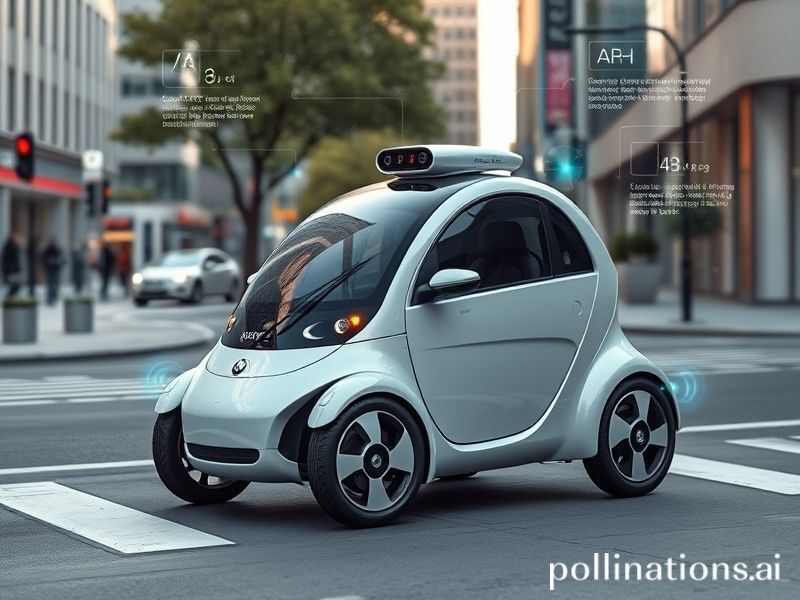
The Dawn of AI-Powered Three-Wheeled Beetle Cars: Revolutionizing Urban Mobility
Imagine a vehicle that combines the charm of the iconic Volkswagen Beetle with cutting-edge artificial intelligence and the efficiency of a three-wheeled design. AI-powered three-wheeled Beetle cars represent a bold leap into the future of urban transportation, where compact design meets intelligent autonomy. These mini autonomous vehicles are poised to transform how we navigate cities, promising to solve pressing challenges from traffic congestion to environmental sustainability.
What Makes These Vehicles Unique?
The fusion of AI technology with the nostalgic Beetle aesthetic creates something entirely new: a smart, eco-friendly urban mobility solution. These vehicles typically feature:
- An AI-driven autonomous navigation system capable of real-time decision-making
- Advanced sensor arrays including LiDAR, cameras, and ultrasonic sensors
- Compact three-wheeled design optimized for urban environments
- Electric powertrains with regenerative braking capabilities
- Connected vehicle technology for seamless integration with smart city infrastructure
The Technology Behind the Innovation
AI Systems and Machine Learning
At the heart of these vehicles lies sophisticated AI technology that processes vast amounts of data in milliseconds. The neural networks powering these cars are trained on millions of driving scenarios, enabling them to:
- Recognize and respond to traffic signs, signals, and road markings
- Predict pedestrian and cyclist behavior patterns
- Navigate complex urban intersections safely
- Adapt to varying weather conditions and road surfaces
- Communicate with other vehicles and infrastructure through V2X (Vehicle-to-Everything) protocols
Safety and Navigation Innovations
The three-wheeled configuration presents unique challenges that AI systems must overcome. Advanced algorithms continuously monitor vehicle stability, adjusting power distribution and braking to maintain optimal balance. The AI’s predictive capabilities extend beyond immediate obstacles, calculating potential risks several seconds ahead and planning alternative routes in real-time.
Industry Implications and Market Disruption
Transforming Urban Transportation
The introduction of AI-powered three-wheeled Beetle cars signals a paradigm shift in urban mobility. Cities worldwide are grappling with:
- Increasing traffic congestion and limited parking spaces
- Rising pollution levels from traditional vehicles
- The need for accessible transportation options for elderly and disabled populations
- Pressure to reduce carbon emissions and meet climate goals
These compact autonomous vehicles address each of these challenges while offering a unique value proposition: personal transportation that’s both environmentally conscious and technologically advanced.
Economic Opportunities
The market potential for these vehicles extends beyond individual ownership. Business models emerging include:
- Shared autonomous fleets for ride-hailing services
- Last-mile delivery solutions for e-commerce companies
- Corporate campus transportation systems
- Tourism-focused rental services in urban centers
Industry analysts project the global autonomous vehicle market to reach $196 billion by 2030, with compact urban vehicles capturing a significant portion of this growth.
Practical Insights for Implementation
Technical Challenges and Solutions
Developing AI systems for three-wheeled vehicles requires addressing specific technical hurdles:
- Stability Control: AI algorithms must compensate for the inherent instability of three-wheeled designs at high speeds or during sharp turns
- Weather Adaptation: Machine learning models need extensive training on diverse weather conditions, from heavy rain to snow
- Urban Complexity: Navigation systems must handle the unpredictability of city driving, including construction zones and temporary traffic patterns
Leading manufacturers are tackling these challenges through iterative testing and continuous learning algorithms that improve with each mile driven.
Regulatory Landscape
The path to widespread adoption requires navigating complex regulatory frameworks. Current initiatives include:
- Establishing safety standards specific to autonomous three-wheeled vehicles
- Creating insurance frameworks for AI-driven transportation
- Developing certification processes for AI decision-making systems
- Harmonizing international regulations for cross-border deployment
Future Possibilities and Innovations
Emerging Technologies Integration
The next generation of AI-powered Beetle cars will incorporate breakthrough technologies:
- Quantum Computing: Enhanced processing power for split-second decision making
- 5G/6G Connectivity: Ultra-low latency communication with smart city infrastructure
- Advanced Materials: Self-healing polymers and lightweight composites for improved efficiency
- Biometric Integration: Personalized AI assistants that adapt to individual passenger preferences
Societal Impact and Urban Planning
As these vehicles become mainstream, cities will undergo dramatic transformations:
- Reduced need for parking spaces, freeing up land for green spaces and housing
- Decreased traffic accidents, potentially saving thousands of lives annually
- Improved air quality through widespread adoption of electric powertrains
- Enhanced mobility for populations currently underserved by traditional transportation
Urban planners are already redesigning city centers with autonomous vehicle infrastructure in mind, including dedicated lanes and charging stations.
The Road Ahead
AI-powered three-wheeled Beetle cars represent more than just a technological novelty—they embody a vision of sustainable, intelligent urban mobility. As AI systems become more sophisticated and cities embrace smart infrastructure, these vehicles will play a crucial role in shaping tomorrow’s transportation landscape.
The convergence of nostalgic design with futuristic technology creates an emotional connection that could accelerate public acceptance of autonomous vehicles. By addressing practical concerns while inspiring imagination, these mini autonomous vehicles pave the way for a future where technology enhances rather than replaces the human experience of mobility.
As we stand at the threshold of this transportation revolution, one thing is clear: the AI-powered three-wheeled Beetle car is not just a vehicle—it’s a glimpse into a future where artificial intelligence and human-centric design converge to create smarter, cleaner, and more accessible cities for all.