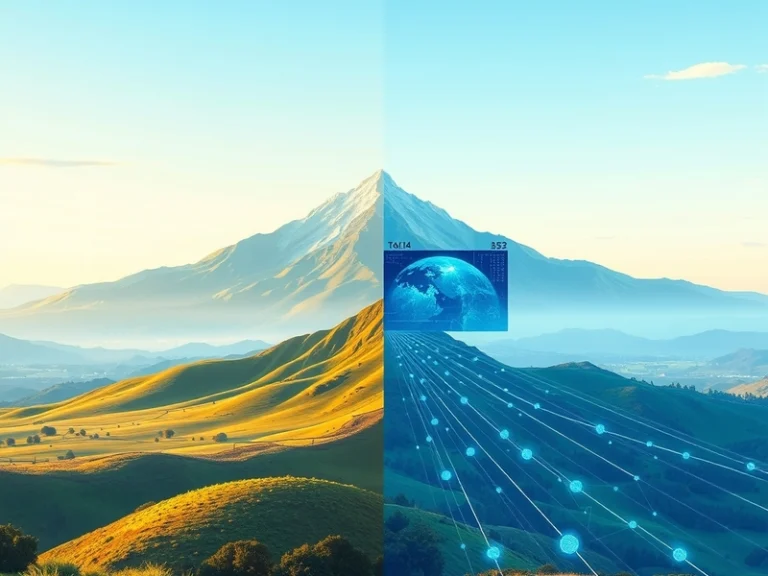
The landscape of digital content creation is rapidly evolving with the emergence of powerful AI tools that are enabling users to generate sophisticated video content directly from static images, significantly lowering the barrier to entry for dynamic visual storytelling. This innovation is transforming how marketers, artists, educators, and social media creators approach video production, moving from labor-intensive manual processes to AI-driven automation.
From Still to Motion: The Core Technology
At the heart of this capability are advanced generative artificial intelligence models, primarily variations of diffusion models, coupled with sophisticated motion synthesis techniques. These models are trained on immense datasets comprising countless images and corresponding video clips, allowing them to learn not only the visual characteristics of objects and scenes but also their potential dynamics and how they interact over time. When a static image is provided as input, these AI systems can infer plausible motion, synthesize a series of intermediate frames, and apply stylistic transformations to produce a coherent and often compelling video sequence.
Key technological components enabling this transformation include:
- Diffusion Models: These neural networks operate by learning to reverse a process of progressively adding noise to training data. For video generation, this extends to understanding how to denoise a sequence of noisy frames into a coherent visual narrative, or to infer motion from a still image.
- Motion Synthesis and Prediction: Rather than merely animating pixels, advanced algorithms predict and apply motion vectors or learned motion patterns to specific elements within an image. This allows for dynamic camera movements like pans and zooms, as well as the animation of individual objects or characters, creating an illusion of depth and movement.
- Temporal Consistency: A critical challenge in video generation is maintaining visual consistency across frames. Recent advancements have significantly improved the models’ ability to ensure that objects, lighting, and textures remain stable and coherent throughout the generated video, mitigating flickering or sudden, jarring changes.
Leading Tools and Their Capabilities
Several companies are at the forefront of developing and deploying these image-to-video AI tools, each offering distinct features and user experiences. These platforms are empowering creators to experiment with video production without requiring extensive animation skills or expensive hardware.
- RunwayML: A pioneer in AI-powered video editing and generation, RunwayML offers capabilities like Gen-1 and Gen-2. Gen-1 allows users to apply the style of an image or text prompt to an existing video, effectively transforming its aesthetic. Gen-2, however, is a direct text-to-video and image-to-video model, enabling users to generate entirely new video clips from a single image or an image combined with a text prompt, controlling elements like camera movement and subject action.
- Pika Labs: Gaining significant traction through its Discord-based interface, Pika Labs provides robust image-to-video capabilities. Users can upload an image and add text prompts to describe desired motion, camera angles, and stylistic elements. The platform is known for its user-friendly approach and continuous updates, making advanced video generation accessible to a broader audience.
- Stability AI’s Stable Video Diffusion (SVD): Building on the success of Stable Diffusion for image generation, Stability AI released Stable Video Diffusion, a powerful open-source model designed specifically for generating video from images. SVD can generate short, high-quality video clips from a single input image, offering researchers and developers a robust foundation for building their own applications and exploring the limits of generative video.
- Adobe Firefly: While not yet fully public with dedicated image-to-video features in the same vein as Runway or Pika, Adobe is actively integrating generative AI capabilities across its Creative Cloud suite. Its research initiatives and demonstrations, such as Project Clover, indicate a strong future focus on transforming static assets into dynamic content, aiming to streamline workflows for professional creators within familiar environments like Premiere Pro and After Effects.
- Google Research: Google has showcased impressive capabilities with models like Imagen Video and Lumiere, demonstrating high-quality, temporally consistent video generation from text and images. While these are primarily research projects, they push the boundaries of what’s possible and often inform features that eventually make their way into consumer products or developer APIs.
Transforming Content Creation Workflows
The impact of these AI tools on content creation is multifaceted, offering significant advantages across various sectors:
- Marketing and Advertising: Brands can quickly generate dynamic product showcases, animated advertisements, or social media snippets from existing product photos, reducing production costs and turnaround times for campaigns.
- Social Media and Digital Storytelling: Individual creators, influencers, and small businesses can produce engaging video content for platforms like Instagram, TikTok, and YouTube without needing complex video editing software or animation skills. A static image can become a captivating short story in minutes.
- Concept Visualization and Prototyping: Filmmakers, animators, and game developers can rapidly prototype ideas, visualize storyboards, or test different animation styles by bringing still concept art to life, accelerating the pre-production phase.
- Personal Content and Education: Users can animate family photos, create dynamic presentations, or generate educational explainers from diagrams and illustrations, making content more engaging and accessible.
Current Limitations and Future Outlook
While the capabilities are impressive, these AI tools are still in active development and come with certain limitations. Achieving precise control over complex motion, ensuring perfect temporal consistency over longer video durations, and avoiding occasional “uncanny valley” effects or visual artifacts remain ongoing challenges. The computational resources required for high-quality generation can also be substantial, though cloud-based services are making these tools more accessible.
Looking ahead, the trajectory for image-to-video AI is one of continuous improvement. We can anticipate enhanced control mechanisms, allowing creators to dictate motion paths, character expressions, and camera movements with greater granularity. Integration with existing creative suites will likely deepen, embedding these powerful generative capabilities directly into professional workflows. As models become more efficient and capable, the distinction between static and dynamic visual content will blur further, ushering in an era where every image holds the potential for a compelling video narrative.