
AI’s Biggest Threats by 2028: Analyzing the Top Concerns Surrounding Artificial Intelligence’s Impact on Society
As artificial intelligence (AI) continues to evolve at a breakneck pace, it brings with it a myriad of benefits and possibilities. However, it also raises significant concerns about its impact on society. By 2028, experts predict that several threats could manifest, affecting various aspects of life and industry. In this article, we will delve into these potential threats, explore their implications, and discuss practical insights for navigating this transformative landscape.
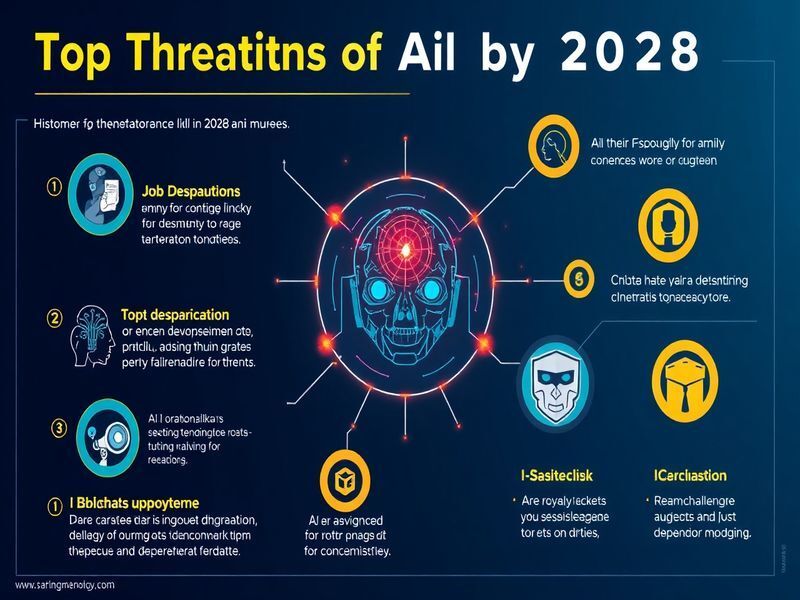
1. Job Displacement and Economic Inequality
One of the most discussed threats posed by AI is its potential to displace jobs across numerous sectors. As automation technologies become more sophisticated, the risk of large-scale job loss increases.
- Automation of Routine Tasks: Industries such as manufacturing, retail, and customer service are already witnessing the effects of automation. Robots and AI systems can perform repetitive tasks with greater efficiency than their human counterparts.
- Skill Mismatch: Many workers may find themselves unprepared for the new job landscape, leading to increased unemployment and economic disparity.
- Concentration of Wealth: The benefits of AI are often concentrated among a small number of tech companies and wealthy individuals, exacerbating economic inequality.
To mitigate these challenges, industry leaders must invest in retraining programs and promote policies that support workforce transition.
2. Ethical Concerns and Bias in AI
Ethical considerations around AI are paramount, especially regarding its decision-making processes. AI systems learn from data, and if that data is biased, the outcomes can perpetuate existing inequalities.
- Algorithmic Bias: AI algorithms can inadvertently discriminate against certain groups if the training data reflects historical biases.
- Lack of Transparency: Many AI systems operate as “black boxes,” making it difficult to understand how decisions are made, leading to mistrust from users.
- Informed Consent: As AI systems increasingly influence decisions in sensitive areas like healthcare and criminal justice, ensuring informed consent becomes critical.
Addressing these ethical concerns requires a multidisciplinary approach involving technologists, ethicists, and policymakers to create standards for fairness and accountability.
3. Privacy and Surveillance Issues
The rise of AI technologies also poses significant risks to privacy. As more data is collected and processed, the potential for misuse grows.
- Mass Surveillance: Governments and corporations could leverage AI for surveillance, infringing on civil liberties and personal privacy.
- Data Breaches: With increased data collection comes the risk of data breaches, exposing sensitive personal information.
- Manipulation of Personal Data: AI can be used to analyze personal data to influence decisions, from advertising to voting behavior.
To combat these privacy concerns, robust data protection regulations and ethical guidelines for data usage must be established.
4. Autonomous Weapons and Security Risks
The development of AI in military applications raises alarms about the creation of autonomous weapons systems that could operate without human intervention.
- Escalation of Conflicts: Autonomous weapons could lower the threshold for military engagement, leading to faster and potentially more catastrophic conflicts.
- Accountability: Determining accountability for actions taken by AI-controlled systems poses significant legal and ethical challenges.
- Cybersecurity Threats: AI could be weaponized to conduct sophisticated cyberattacks, jeopardizing national security.
It is essential for international bodies to establish treaties and regulations governing the development and use of AI in warfare.
5. Dependency and Loss of Human Skills
As society becomes increasingly reliant on AI for everyday tasks, there is a growing concern about the loss of essential human skills.
- Cognitive Offloading: Over-reliance on AI tools may lead to diminished problem-solving abilities and critical thinking skills among individuals.
- Decreased Human Interaction: The proliferation of AI-driven communication tools could reduce face-to-face interactions, impacting social skills and relationships.
- Vulnerability to Malfunctions: An over-dependence on AI could render individuals and organizations vulnerable to system failures or inaccuracies.
To counteract these issues, it is vital to foster a balanced approach that integrates AI tools while encouraging the development of human skills.
Conclusion: Navigating the AI Landscape
As we approach 2028, the threats posed by AI demand urgent attention and action. While the potential benefits of AI are vast, understanding and addressing its risks is crucial for a sustainable future. Stakeholders must collaborate to establish regulations, ethical standards, and educational initiatives that promote a balanced coexistence with AI. By taking proactive measures, we can harness the power of AI while safeguarding our society against its potential threats.