Artificial intelligence is rapidly advancing our ability to interpret animal vocalizations, moving beyond simple classification to potentially deciphering complex communication patterns and individual identities across species.
For decades, bioacousticians have painstakingly analyzed animal sounds to understand species distribution, behavior, and health. However, the sheer volume and complexity of acoustic data have always presented a significant bottleneck. Enter machine learning: deep learning models, particularly convolutional neural networks (CNNs) and recurrent neural networks (RNNs) trained on vast datasets of audio recordings, are now capable of identifying intricate patterns, distinguishing individual calls within a chorus, and even correlating vocalizations with observed behaviors.
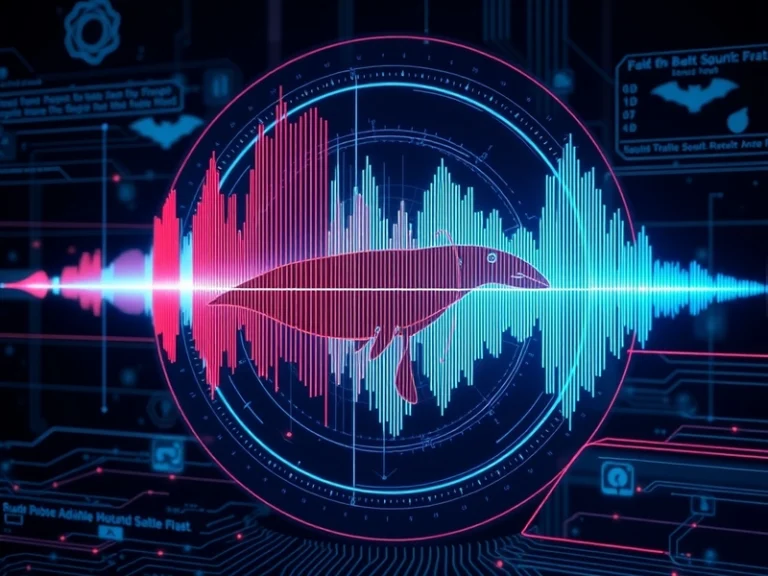
Projects like the Cetacean Translation Initiative (Project CETI) exemplify this shift. Utilizing advanced machine learning and robotics, CETI aims to understand the communication of sperm whales – creatures with complex click-based vocalizations known as “codas.” By deploying underwater listening stations and autonomous observation platforms, researchers are collecting unprecedented amounts of data, which AI then processes to identify patterns that might indicate meaning, context, or even a form of syntax in whale communication. Similar efforts are underway for other species, from bats and birds to prairie dogs, where AI is helping to map out intricate social calls and alarm systems.
The Promise: A Deeper Understanding
The potential benefits of these advancements are profound. A deeper understanding of animal communication could revolutionize several fields:
- Conservation: AI could help monitor endangered species more effectively by identifying distress signals, tracking population movements, or detecting poaching activity through acoustic signatures.
- Animal Welfare: Interpreting the vocalizations of livestock or captive animals could provide objective insights into their stress levels, pain, or specific needs, leading to improved welfare practices.
- Scientific Research: Unlocking animal “languages” could offer unprecedented insights into animal cognition, social structures, and even culture, challenging our anthropocentric views of intelligence.
- Mitigation: Understanding how human noise pollution impacts marine life, for instance, by analyzing changes in whale communication patterns, could inform better environmental policies.
The Peril: New Ethical Responsibilities
However, as AI’s capabilities grow, so do the ethical considerations. The ability to “talk” to animals, or at least interpret their communications, brings with it a complex web of responsibilities that society and the scientific community must address proactively.
1. The Challenge of Interpretation and Anthropomorphism
AI identifies patterns; it does not inherently understand meaning or intent as humans do. The risk of anthropomorphism – projecting human emotions, thoughts, or intentions onto animal signals – is significant. An AI might classify a specific sequence of calls as a “warning,” but attributing human-like fear or strategic planning to the animal based solely on this pattern could be misleading. Researchers must develop robust validation methods, often involving cross-referencing AI interpretations with extensive behavioral observations, to avoid misrepresenting animal communication. We must question what “understanding” truly means in this context and avoid overstating AI’s current capabilities.
2. Animal Autonomy and Privacy
If we can interpret an animal’s internal state, social dynamics, or even individual “thoughts” (however rudimentary), what are the implications for their autonomy? Does knowing a whale’s migration plans or a primate’s social hierarchy infringe upon their natural existence? The concept of “listening in” on entire ecosystems raises questions similar to those surrounding human privacy in the digital age. We need to consider whether animals have a right to their own communication, free from human eavesdropping and potential manipulation.
3. Potential for Exploitation
The knowledge gained from interpreting animal communication could be misused. For instance, understanding specific calls that attract mates or signal distress could be exploited for commercial purposes (e.g., in tourism, hunting, or even animal trade). Military or security applications, though speculative, also present a concerning avenue for misuse. Establishing clear ethical guidelines and regulations around the access and application of such powerful interpretive tools is paramount to prevent exploitation.
4. The Burden of Knowledge and Intervention
If AI helps us understand that a group of animals is in distress due to environmental factors, or that an individual animal is experiencing pain, what is our moral obligation to intervene? And what constitutes appropriate intervention? Unilateral human intervention, even with good intentions, can disrupt natural ecosystems and animal behaviors in unforeseen ways. This knowledge places a heavy burden on humanity to act responsibly, considering the broader ecological context and the long-term well-being of the species.
Charting a Responsible Path Forward
Navigating these ethical complexities requires an interdisciplinary approach, bringing together AI developers, bioethicists, conservationists, zoologists, and policymakers. Developing open-source tools, fostering transparent research practices, and engaging in public discourse about the implications of these technologies will be crucial. As AI continues to bridge the communication gap between humans and the animal kingdom, it forces us to re-evaluate our place in the natural world and the responsibilities that come with unprecedented insight into the lives of other species.