
# AI’s Impact on Traditional Benchmarks: How Pokémon is Becoming a New Test for AI Intelligence
## The Evolution of AI Benchmarks
Artificial Intelligence (AI) has long been measured against traditional benchmarks such as the Turing Test, the Winograd Schema Challenge, and various performance metrics in specific domains like image recognition or natural language processing. However, as AI technologies advance, these benchmarks are becoming outdated and less indicative of true intelligence. Enter Pokémon, a cultural phenomenon that is now emerging as a novel and comprehensive test for AI capabilities.
## Why Pokémon?
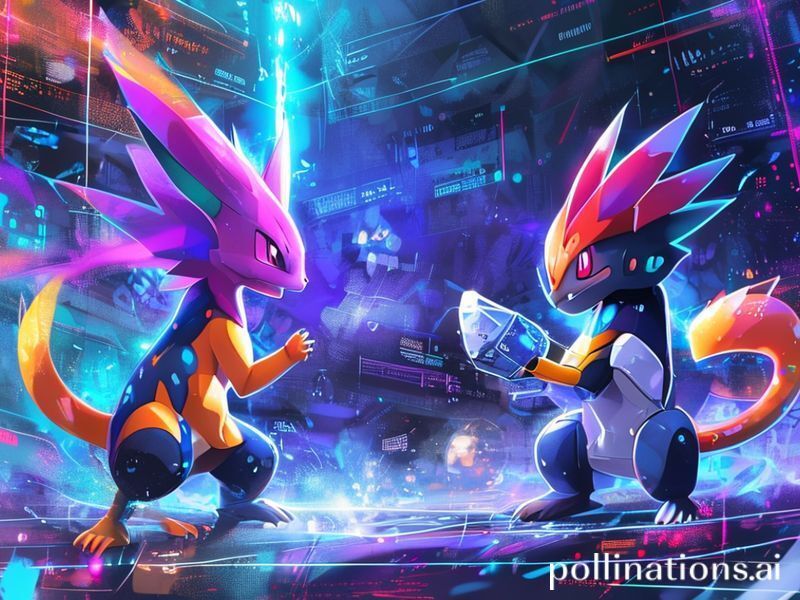
Pokémon, with its rich ecosystem of creatures, complex battle mechanics, and strategic depth, offers a unique challenge for AI systems. Unlike traditional benchmarks, Pokémon requires a combination of skills:
- Pattern Recognition: Identifying Pokémon types, moves, and abilities.
- Strategic Planning: Developing battle strategies based on type advantages and move sets.
- Adaptability: Adjusting strategies in real-time based on opponent actions.
- Knowledge Integration: Combining vast amounts of data to make informed decisions.
## Practical Insights
### 1. **Pattern Recognition and Image Processing**
Pokémon’s visual complexity makes it an excellent test for image recognition and pattern recognition algorithms. AI systems must accurately identify Pokémon types, moves, and abilities from visual data, which is a critical skill in real-world applications such as medical imaging, autonomous vehicles, and quality control in manufacturing.
### 2. **Strategic Planning and Decision Making**
The strategic depth of Pokémon battles requires AI systems to plan multiple moves ahead, considering various outcomes and adapting to changing circumstances. This mirrors the decision-making processes in fields like finance, logistics, and military strategy, where AI systems must make complex, high-stakes decisions.
### 3. **Adaptability and Real-Time Learning**
Pokémon battles are dynamic, with opponents constantly adapting their strategies. AI systems must learn and adapt in real-time, a skill that is increasingly important in real-world applications such as cybersecurity, where threats evolve rapidly.
### 4. **Knowledge Integration and Contextual Understanding**
Pokémon requires AI systems to integrate vast amounts of data and understand the context in which that data is used. This is a critical skill in fields like natural language processing, where AI systems must understand the context of human language to provide accurate and relevant responses.
## Industry Implications
The shift towards Pokémon as an AI benchmark has significant implications for various industries:
1. Gaming and Entertainment
- AI systems trained on Pokémon can enhance gaming experiences by providing more intelligent and adaptive opponents.
- They can also be used to create more immersive and personalized gaming experiences.
2. Education and Training
- Pokémon can be used as a tool for teaching AI systems about strategy, adaptability, and decision-making.
- It can also be used to train AI systems in real-world applications, such as medical diagnosis or financial forecasting.
3. Research and Development
- Pokémon provides a rich and complex environment for AI research, allowing researchers to test and refine AI algorithms.
- It can also be used to explore new areas of AI, such as emotional intelligence and creativity.
## Future Possibilities
The use of Pokémon as an AI benchmark opens up exciting possibilities for the future:
1. Emotional Intelligence
- Pokémon’s rich narrative and emotional depth can be used to test AI systems’ emotional intelligence.
- This could lead to the development of AI systems that can understand and respond to human emotions.
2. Creativity and Innovation
- Pokémon’s vast ecosystem of creatures and moves can be used to test AI systems’ creativity and innovation.
- This could lead to the development of AI systems that can generate new ideas, products, or solutions.
3. Collaboration and Teamwork
- Pokémon’s multiplayer battles can be used to test AI systems’ ability to collaborate and work as part of a team.
- This could lead to the development of AI systems that can work effectively with humans and other AI systems.
## Conclusion
Pokémon is more than just a game; it’s a complex and challenging environment that is pushing the boundaries of AI research and development. As AI systems become more advanced, traditional benchmarks are becoming less relevant, and new, more comprehensive tests are needed. Pokémon, with its rich ecosystem of creatures, complex battle mechanics, and strategic depth, is emerging as a novel and comprehensive test for AI capabilities. The shift towards Pokémon as an AI benchmark has significant implications for various industries and opens up exciting possibilities for the future.
—